
Teaching young children how to make choices is a vital communication skill that supports their independence and helps reduce frustration. This set of 6 essential communication phrases focuses on everyday situations where children can express their preferences clearly and respectfully. Whether your child uses speech, gestures, pointing, picture cards, or AAC, these phrases provide practical tools to communicate choices effectively.
Key Communication Phrases for Making Choices
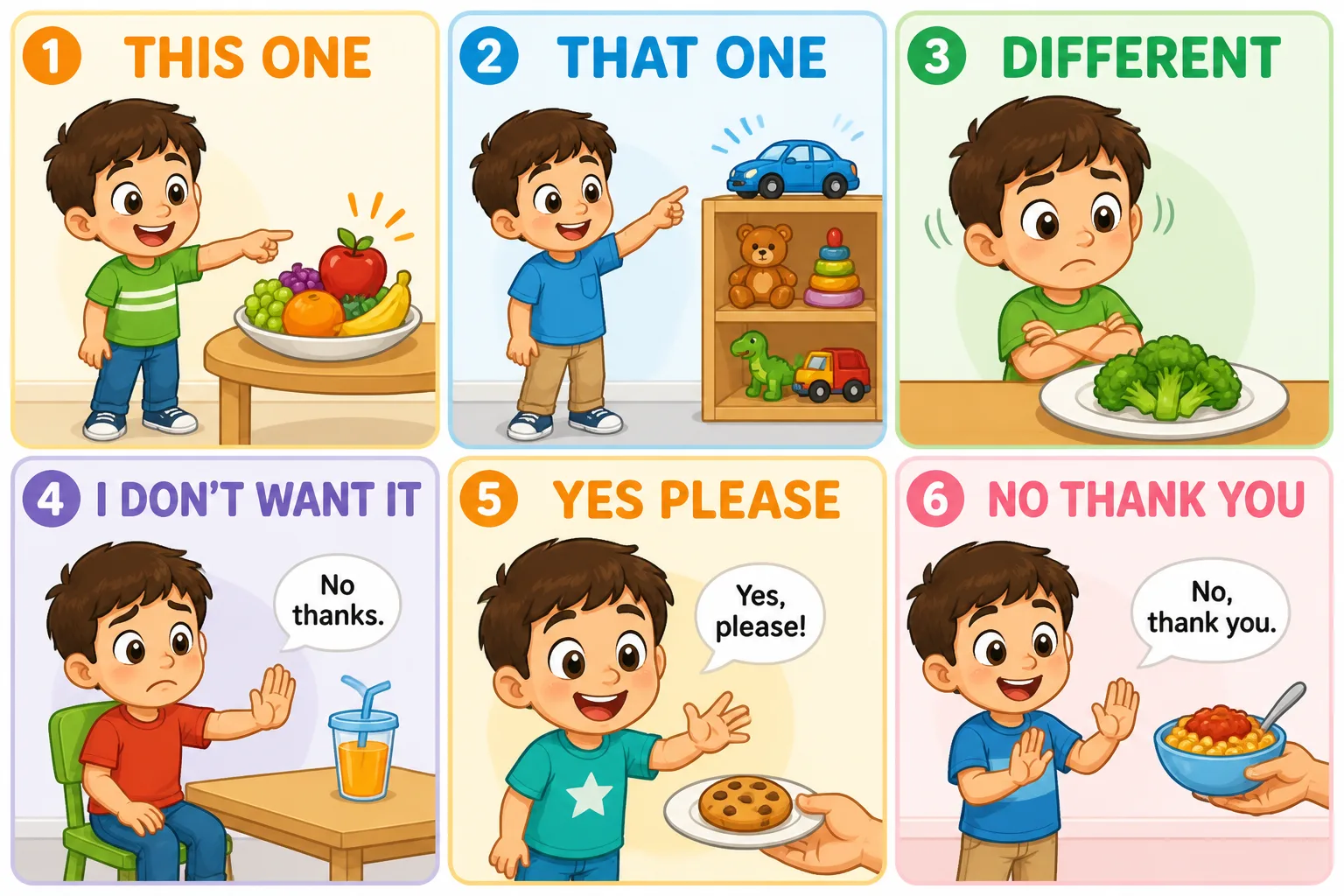
1. THIS ONE
Use when your child wants to select a specific item, such as a favorite toy or snack. For example, pointing at an apple and saying “This one” helps them specify their preference clearly.
2. THAT ONE
Similar to “This one,” but used when pointing to something a bit farther away or less immediate. It helps children distinguish between multiple options.
3. DIFFERENT
This phrase is useful when your child wants an alternative to what is offered. For example, if presented with broccoli but prefers something else, they can say “Different” to indicate their choice.
4. I DON’T WANT IT
Teaching your child to express refusal politely is important. “I don’t want it” helps them reject an offer without frustration or tantrums.
5. YES PLEASE
Encourages polite acceptance and reinforces positive social communication when your child wants something.
6. NO THANK YOU
Allows your child to decline offers politely, supporting respectful social interactions.
How Parents Can Practice These Phrases Naturally
- Model the phrases during daily routines without forcing repetition.
- Pair words with gestures, pointing, or visual supports.
- Offer two simple choices and wait patiently for your child to respond.
- Celebrate all attempts to communicate, whether verbal or nonverbal.
- Use consistent language and repeat phrases naturally throughout the day.
Remember, communication is not only about words but also about respecting your child’s pace and style. These phrases empower children to make choices and express preferences in a positive, functional way.
What are some favorite choices your child likes to make during the day? Share your experiences below!
For more communication skills, check out Asking for a Break: 6 Essential Communication Phrases for Young Children and Teaching Personal Boundaries: 6 Essential Communication Phrases for Young Children.
Download the images in this article