

New Framework Introduced to Evaluate Autism Support Through a Neurodiversity-Affirming Lens

A new five-principle framework offers a way to evaluate autism support research that respects neurodiversity, focusing on strengths, autonomy, communication, and sensory differences.

Emerging Technologies Offer New Opportunities for Autism Screening and Support with Focus on Equity

Emerging technologies like AI, telehealth, and wearable sensors show promise in improving autism screening and support, especially in underserved communities, but challenges remain in equity and validation.

UK Universities Show Varied Support for Autistic Students Across Diagnostic Stages, Study Finds
A UK study reveals that universities vary widely in how they identify and support autistic students, especially those without formal diagnoses, raising questions about equitable access to accommodations.

Experts Advocate for Autistic-Led Approaches to Address Social Anxiety in Autism

Experts highlight the need for autistic-led treatment approaches targeting social anxiety, a common concern in autism, to improve support and outcomes.

New Insights into Aging Biomarkers in Autism and Related Research Updates
Recent research highlights emerging biomarkers related to aging in autism, offering new perspectives on health and care for autistic adults.

New Research Indicates Autism Rates Have Stabilized in Recent Years

A recent study published in JAMA reports that autism incidence rates have stabilized, indicating no significant increase in new diagnoses in recent years.
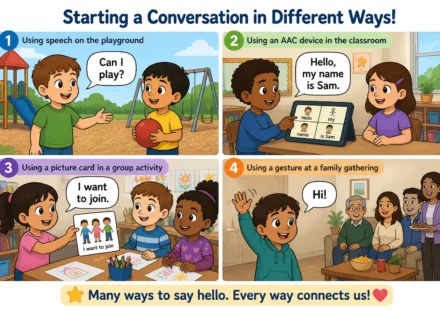
Starting a Conversation

Learn how to help young children, including autistic children, start a conversation using respectful communication methods and simple social skills.

Study Explores Cognitive Aging in Autism: Evidence Suggests Unique Patterns

A recent study reveals that cognitive aging in autistic adults shows both similarities and unique patterns compared to non-autistic adults, with some memory functions appearing safeguarded.

Brief Observation of Social Communication Change (BOSCC) Shows Promise in Tracking Social Communication Improvements in Autism
A rapid review of 19 studies suggests the Brief Observation of Social Communication Change (BOSCC) effectively detects subtle improvements in social communication among autistic children, outperforming traditional diagnostic tools in some areas.

Study Finds Autistic Adolescents Speak Differently in Same-Sex Versus Mixed-Sex Conversations

A new study reveals that autistic adolescents communicate differently depending on whether their conversation partner is the same sex or a different sex, highlighting the importance of social context in autism.