Teaching Personal Boundaries: 6 Essential Communication Phrases for Young Children

Teaching young children how to communicate their personal boundaries is crucial for their safety, comfort, and self-confidence. This article focuses on personal boundaries communication, a vital skill set that helps children express when they feel uncomfortable or need space. Children, including those with autism or additional communication needs, benefit greatly from learning clear, functional phrases they can use in everyday situations to advocate for themselves.
Why Teach Personal Boundaries Communication?
Personal boundaries communication empowers children to say “No,” “Stop,” or “I need space” when they feel overwhelmed, touched without consent, or in noisy environments. These skills promote respect and safety and are foundational for healthy social interactions. According to the Centers for Disease Control and Prevention (CDC), fostering communication skills supports social and emotional development in early childhood.
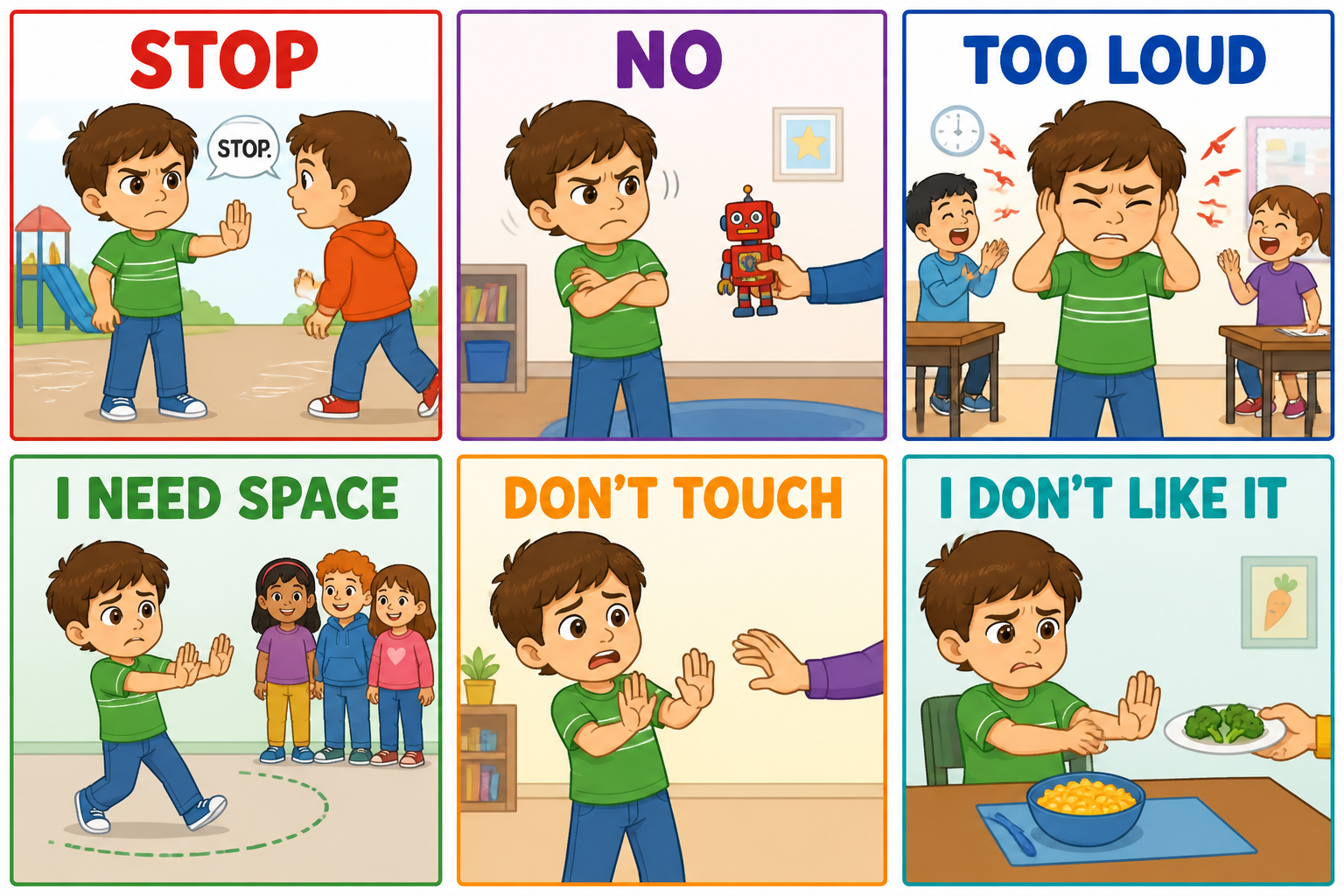
6 Essential Personal Boundaries Phrases
- STOP – Used to halt unwanted actions or approaches, such as someone coming too close.
- NO – A firm refusal to accept something, like a toy or activity.
- TOO LOUD – Expressing discomfort with noise levels, helpful in classrooms or busy places.
- I NEED SPACE – Asking for physical distance when feeling crowded.
- DON’T TOUCH – Setting limits on physical contact when it is unwelcome.
- I DON’T LIKE IT – Communicating dislike of food, activities, or situations.
How Parents Can Practice These Phrases Naturally
Model these phrases during daily routines without pressuring your child to repeat them. Use gestures, picture cards, or AAC devices alongside words. For example, if a sibling is too close, say calmly, “STOP, I need space,” while showing the gesture. Offer simple choices and pause to allow your child time to respond in their way, whether by pointing, signing, or speaking. Celebrate their attempts to communicate, reinforcing their confidence.
Supporting Your Child’s Self-Advocacy
Encourage your child to use these phrases in real-life situations, such as at school, playgrounds, or family gatherings. Respect their communication style and never force eye contact or verbal repetition. Remember, communication is about connection and safety, not perfection.
Additional Resources
For more on supporting communication and social skills in young children, visit the Autism Speaks Communication Resources and the American Speech-Language-Hearing Association (ASHA).
What personal boundary phrase do you think would help your child feel safest today?
Download the personal boundaries communication image