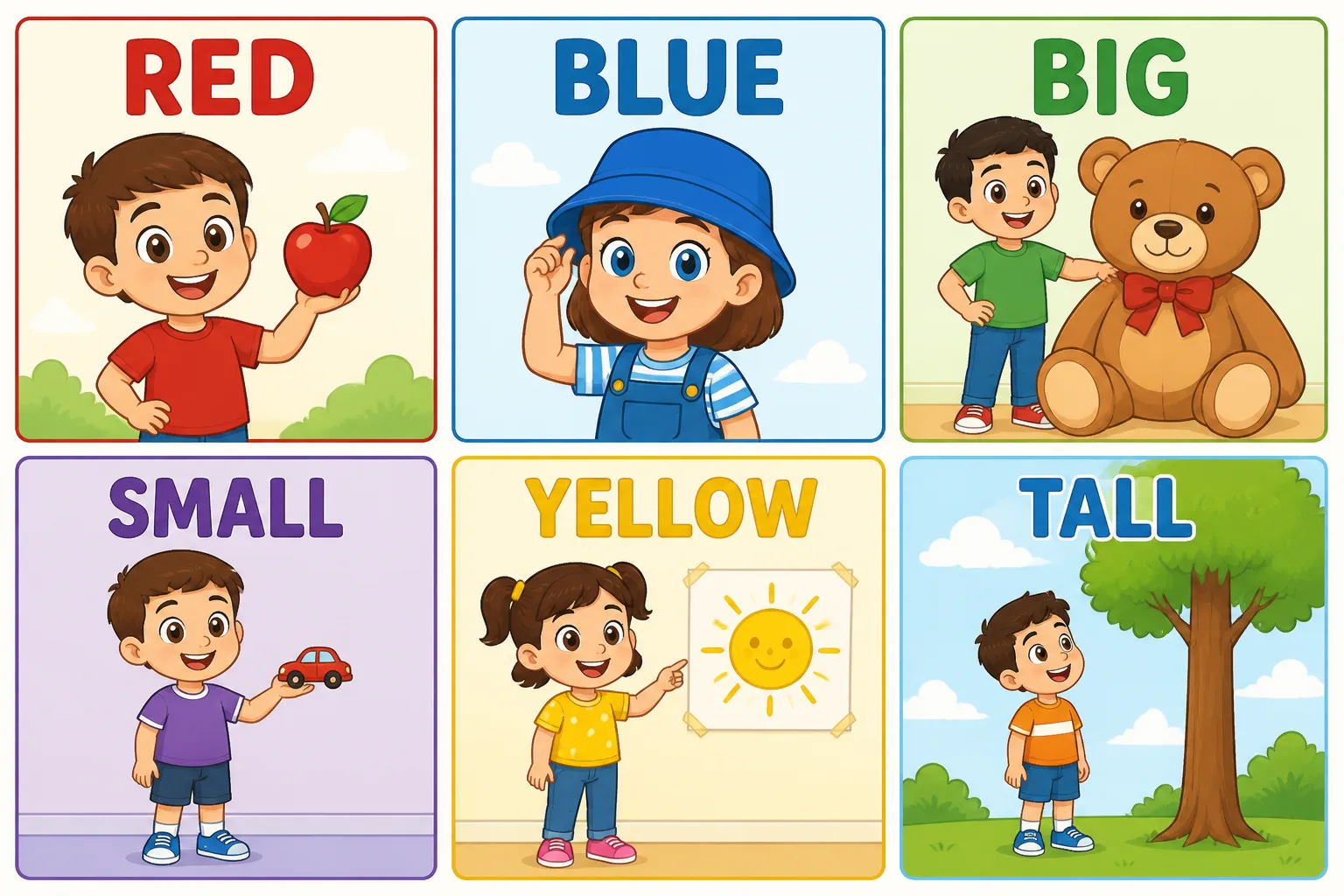

Teaching young children descriptive words like colors and sizes is a fundamental step in building their vocabulary and expressive language skills. This visual language lesson focuses on six practical adjectives: red, blue, yellow, big, small, and tall. Each panel clearly shows the meaning of one word with a friendly cartoon child and a simple object or scene, making it easy for children to understand and use these words in everyday conversation.
Why Teach Colors and Sizes?
Colors and sizes are among the first descriptive words children learn. They help children notice details about the world around them and communicate more clearly. Understanding and using these words supports early literacy and cognitive development by encouraging children to compare, categorize, and describe objects.
How to Use This Visual Language Lesson
Parents and caregivers can use this image to naturally model language during daily routines. For example, while playing or reading, name the colors and sizes of objects you see. Use simple phrases like “Look at the red apple” or “This teddy bear is big.” Encourage your child to point, gesture, or say the words, but don’t pressure them to repeat perfectly. Repetition over time helps learning.
Examples of Describing Words in the Visual
- Red: A child holding a red apple.
- Blue: A child wearing a blue hat.
- Yellow: A child pointing to a yellow sun drawing.
- Big: A child standing next to a big teddy bear.
- Small: A child holding a small toy car.
- Tall: A child standing next to a tall tree.
Supporting Language Growth
Use this lesson alongside activities like sorting toys by color or size, drawing colorful pictures, or describing objects during outings. For children who use AAC or gestures, encourage pointing to the pictures or selecting symbols for these words. This approach supports both receptive and expressive language development.
For more sensory support tips related to clothing comfort or loud events, see our articles on Recognizing and Managing Clothing Discomfort and Preparing for Loud Events.
Try This at Home
Next time you play or read together, point out colors and sizes in the environment. Use simple sentences and give your child time to respond in their way. Remember, every attempt to communicate is a success!
Parent Question: What is your child’s favorite color or something big they like to play with?
Download the images in this article