

New Framework Introduced to Evaluate Autism Support Through a Neurodiversity-Affirming Lens

A new five-principle framework offers a way to evaluate autism support research that respects neurodiversity, focusing on strengths, autonomy, communication, and sensory differences.

Study Explores Narrative Understanding and Moral Reasoning in Greek-Speaking Children with Autism Using Aesop’s Fables

A study using Aesop's fables found that Greek-speaking autistic children may face challenges in understanding others' mental states and moral lessons, especially with complex language.

Experts Advocate for Autistic-Led Approaches to Address Social Anxiety in Autism

Experts highlight the need for autistic-led treatment approaches targeting social anxiety, a common concern in autism, to improve support and outcomes.

New Scale Measures Choice-Making Opportunities Among Autistic Adults
Researchers have developed and validated the AASPIRE-Choices and Decisions Scale to measure choice-making opportunities among autistic adults, highlighting its importance alongside self-determination.

New Insights into Aging Biomarkers in Autism and Related Research Updates
Recent research highlights emerging biomarkers related to aging in autism, offering new perspectives on health and care for autistic adults.

Establishing Ongoing Patient Involvement in Adult Autism Psychiatry and Neurodevelopmental Research: Insights from Sweden’s First Year

A Swedish study reports on the first year of two recurring patient and public involvement structures in adult autism psychiatry and neurodevelopmental research, highlighting successes and challenges in sustaining meaningful engagement.
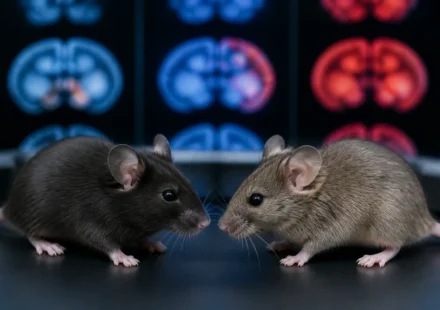
Study Finds Autism-Linked Genetic Variants Cluster into Two Molecular Patterns in Mouse Brains

A study of 17 autism mouse models reveals that diverse genetic variants cluster into two opposing molecular states, suggesting shared biological pathways in autism.

Study Finds Communication Efficiency in Autism Unaffected by Neurotype Matching

A recent study finds that communication efficiency among autistic adults is not improved by pairing with others of the same neurotype, challenging the double empathy theory's predictions.
Distinct Neuron Groups Influence Social Behavior Differently: Insights from Recent Autism Research

New research identifies two neuron groups with opposing effects on sociability, offering insights into social behavior relevant to autism spectrum conditions.

New Framework Proposes Holistic Approach to Autism Healthcare Using Autopoietic Enactivism

A new framework called Enactive Mind Autism (EMA) offers a holistic, environment-inclusive approach to autism healthcare, emphasizing dynamic interactions between individuals and their surroundings.