Skip to content
-
Subscribe to our newsletter & never miss our best posts. Subscribe Now!
Love Beyond Words - autismwords.com Love Beyond Words - autismwords.com Love Beyond Words - autismwords.com

Supporting children with autism through education and care

Love Beyond Words - autismwords.com Love Beyond Words - autismwords.com Love Beyond Words - autismwords.com

Supporting children with autism through education and care

  • Learning & Support
    • Communication Skills
    • Daily Living Skills
    • Emotional Regulation
    • Everyday Challenges
    • Learning Through Play
    • Parent Education & Advocacy
    • Positive Behavior Support
    • Routines & Transitions
    • Social Skills
    • Speech & Language
  • Learning & Support
    • Communication Skills
    • Daily Living Skills
    • Emotional Regulation
    • Everyday Challenges
    • Learning Through Play
    • Parent Education & Advocacy
    • Positive Behavior Support
    • Routines & Transitions
    • Social Skills
    • Speech & Language
Close

Search

  • https://www.facebook.com/
  • https://twitter.com/
  • https://t.me/
  • https://www.instagram.com/
  • https://youtube.com/
Subscribe
Love Beyond Words - autismwords.com Love Beyond Words - autismwords.com Love Beyond Words - autismwords.com

Supporting children with autism through education and care

Love Beyond Words - autismwords.com Love Beyond Words - autismwords.com Love Beyond Words - autismwords.com

Supporting children with autism through education and care

  • Learning & Support
    • Communication Skills
    • Daily Living Skills
    • Emotional Regulation
    • Everyday Challenges
    • Learning Through Play
    • Parent Education & Advocacy
    • Positive Behavior Support
    • Routines & Transitions
    • Social Skills
    • Speech & Language
  • Learning & Support
    • Communication Skills
    • Daily Living Skills
    • Emotional Regulation
    • Everyday Challenges
    • Learning Through Play
    • Parent Education & Advocacy
    • Positive Behavior Support
    • Routines & Transitions
    • Social Skills
    • Speech & Language
Close

Search

  • https://www.facebook.com/
  • https://twitter.com/
  • https://t.me/
  • https://www.instagram.com/
  • https://youtube.com/
Subscribe
Home/Learning & Support/Speech & Language/Preparing for Loud Events: 6 Sensory Support Steps for Children
Preparing for Loud Events: 6 Sensory Support Steps for Children
Speech & Language

Preparing for Loud Events: 6 Sensory Support Steps for Children

By Andyle
August 21, 2026 2 Min Read
0

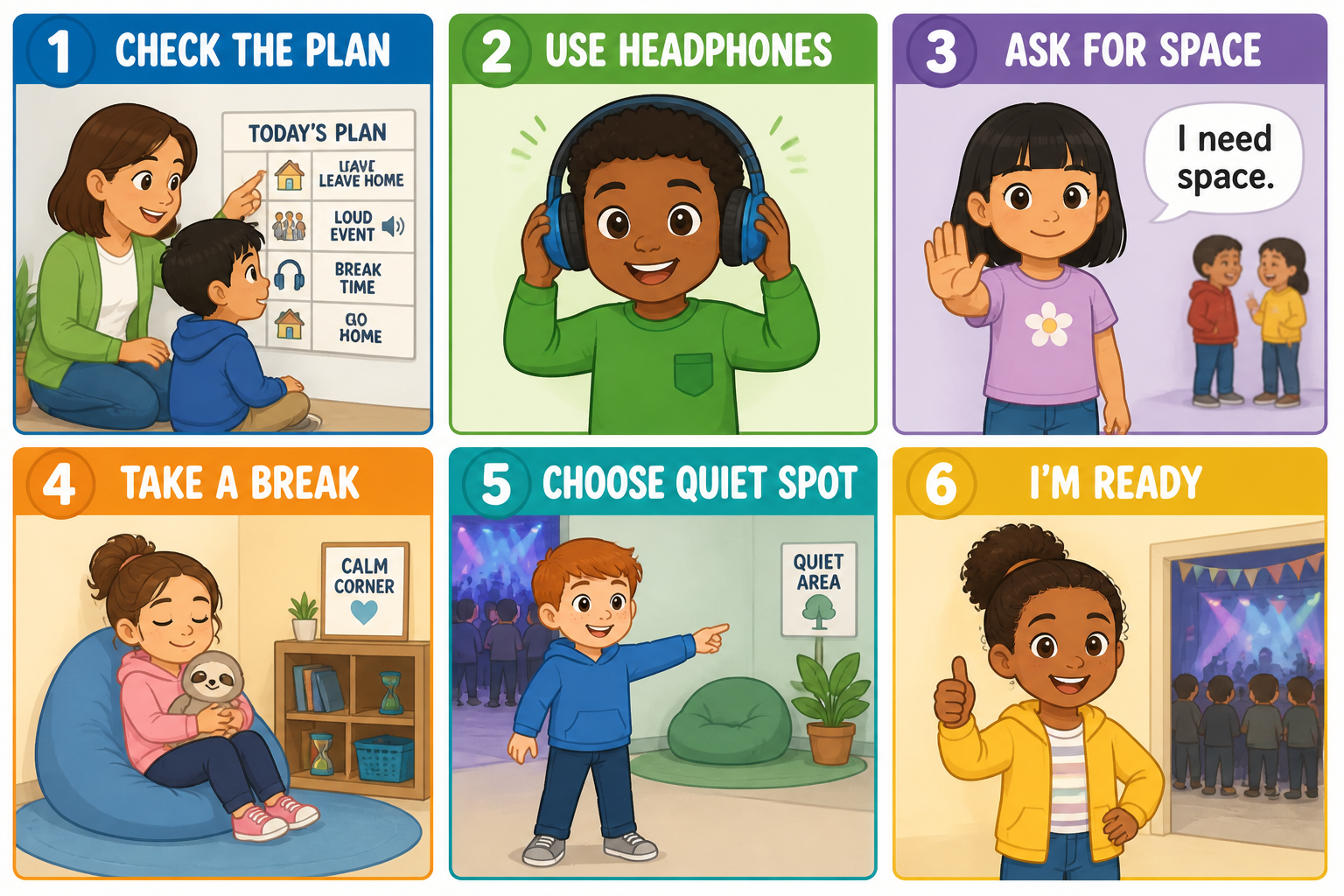
Preparing for loud events can be challenging for children with sensory sensitivities. This visual guide teaches 6 practical sensory support strategies to help children recognize discomfort, communicate their needs, and manage their comfort before, during, and after loud events. These steps promote choice, respect, and self-regulation without forcing exposure to overwhelming sounds.

1. Check the Plan

Before attending a loud event, review the schedule or plan with your child. Use a visual calendar or social story to explain what will happen and when. This helps reduce anxiety by setting clear expectations and preparing the child mentally for the sensory environment.

2. Use Headphones

Noise-cancelling headphones or earmuffs can reduce overwhelming sounds. Encourage your child to wear them during the event to protect their ears and help them feel more comfortable. Allow the child to choose when to put them on or take them off.

3. Ask for Space

Teach your child simple ways to communicate the need for space, such as holding up a hand or using picture cards. Respecting their request for personal space helps prevent sensory overload and supports their emotional regulation.

4. Take a Break

Identify quiet areas or calm corners where your child can take breaks if the noise becomes too much. Taking a break allows them to rest and recover before rejoining the event.

5. Choose a Quiet Spot

Help your child find and choose a quieter spot within the event space, away from crowds or loudspeakers. This gives them control over their sensory environment and can reduce distress.

6. Communicate Readiness

Encourage your child to communicate when they feel ready to return to the event. This can be through speech, gestures, or AAC devices. A simple thumbs-up or “I’m ready” phrase helps caregivers know the child’s comfort level.

By following these steps, parents and caregivers can support children in navigating loud events with respect and understanding. Remember to observe your child’s signals, offer choices, and never force participation.

Parent Tip: Practice these steps at home with role-play before attending an event to build familiarity and confidence.

What strategies have you found helpful when preparing your child for loud events?

Download the images in this article

  • Preparing for Loud Events: 6 Sensory Support Steps for Children
Author

Andyle

Follow Me
Other Articles
Color Sorting Treasure Hunt: A Fun Learning Through Play Activity
Previous

Color Sorting Treasure Hunt: A Fun Learning Through Play Activity

No Comment! Be the first one.

Leave a Reply Cancel reply

Your email address will not be published. Required fields are marked *

  • Preparing for Loud Events: 6 Sensory Support Steps for Children
    Preparing for Loud Events: 6 Sensory Support Steps for Children
    Learn 6 practical sensory support steps to help children prepare for loud events. Teach recognition, communication, breaks, and choices for comfort and confidence.
  • Color Sorting Treasure Hunt: A Fun Learning Through Play Activity
    Color Sorting Treasure Hunt: A Fun Learning Through Play Activity
    Engage your child with a playful color sorting treasure hunt that builds color recognition, matching, and motor skills in six fun, easy steps.
  • Teaching Prepositions: IN, ON, UNDER, NEXT TO
    Teaching Prepositions: IN, ON, UNDER, NEXT TO
    Teach children the prepositions IN, ON, UNDER, and NEXT TO with a fun, clear cartoon poster. Help your child describe where things are with simple language and play.
  • Expressing Discomfort and Asking for Help: 6 Essential Communication Phrases for Young
    Expressing Discomfort and Asking for Help: 6 Essential Communication Phrases for Young Children
    Help your child express discomfort and ask for help with 6 practical communication phrases. Teach "I don't like it," "Help me please," "Too loud," and more for everyday situations.
  • Snack Time Routine Visual Learning Set: 6 Steps to Help Your Child
    Snack Time Routine Visual Learning Set: 6 Steps to Help Your Child Build Independence
    Teach your child the snack time routine with 6 simple steps: wash hands, get snack, open snack, eat, throw trash away, and wipe mouth. Build independence with this visual guide.
Teaching Prepositions: IN, ON, UNDER, NEXT TO Teaching Prepositions: IN, ON, UNDER, NEXT TO
August 21, 2026
Personal Hygiene Visual Learning Set: 6 Steps to Help Your Child Develop Personal Hygiene Visual Learning Set: 6 Steps to Help Your Child Develop Independence
5 views
Teaching Personal Boundaries: 6 Essential Communication Phrases for Young Children Teaching Personal Boundaries: 6 Essential Communication Phrases for Young Children
5 views
Grocery Shopping Routine Visual Learning Set: 6 Steps to Help Your Child Grocery Shopping Routine Visual Learning Set: 6 Steps to Help Your Child Participate Independently
4 views
Cleaning Up After Playtime: 6 Steps to Teach Your Child Responsibility and Cleaning Up After Playtime: 6 Steps to Teach Your Child Responsibility and Independence
3 views
Preparing for Loud Events: 6 Sensory Support Steps for Children Preparing for Loud Events: 6 Sensory Support Steps for Children
1 view
Copyright 2026 — Love Beyond Words - autismwords.com. All rights reserved. Blogsy WordPress Theme