
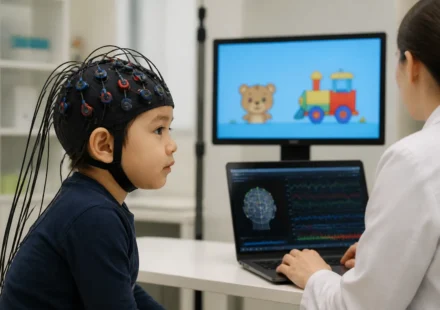
Exploratory Study Uses fNIRS and Machine Learning to Differentiate Autism in Young Children

A study explored using functional near-infrared spectroscopy (fNIRS) with machine learning to classify autism in children aged 2-6, finding modest accuracy and no significant diagnostic advantage beyond age and sex.

New Insights into Neurodevelopmental Disorders: The Role of Perinatal Factors and Genetic Vulnerability

A recent review highlights how genetic susceptibility and perinatal environmental factors interact through epigenetic changes to influence neurodevelopmental disorders like autism and ADHD.
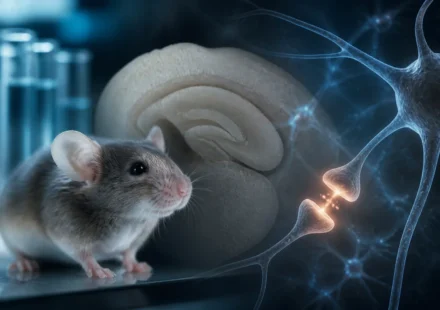
Early D-Aspartate Deficiency Alters Hippocampal Synaptic Plasticity in Juvenile Mice

A recent study shows that embryonic depletion of D-Aspartate in mice leads to enhanced NMDA receptor-dependent synaptic plasticity in the juvenile hippocampus, highlighting its role in brain development.

Study Links Executive Function Challenges to ADHD and Autism Symptoms in Adults with ASD
New research shows that daily executive function difficulties in adults with autism spectrum disorder are linked to ADHD symptoms and core autism traits, highlighting the importance of cognitive assessments in this group.
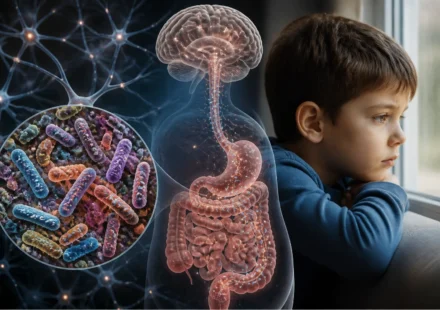
Exploring Gut-Brain Axis Mechanisms in Autism and ADHD: Shared and Distinct Pathways
A recent review highlights how gut microbiome interactions with the brain may influence autism and ADHD, revealing shared and unique biological pathways and the need for further research.

New Deep Learning Framework Enhances Autism Spectrum Disorder Detection Using Brain MRI

A new deep learning framework using advanced MRI image analysis shows promise in improving early detection of Autism Spectrum Disorder, potentially aiding clinical diagnosis.

New Research Expands List of Genes Associated with Autism Spectrum Disorder

New analyses have more than tripled the number of genes associated with autism, offering deeper insights into genetic susceptibility and the complex biology of ASD.
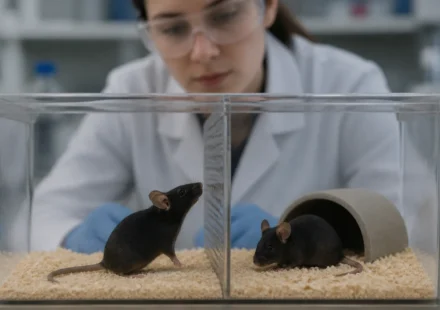
Study Reveals Sex-Specific Behavioral Changes in Mice Lacking α5-Nicotinic Acetylcholine Receptors

A recent study on mice lacking the α5 nicotinic acetylcholine receptor subunit reveals sex-specific behavioral changes relevant to autism and schizophrenia, highlighting differences in anxiety, memory, social interaction, and repetitive behaviors.

Study Finds Visual-Spatial Skills May Be Affected in Children with ADHD and Autistic Traits

A study using the WISC-R found that children with ADHD and autistic traits may have specific difficulties in visual-spatial skills, highlighting the need for targeted assessments.
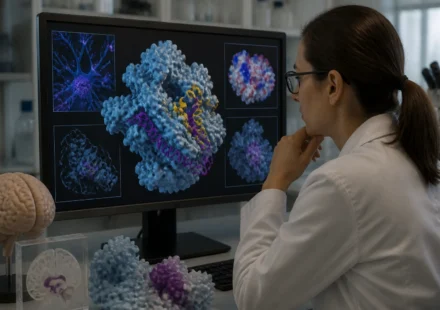
Molecular Modeling Sheds Light on SYNGAP1 Mutations Impacting Brain and Cancer-Related Pathways

A new molecular modeling study explores how SYNGAP1 gene mutations may disrupt SynGAP protein interactions with Ras and Rap GTPases, shedding light on mechanisms behind neurodevelopmental disorders and cancer.