
Helping young children express their feelings is a key part of building strong communication skills and emotional awareness. This post teaches 6 simple, practical phrases children can use to tell others how they feel. Each phrase is paired with a clear everyday situation so children can understand when and why to use it.
Why Teach Feeling Words?
Expressing feelings helps children connect with others, manage emotions, and reduce frustration. For autistic children and those needing extra support, having clear words or signs for feelings can prevent behavior challenges and build self-advocacy. Using speech, gestures, picture cards, or AAC are all valid ways to communicate these messages.
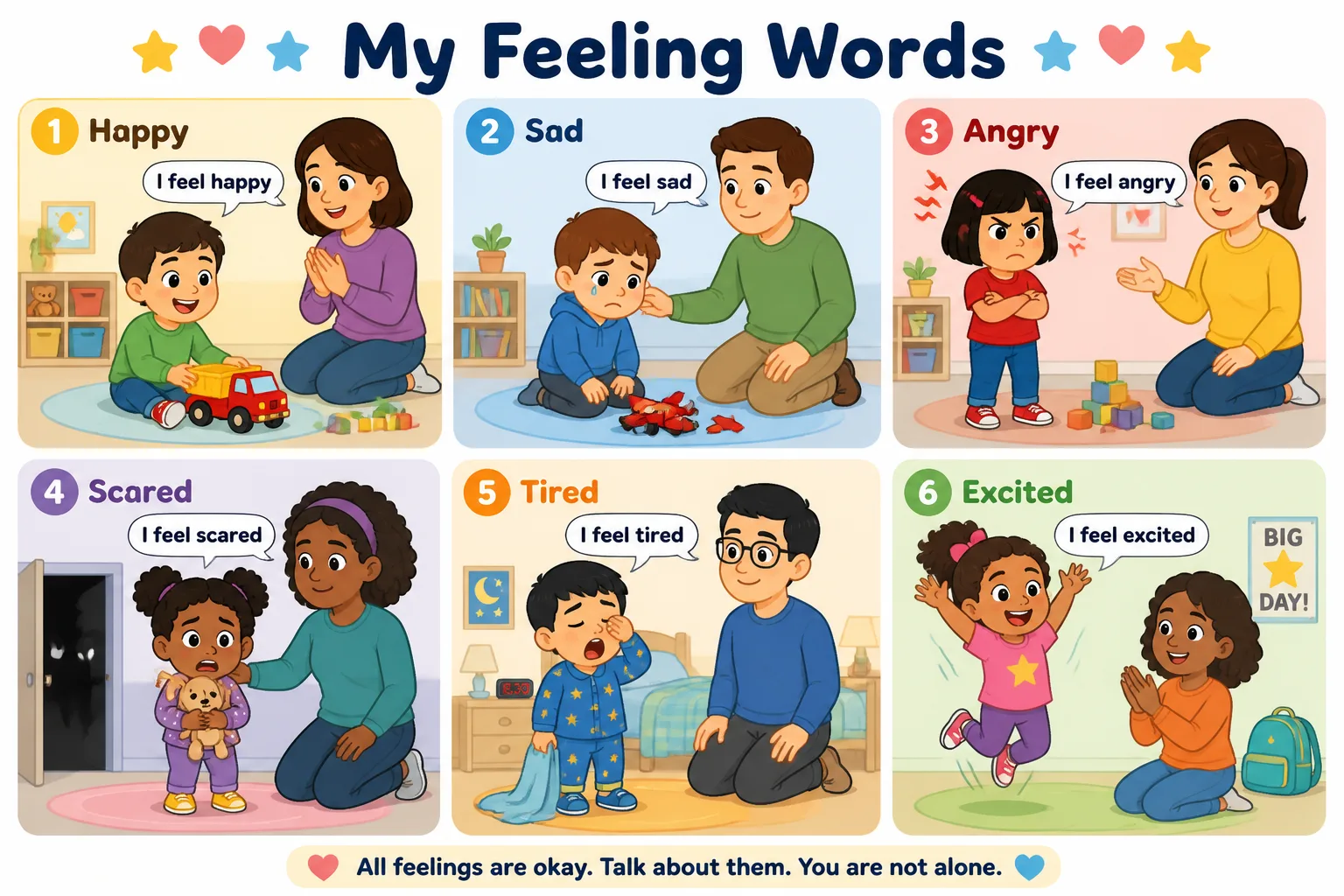
6 Feeling Words to Teach
- I feel happy – When playing or enjoying something fun.
- I feel sad – When something doesn’t go as expected or a favorite toy breaks.
- I feel angry – When upset or frustrated about a situation.
- I feel scared – When something is new, loud, or makes the child uncomfortable.
- I feel tired – When needing rest or a break.
- I feel excited – When looking forward to something or very happy.
How Parents Can Model and Practice
Model these phrases naturally during daily routines. For example, say “I feel happy” when smiling or “I feel tired” when yawning. Use gestures, point to picture cards, or use AAC devices if your child uses them. Give your child time to respond without pressure. Celebrate any attempt to communicate feelings, whether spoken, signed, or gestured.
Recognize and respect your child’s way of sharing feelings. Avoid forcing eye contact or repetition. Instead, create a calm, supportive environment where your child feels safe to express themselves.
Supporting Emotional Communication
Encouraging feeling words is a foundation for more complex communication and social skills. It helps children understand themselves and others better. For more ways to support your child’s communication, check out our posts on words for waiting and taking turns and phrases to set boundaries.
Key Takeaways
- Use simple, clear feeling words paired with everyday situations.
- Respect all communication methods: speech, gestures, signs, AAC.
- Model phrases naturally without pressure or forced repetition.
- Celebrate your child’s efforts to share how they feel.
Download the images in this article