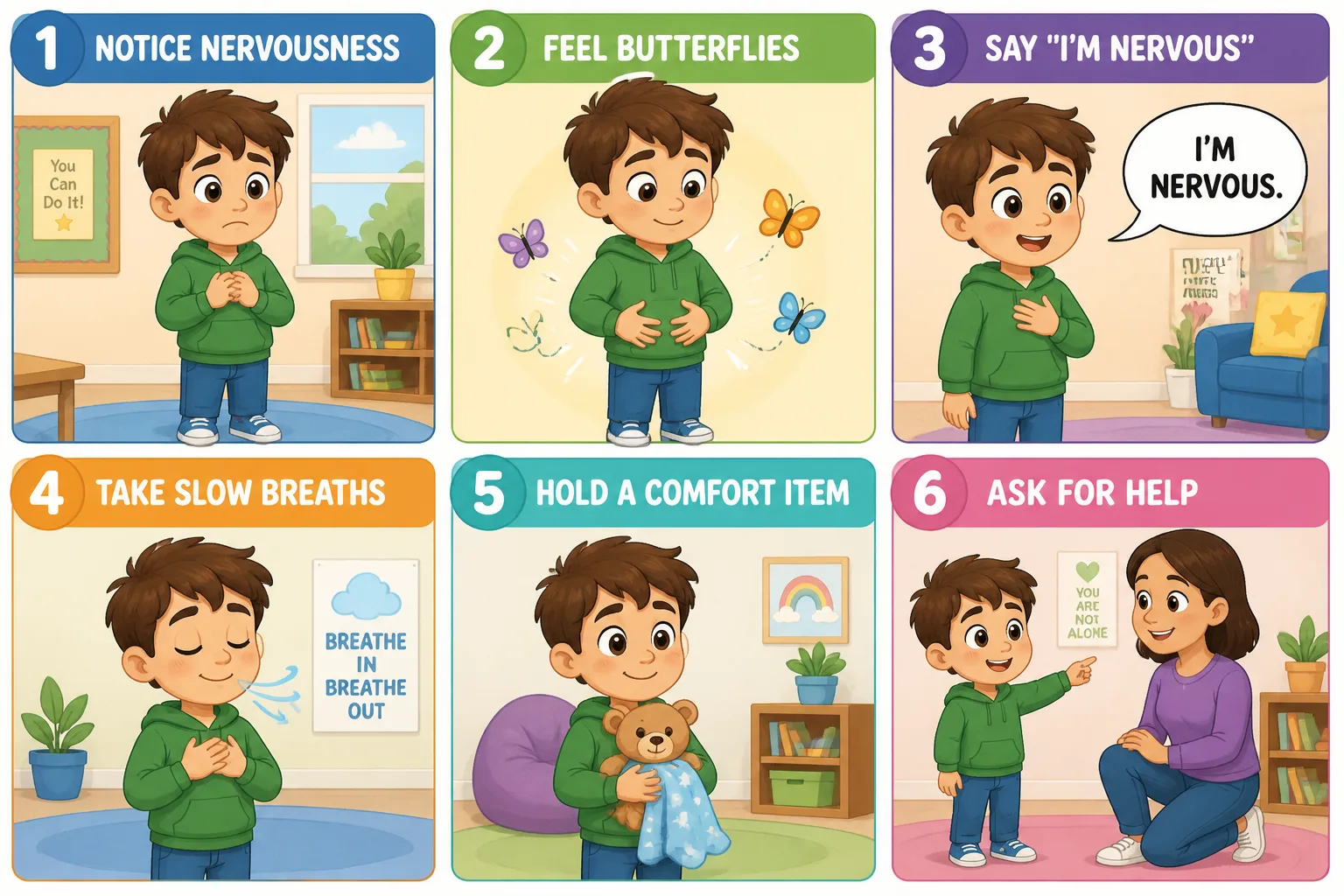
When I’m Nervous: 6 Steps to Recognize and Manage Nervousness in Young Children

Helping young children recognize and manage nervousness is an important part of emotional regulation. When children learn to notice their feelings of nervousness, understand their body signals, communicate their needs, and use safe coping strategies, they can better handle challenging situations like new experiences or social interactions. This article presents a practical visual learning set titled “When I’m Nervous: 6 Steps to Recognize and Manage Nervousness in Young Children.”
1. Notice Nervousness
The first step is helping children become aware of the feeling of nervousness. They may feel unsure, worried, or uneasy. Encouraging children to notice these feelings without judgment is key. Parents can model this by naming their own nervous feelings aloud.
2. Feel Butterflies
Children often experience physical sensations like “butterflies” in their stomach or a fluttery feeling. Teaching children to recognize these body signals helps them connect feelings to physical cues, which is a foundational emotional regulation skill.
3. Say “I’m Nervous”
Encouraging children to communicate their feelings using simple phrases like “I’m nervous” empowers them to express their emotional state. This can be done verbally, with gestures, or using AAC methods depending on the child’s communication style.
4. Take Slow Breaths
Slow, deep breathing is a safe and accessible coping strategy that helps children calm their nervous system. Parents can practice this together with their child, making it a shared calming routine.
5. Hold a Comfort Item
Holding a soft toy, blanket, or other comfort item can provide tangible reassurance and help children feel grounded when nervous. This strategy respects the child’s need for safety and comfort.
6. Ask for Help
Finally, teaching children to ask for help when they feel nervous ensures they know support is available. This might mean asking a trusted adult to stay close or help with a task.
These six steps form a supportive sequence that respects children’s feelings and promotes safe emotional expression. Parents can use this visual learning set to introduce and practice these skills in everyday situations.
How Parents Can Support These Skills
Parents can model naming nervous feelings and noticing body signals without judgment. Offering two simple coping choices, such as slow breathing or holding a comfort item, gives children options without pressure. It’s important to provide processing time and stay calm and supportive. Respecting requests for space and using visuals before potentially nervous situations can help children prepare. Practicing these skills when the child is calm builds confidence for when nervousness arises.
Remember, the goal is safe expression and support, not immediate suppression of nervous feelings.
For related emotional regulation strategies, see our posts on When I’m Mad and When I’m Disappointed.
Parent Engagement Question
What are some ways you help your child notice and express nervous feelings?
Download the images in this article