Helping Young Children Cope with Being Told No: Practical Emotional Support Strategies

Hearing “no” can be one of the most challenging experiences for young children, especially those who are autistic or need extra emotional support. Helping young children cope with being told no involves understanding their feelings, recognizing signs of distress, and providing compassionate support that respects their emotional experience. This article explores practical strategies parents and caregivers can use to guide children through these difficult moments with patience and kindness.
What the Child May Be Experiencing
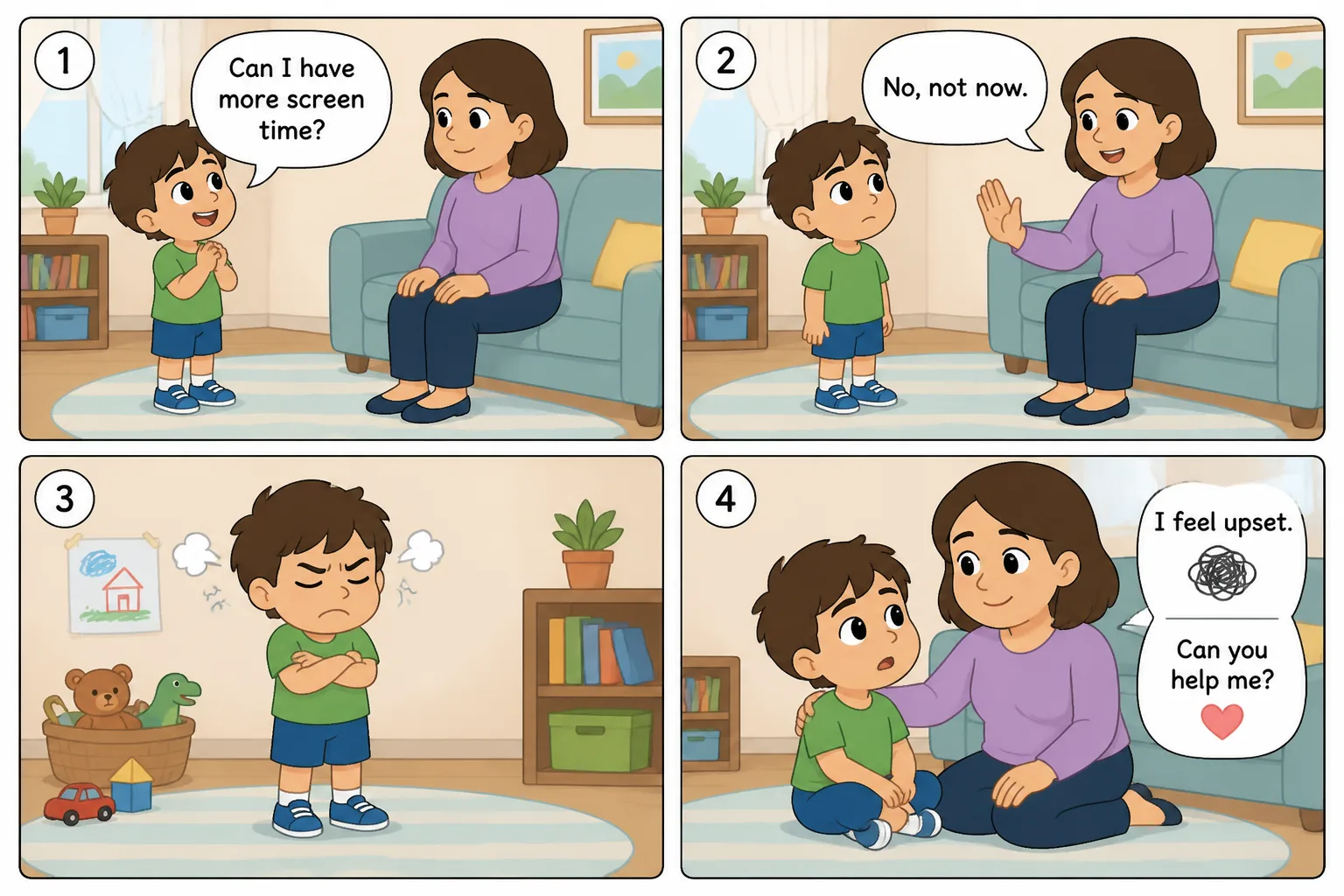
When a child hears “no,” they may feel a range of emotions such as disappointment, frustration, sadness, or confusion. For some children, especially those with sensory sensitivities or difficulty with change, the word “no” can feel overwhelming or even scary. They might not fully understand why they can’t have or do something they want, which can lead to big feelings that are hard to manage.
Common Signs and Possible Triggers
Adults might notice signs like:
- Facial expressions showing upset or confusion
- Body language such as crossing arms, turning away, or stomping feet
- Vocal protests, crying, or silence
- Increased physical activity or withdrawal
Triggers can include being told no unexpectedly, during a transition, or when the child is already tired or overwhelmed. Understanding these triggers helps adults anticipate and prepare to support the child.
Practical Support Strategies
1. Stay Calm and Present: Your calm presence helps the child feel safe. Take deep breaths and keep your voice gentle.
2. Use Clear, Simple Language: Explain the reason for “no” in a way the child can understand, e.g., “We can’t play outside now because it’s raining.”
3. Validate Feelings: Acknowledge the child’s emotions without judgment. Say things like, “I see you’re upset because you want to play outside.”
4. Offer Choices or Alternatives: When possible, give the child options to regain a sense of control, e.g., “Would you like to read a book or play with blocks instead?”
5. Use Visual Supports: Visual schedules or “no” cards can help children understand and prepare for limits.
6. Provide Space and Time: Some children need a quiet moment to calm down. Offer a safe space without forcing interaction.
Helpful Things Adults Can Say or Do
- “I’m here with you.”
- “It’s okay to feel upset.”
- “Can you show me how you feel?”
- “Let’s take some slow breaths together.”
- “You can ask me for help when you’re ready.”
These phrases support emotional expression and co-regulation without pressure.
How to Practice Skills During Calm Moments
Practice naming feelings and discussing the word “no” when the child is calm. Use stories, role-play, or social stories to prepare for times when limits are set. Reinforce positive coping by praising efforts to communicate feelings or accept limits.
What Adults Should Avoid Forcing
Avoid demanding immediate compliance, forcing eye contact, or telling the child to “calm down” or “stop crying.” These approaches can increase anxiety and reduce trust. Instead, focus on understanding and gentle support.
Individual Differences
Every child is unique. Some may need more visual cues, others more physical comfort, and some may prefer quiet space. Tailor your approach to the child’s preferences and needs, and consult with professionals if needed.
Key Takeaway
Helping young children cope with being told no is about respecting their feelings, offering clear communication, and providing supportive presence. With patience and understanding, children learn that limits are safe and manageable, and that their emotions are valid.
How do you currently support your child when they hear “no,” and what has helped them feel understood?
For more strategies on helping children manage difficult feelings, see our articles on Helping Young Children Cope with Disappointment and Helping Young Children Cope with Feeling Left Out.
Download the images in this article