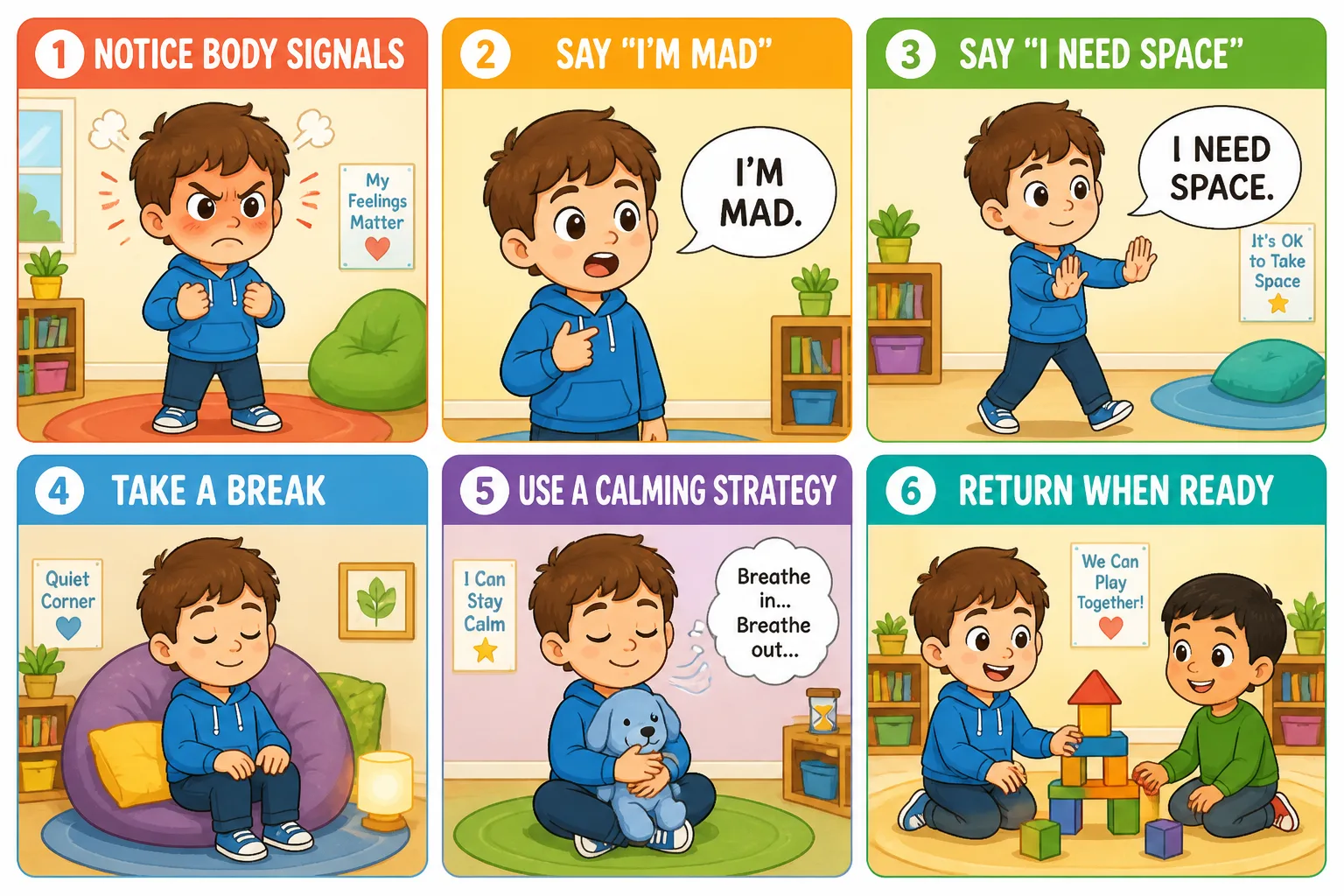

Helping young children recognize and manage anger is an important emotional regulation skill. When children learn to notice their feelings and body signals, communicate their needs, and choose safe ways to cope, they build confidence and reduce distress. This visual poster, “When I’m Mad,” teaches 6 clear steps to guide children through understanding and managing anger safely and respectfully.
1. Notice Body Signals
Children often experience physical signs when they feel mad, such as clenched fists, a hot face, or a fast heartbeat. Teaching children to notice these signals helps them recognize anger early before it escalates.
2. Say “I’m Mad”
Naming the feeling is a powerful communication tool. Children can use words, signs, or AAC to say “I’m mad,” helping them express their emotions clearly and safely.
3. Say “I Need Space”
Encouraging children to communicate their need for space or a break helps prevent escalation and teaches self-advocacy. This can be done verbally, with gestures, or using visual supports.
4. Take a Break
A quiet break in a comfortable space allows children to calm their bodies and minds. This step respects the child’s need for time without forcing immediate calming or emotional suppression.
5. Use a Calming Strategy
Simple coping strategies like squeezing a soft toy, taking deep breaths, or drinking water can help children regulate their emotions. Offering choices empowers children to find what works best for them.
6. Return When Ready
Children should return to activities when they feel ready, ensuring they have processed their feelings safely. This step supports gradual re-engagement and confidence.
Parents can support these skills by modeling calm communication, naming emotions without judgment, and offering gentle guidance. Practicing these steps during calm moments and respecting the child’s pace fosters trust and emotional growth.
For more ways to support emotional regulation in young children, see our posts on managing disappointment and helping children manage worry.
Parent question: What are some ways your child lets you know when they feel mad, and how do you help them manage it?
Download the images in this article