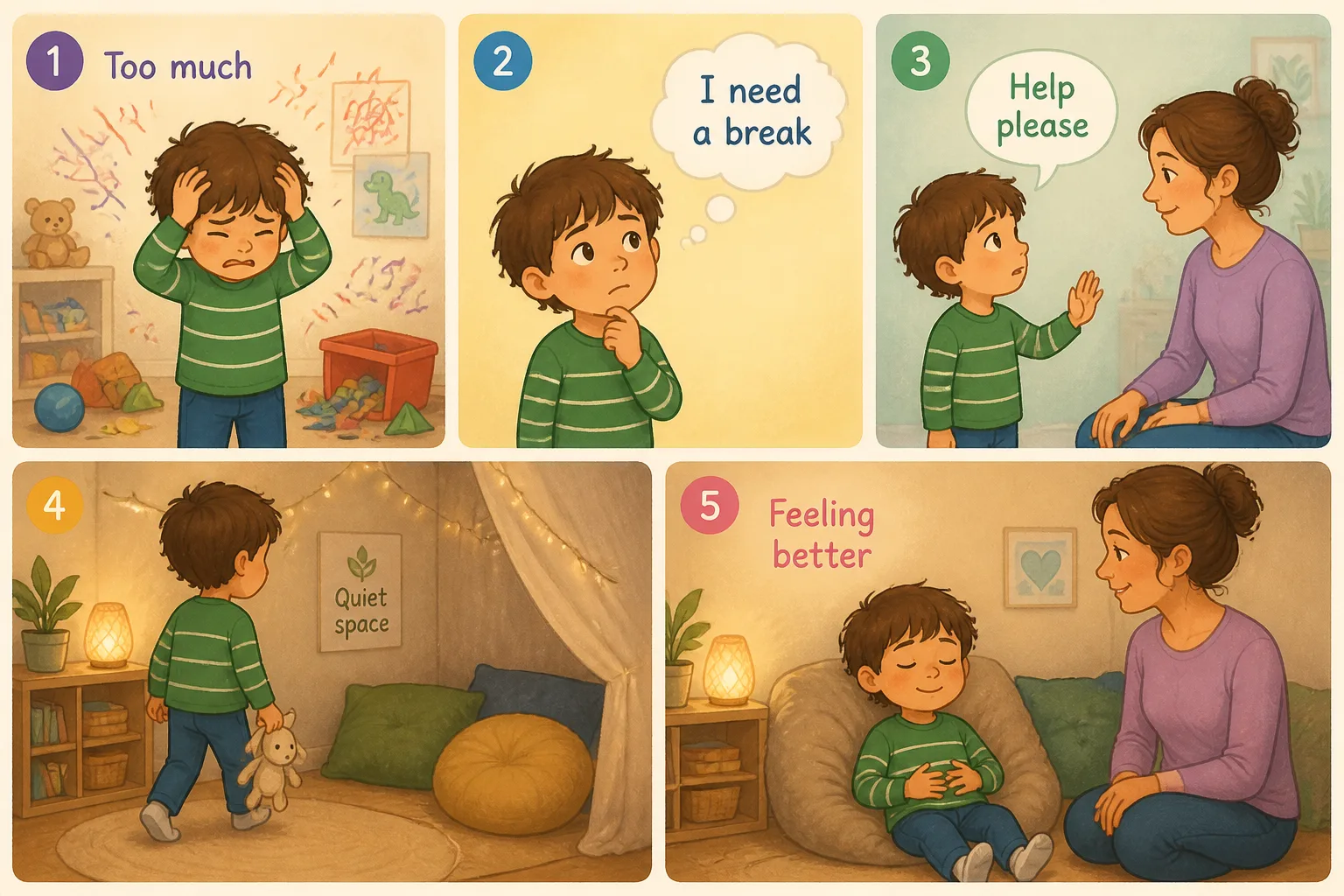

Young children, including those who are autistic or need additional emotional support, often experience big feelings that can feel overwhelming. Learning to recognize when they need a break and how to ask for one is a vital emotional regulation skill. “I Need a Break” helps children understand their emotions, notice body signals, communicate their needs, and recover with adult support.
What the Child May Be Experiencing
Children may feel overwhelmed by noise, bright lights, too many people, or complex tasks. These feelings can build up quickly, leading to anxiety, frustration, or sensory overload. For autistic children, sensory sensitivities often make these moments more intense.
Common Signs and Possible Triggers
Adults might notice signs like increased restlessness, covering ears, avoiding eye contact, fidgeting, or withdrawing. Triggers can include loud environments, crowded spaces, unexpected changes, or demanding tasks. Recognizing these early signs helps adults support children before emotions escalate.
Practical Support Strategies
- Teach children to notice body signals: Help them recognize signs like a fast heartbeat, tense muscles, or feeling hot.
- Use simple language or visuals: Introduce phrases like “I need a break” or use picture cards to communicate the need for space.
- Create a quiet, safe space: Designate a calm corner with soft cushions, headphones, or favorite calming items.
- Offer choices: Let the child decide if they want to sit quietly, listen to music, or have a drink.
- Model asking for a break: Adults can show how to say “I need a break” to normalize this behavior.
Helpful Things Adults Can Say or Do
Adults play a key role in co-regulation. Helpful phrases include:
- “I see you’re feeling overwhelmed. Would you like to take a break?”
- “You can go to your quiet space whenever you need.”
- “I’m here if you want company or help.”
- “It’s okay to take your time to feel better.”
Adults should stay calm, reduce demands, and avoid forcing interaction or compliance during these moments.
How to Practice Skills During Calm Moments
Practice recognizing feelings and asking for breaks when the child is calm. Use role-play, stories, or visuals to reinforce the idea that breaks are a positive tool for feeling better. Celebrate when the child successfully asks for a break.
What Adults Should Avoid Forcing
Avoid telling children to “just calm down” or forcing them to stay in overwhelming situations. Don’t pressure them to explain feelings before they’re ready or demand eye contact. Respect their pace and communication style.
Individual Differences
Each child is unique. Some may use words, others gestures or visuals. Sensory needs and triggers vary widely. Tailor support to the child’s preferences and needs, and be patient as skills develop over time.
Key Takeaway
Helping children recognize when they need a break and supporting them to ask for it empowers them to manage big feelings safely and respectfully. This skill builds emotional resilience and fosters trust between child and adult.
How does your child show they need a break, and what helps them feel safe when they take one?
For more strategies on supporting children through difficult feelings, see our articles on Helping Young Children Cope with Being Told No and Helping Young Children Cope with Disappointment.
Download the images in this article