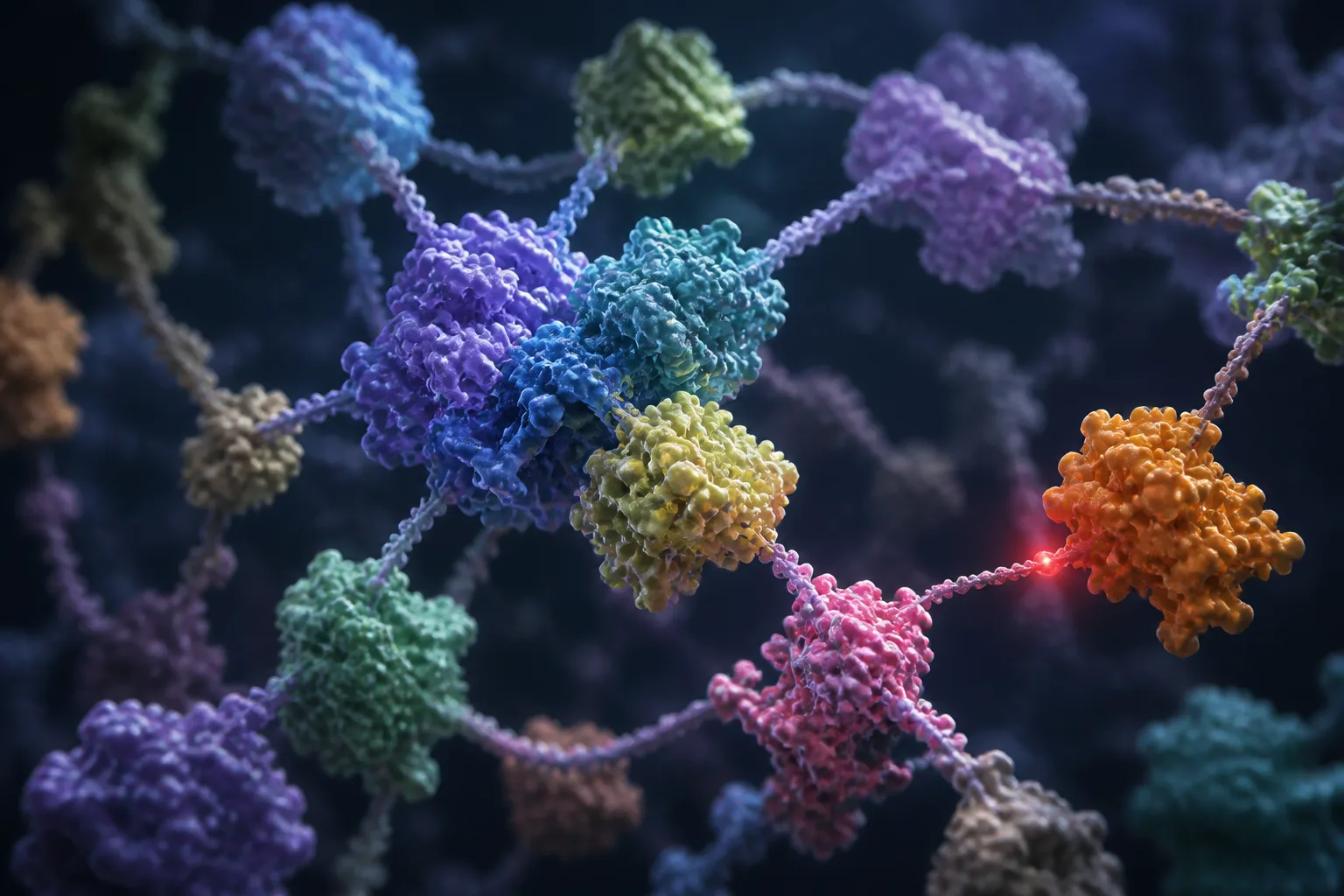

New Insights into Autism-Linked Protein Interactions
Recent research has shed light on how genetic variants associated with autism spectrum disorder (ASD) may affect the organization of protein networks within cells. Scientists have found that proteins linked to autism tend to group together in specific patterns that were not previously understood. Variations in these proteins can disrupt these clusters, potentially influencing the biological pathways involved in ASD.
Key Findings on Protein Clustering
The study identified that proteins implicated in autism do not act in isolation but form interconnected networks. These networks represent clusters of proteins that interact closely, suggesting coordinated roles in neural development and function. Importantly, certain genetic variants—changes in the protein-coding regions—appear to rewire these networks, altering how proteins associate with each other.
Implications for Understanding Autism
By revealing how autism-linked variants can change protein interactions, this research provides a new perspective on the molecular mechanisms underlying ASD. Understanding these disrupted networks may help clarify how genetic differences contribute to the diverse manifestations of autism and could guide future therapeutic strategies.
Considerations and Future Directions
While these findings offer valuable insights, it is important to note that the relationship between genetic variants and protein network changes is complex. Further studies are needed to determine how these alterations translate to functional changes in brain development and behavior. Additionally, the diversity of autism presentations means that protein network disruptions may vary widely among individuals.
For more detailed information, see the original report at The Transmitter.
Download the images in this article