
Messy hands can be a challenging sensory experience for many young children, especially those with sensory sensitivities. Recognizing discomfort with messy hands and knowing how to communicate and manage it helps children feel safer and more in control during play and learning activities. This article presents 6 practical sensory support steps to help children recognize and manage messy hands comfortably and respectfully.
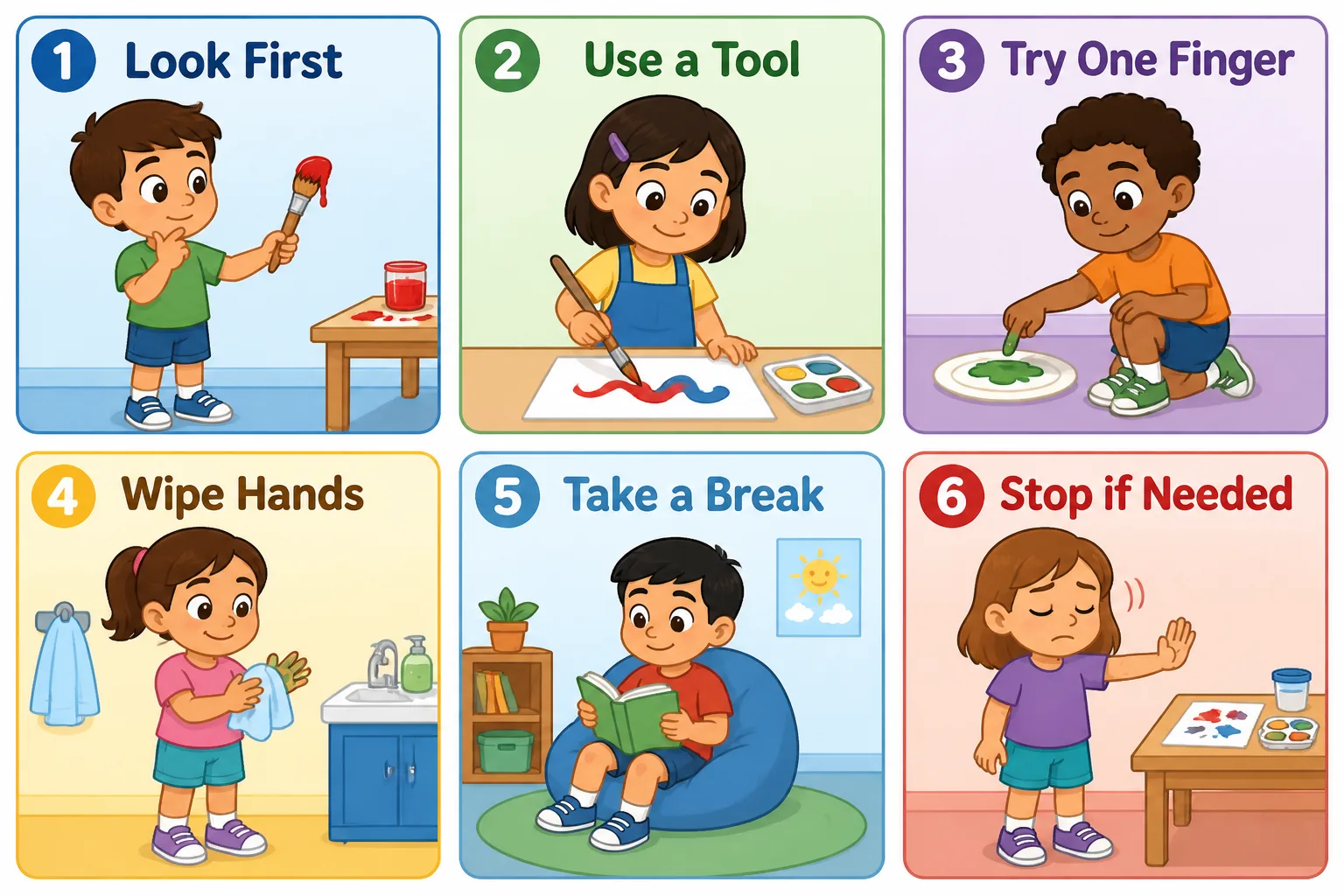
1. Look First
Before touching something messy like paint or glue, encourage children to look carefully at it. This helps them prepare mentally for the sensation and decide if they feel ready to touch. Visual inspection reduces surprises and sensory overload.
2. Use a Tool
Offering a tool such as a paintbrush or sponge gives children an option to explore messy materials without direct hand contact. This reduces tactile discomfort and builds confidence.
3. Try One Finger
Encourage children to try touching the messy material with just one finger first. This gradual exposure helps them gauge their comfort level and decide if they want to continue or stop.
4. Wipe Hands
Provide easy access to towels or wipes so children can quickly clean their hands if the sensation becomes uncomfortable. This supports autonomy and sensory regulation.
5. Take a Break
If the child feels overwhelmed, allow them to take a break away from the messy activity. A quiet space or calm corner can help them regulate sensory input and return when ready.
6. Stop if Needed
Respect the child’s communication if they indicate they want to stop, whether by speech, gesture, or AAC. Never force continued exposure to uncomfortable sensations.
Parents and caregivers can support these steps by observing the child’s signals, offering choices, and modeling simple phrases like “I don’t like this” or “Break please.” Preparing children before messy activities and allowing them to control their participation fosters positive sensory experiences and emotional safety.
For more sensory support ideas, see our teaching emotions with simple feeling words and sensory-friendly car rides articles.
How do you help your child feel comfortable with messy hands during playtime?
Download the images in this article