Supporting Children Sensitive to Touch and Personal Space: Practical Sensory Strategies

Many children, including those with autism or sensory processing differences, experience sensitivity to touch and personal space. This can make everyday interactions like hugs, hand-holding, or crowded environments uncomfortable or overwhelming. Understanding this sensory challenge helps parents and caregivers support children respectfully and effectively.
What the Child May Be Experiencing
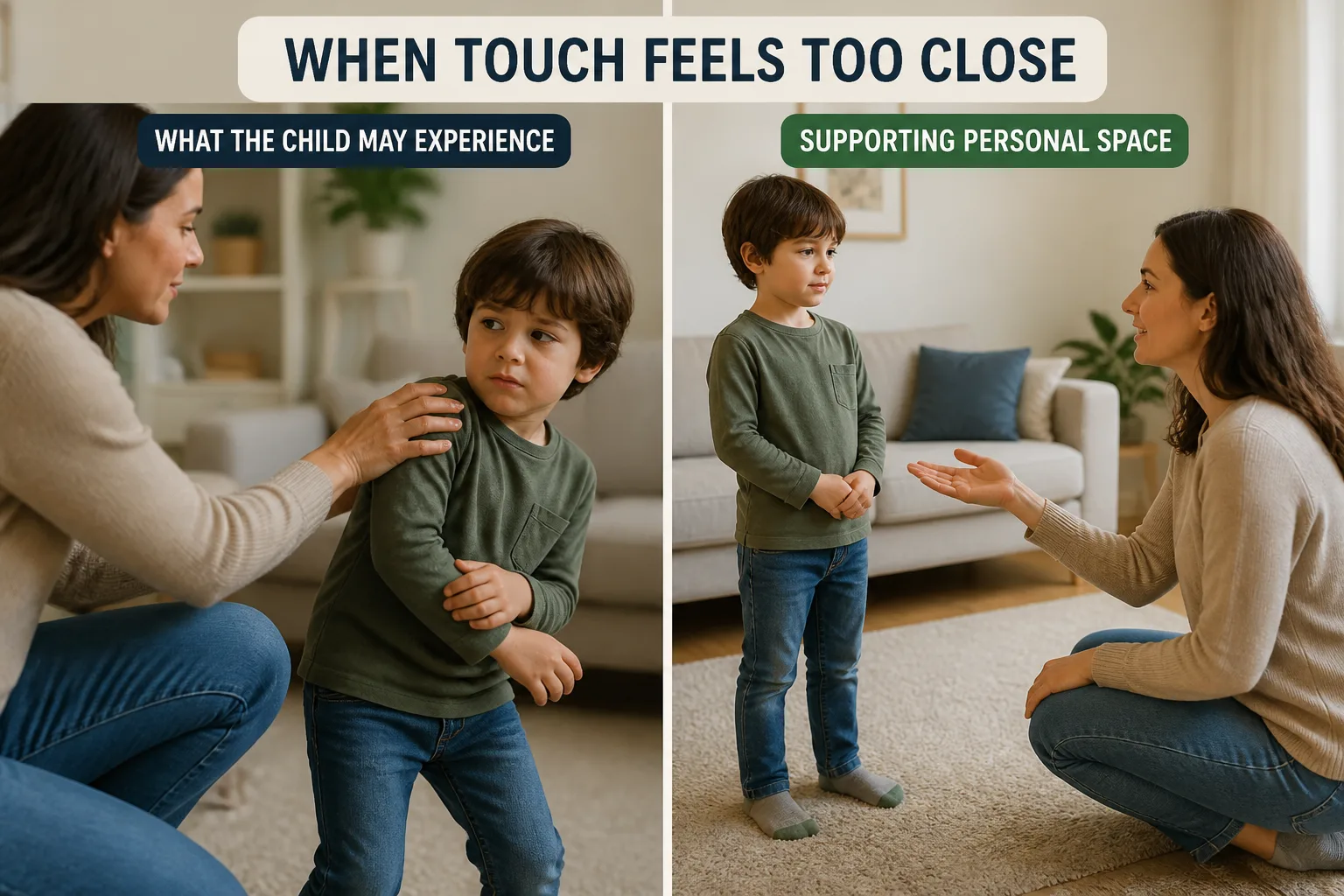
Touch sensitivity, also called tactile defensiveness, means that certain types of touch feel unpleasant, painful, or overwhelming to a child. This can include light touches, unexpected contact, or even proximity of others in personal space. The child might feel a heightened awareness of touch sensations or a strong need to control when and how they are touched.
Personal space sensitivity relates to how close others are physically. Some children need more distance to feel safe and comfortable. Being crowded or approached suddenly can trigger anxiety or discomfort.
Signs Parents May Notice
- The child pulls away or moves back when touched or approached.
- They may stiffen, freeze, or show subtle distress when hugged or touched unexpectedly.
- The child avoids certain types of touch, like tickling or light pats.
- They prefer to keep physical distance from others, even family members.
- Resisting hand-holding or other common social touch gestures.
- Using words, gestures, or AAC to say “stop,” “no,” or “too close.”
Why It May Happen
The tactile system processes touch sensations and helps us understand our body in space. Some children have heightened sensitivity in this system, meaning even gentle touches can feel intense or unpleasant. This can be due to neurological differences common in autism or other sensory processing conditions.
Personal space preferences are also tied to the vestibular and proprioceptive systems, which help regulate body awareness and comfort in social settings. Environmental factors like noisy, crowded spaces can increase sensory overload and make personal space needs more pronounced.
Practical Support Strategies
- Ask for permission before touching: Use simple language or visual cues to ask if the child wants a hug or touch. Respect their answer.
- Offer choices: Let the child decide if and when to hold hands, hug, or be close.
- Use gentle, predictable touch: If touch is needed (e.g., during dressing), use firm but gentle pressure and explain what you are doing.
- Respect personal space: Give the child room to move away or keep distance. Avoid crowding or sudden approaches.
- Create safe spaces: Provide quiet corners or areas where the child can retreat if feeling overwhelmed.
- Model calm body language: Approach slowly, at eye level, and with open hands to reduce anxiety.
- Use visual supports: Visual schedules or social stories can prepare the child for expected touch or social interactions.
How to Practice or Prepare
During calm moments, practice asking for permission to touch using games or routines. For example, play “high five” or “hand shake” games where the child controls when to engage. Use social stories to explain personal space and touch boundaries.
Prepare the child before entering crowded or busy environments by discussing what to expect and where safe spaces are. Encourage the child to use words or signals if they need more space.
What Not to Force
Avoid forcing hugs, hand-holding, or physical contact if the child resists. This can increase distress and damage trust. Never shame or punish a child for needing space or saying “no” to touch.
Do not insist on physical closeness as a social norm if it causes sensory discomfort. Instead, respect the child’s sensory communication.
Individual Differences
Every child’s sensory preferences and tolerance for touch and personal space vary widely. Some children may enjoy certain types of touch but not others. Some may need more personal space only in specific situations.
Observe your child’s unique responses and adjust support accordingly. What works for one child may not work for another.
When Extra Support May Help
If touch or personal space sensitivities significantly impact daily life, social interactions, or cause distress, consider consulting an occupational therapist with sensory integration expertise. They can provide individualized strategies and support.
Speech-language professionals, pediatricians, or school teams can also help with communication supports and environmental adaptations.
Key Takeaway
Sensitivity to touch and personal space is a common sensory experience for many children. Respecting a child’s boundaries, asking permission, offering choices, and creating safe environments help children feel understood and supported. Remember, sensory communication is real communication — honoring it builds trust and comfort.
How does your child let you know when they need more personal space or prefer not to be touched?
For related sensory support, you might also find helpful strategies in our article on Supporting Children Sensitive to Loud Household Sounds or Following Two-Step Directions.
Download the images in this article