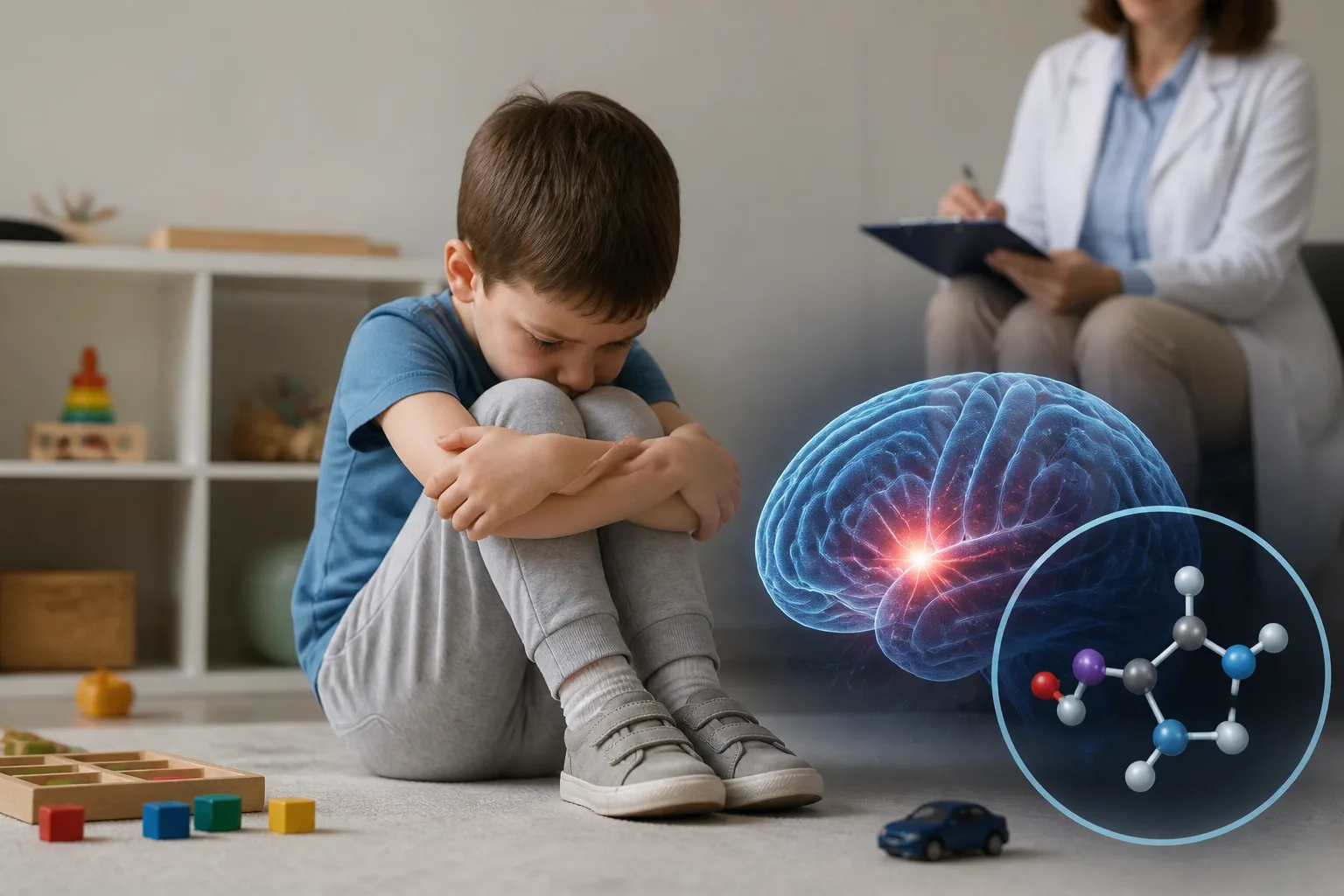
Study Links TMAO Miscompartmentalization to Autism Spectrum Disorder and Explores Potential Treatment

New Insights into Autism Spectrum Disorder and Tryptophan Metabolism
Autism spectrum disorder (ASD) is a complex neurodevelopmental condition characterized by diverse symptoms and underlying causes. Recent research has highlighted that, despite its heterogeneity, ASD shows a consistent pattern when examining tryptophan metabolism, a key biochemical pathway.
Role of TMAO in ASD
A study published in iScience on August 24, 2026, investigated the involvement of trimethylamine N-oxide (TMAO), a chemical chaperone produced by gut microbiota, in ASD. Researchers found that individuals with ASD exhibited a significant reduction of intracellular TMAO. This miscompartmentalization of TMAO—meaning its distribution within cells was altered—may be linked to disruptions in fluid and electrolyte balance.
Impact on Tryptophan Metabolism
The altered TMAO levels appeared to underlie many of the metabolic irregularities in tryptophan pathways previously observed in ASD. Tryptophan metabolism is important for brain function and development, and its disturbance may contribute to ASD symptoms.
Experimental Treatment in Animal Models
Using a rat model designed to mimic both the biochemical and behavioral characteristics of human ASD, the researchers tested the effects of urea administration. Urea is a compound already approved for clinical use in other contexts. Treatment with urea not only normalized biochemical markers related to TMAO and tryptophan metabolism but also led to broad improvements in ASD-like behaviors in the rats.
Implications for Future Therapies
While the study emphasizes that TMAO miscompartmentalization is not a direct cause of ASD, it suggests this mechanism plays a significant role in its pathophysiology. The findings open the possibility that urea or similar interventions could offer new therapeutic avenues for managing ASD symptoms. However, the authors stress that further research is necessary to evaluate the safety and effectiveness of such treatments in humans.
Considerations and Next Steps
This research provides a promising direction but remains preliminary. The complexity of ASD means that no single factor explains all cases, and treatments will likely need to be personalized. Additionally, the translation from animal models to human patients requires careful clinical trials to ensure any new therapies are both safe and beneficial.
For more detailed information, the original study can be accessed here.
Download the images in this article