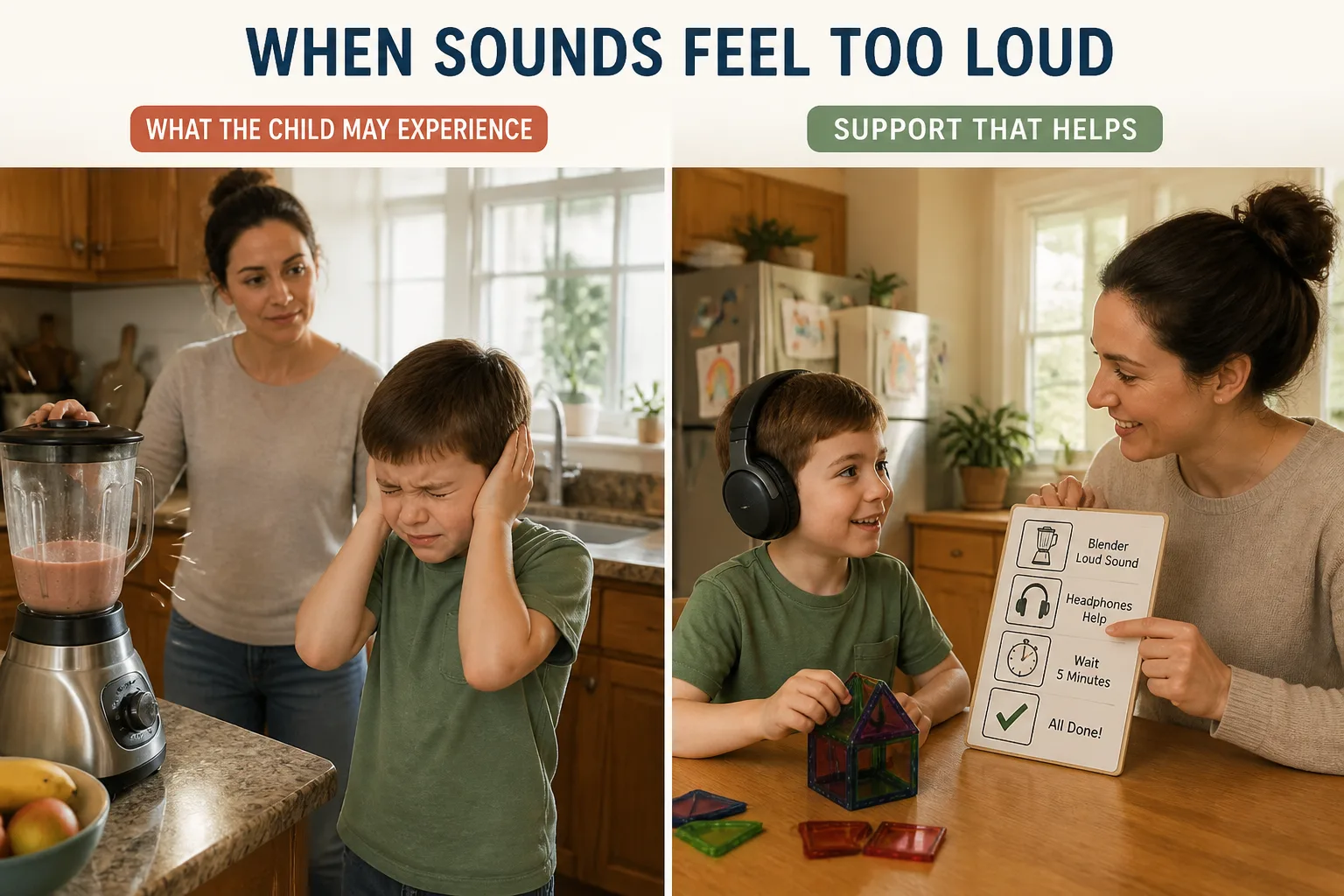
Supporting Children Sensitive to Loud Household Sounds: Practical Sensory Strategies

Many young children, including those on the autism spectrum or with sensory processing differences, can find everyday loud household sounds overwhelming. Noises like blenders, vacuum cleaners, or hair dryers may feel too intense or even painful, causing distress or avoidance. Understanding what your child may be experiencing and learning practical ways to support them can make daily life more comfortable and predictable.
What Your Child May Be Experiencing
Loud sounds can be perceived as startling, painful, or overwhelming to children with sound sensitivity. Their auditory system might process noises more intensely, making common household sounds feel intrusive or threatening. This sensory overload can trigger anxiety, discomfort, or a need to escape the noisy environment.
Signs Parents May Notice
- Covering ears or pressing hands against the head
- Squinting or grimacing when a loud appliance is used
- Trying to move away or hide from the noise source
- Increased irritability, crying, or meltdowns during noisy activities
- Refusing to enter rooms where loud sounds occur
Why Loud Sounds Can Be Challenging
The auditory sensory system helps us detect and interpret sounds, but for some children, it can be hypersensitive. This means their brain may amplify sounds or have difficulty filtering background noise. Environmental factors like sudden, unpredictable noises or high-pitched sounds can increase discomfort. Additionally, a lack of control or warning about upcoming noises can heighten anxiety.
Practical Support Strategies
- Provide advance warning: Use verbal cues or visual schedules to let your child know when a loud sound will happen. For example, “In five minutes, we will use the blender.”
- Use noise-cancelling headphones or ear defenders: These can reduce the volume and intensity of sounds, helping your child stay calm during noisy activities.
- Create a quiet retreat: Designate a calm, low-sensory space your child can go to if sounds become overwhelming.
- Offer choices: Allow your child to decide if they want to be in the room during noisy tasks or prefer to be elsewhere.
- Gradual exposure: When appropriate, slowly introduce louder sounds in a controlled, supportive way to help your child build tolerance over time.
- Use visual supports: Picture schedules, timers, or social stories can prepare your child for noisy events and reduce anxiety.
- Minimize background noise: Turn off other appliances or TV to reduce overall noise levels when using a loud device.
How to Practice or Prepare During Calm Moments
Introduce noise-cancelling headphones during quiet times so your child becomes comfortable wearing them. Practice using visual schedules or social stories about noisy activities when your child is relaxed. Role-play scenarios where you give advance warnings and offer choices. These calm preparations can help your child feel more in control when loud sounds occur.
What Not to Force
Avoid forcing your child to stay in noisy environments if they are clearly distressed. Do not insist they tolerate sounds without support or pressure them to “just get used to it.” Avoid shaming or punishing reactions to loud noises, as this can increase anxiety and reduce trust.
Individual Differences Matter
Every child’s sensory needs are unique. Some may tolerate certain sounds better than others or prefer specific types of headphones. Observing your child’s reactions and preferences helps tailor support effectively.
When Extra Support May Help
If your child’s sound sensitivity significantly impacts daily life, consider consulting an occupational therapist specializing in sensory integration. They can provide personalized strategies and support. Pediatricians or speech-language professionals can also offer guidance if sound sensitivity affects communication or behavior.
Key Takeaway
Supporting a child sensitive to loud household sounds means recognizing their sensory experience and providing respectful accommodations like advance warnings, noise-cancelling headphones, and quiet spaces. These strategies help children feel safe, understood, and more comfortable in everyday environments.
How does your child respond to loud household sounds, and what strategies have you found helpful?
For additional communication support, you might find it useful to explore following two-step directions or learning words for clothing, which can aid in preparing your child for sensory experiences involving sounds and related routines.
Download the images in this article