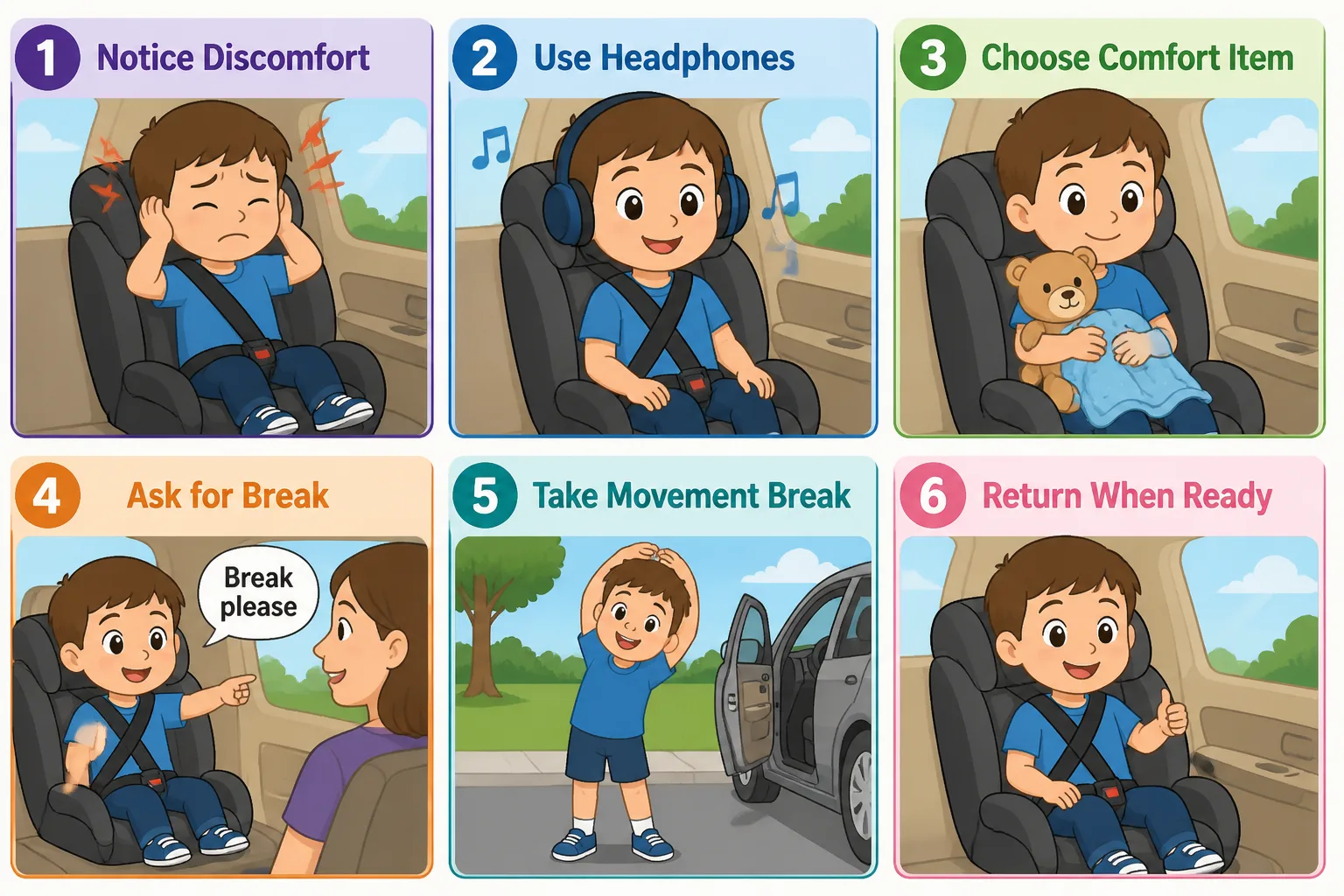

Car rides can be a challenging sensory experience for many children, especially those with sensory sensitivities. The sounds of the engine, vibrations, confined space, and changing scenery can sometimes cause discomfort or overwhelm. This visual guide offers 6 practical sensory support steps to help children recognize discomfort during car rides, communicate their needs, choose helpful supports, and take breaks when needed to feel more comfortable and safe.
1. Notice Discomfort
Encourage children to recognize signs of sensory discomfort such as covering ears, fidgeting, or looking upset. Recognizing these signals early helps prevent overwhelm.
2. Use Headphones
Noise-cancelling or soft headphones can reduce overwhelming sounds from the car or outside traffic, helping children feel calmer.
3. Choose Comfort Item
Allow children to bring a favorite soft toy, blanket, or other comforting object to hold during the ride for reassurance and tactile comfort.
4. Ask for Break
Teach children simple ways to communicate their need for a break, such as pointing, using a picture card, or saying “Break please.” This empowers them to express their needs.
5. Take Movement Break
When possible, stop safely to allow the child to get out, stretch, and move around. Movement breaks can reduce sensory overload and restlessness.
6. Return When Ready
After the break, encourage children to return to the car seat when they feel ready. Respect their pace to build trust and comfort.
Parents can support their child by observing their signals, preparing comfort items and headphones ahead of time, modeling simple communication phrases, and allowing breaks without pressure. Remember to respect your child’s sensory needs and choices throughout the journey.
What strategies have you found helpful to make car rides more comfortable for your child?
Download the sensory-friendly car rides image