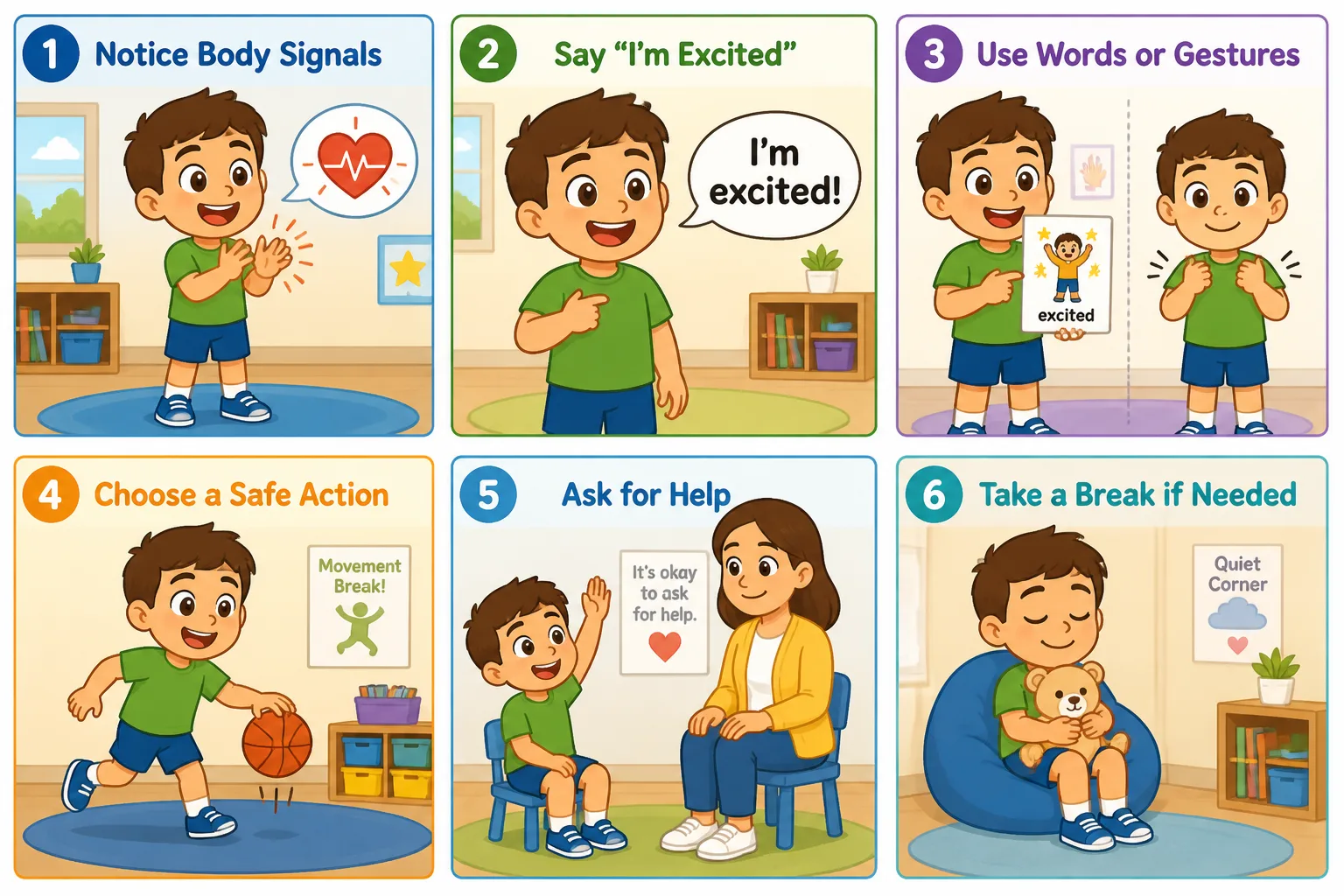

Excitement is a wonderful feeling but can sometimes be hard for young children to manage, especially when it feels very strong. Teaching children to recognize and regulate their excitement helps them express their feelings safely and enjoy positive moments without becoming overwhelmed. This visual post, “When I’m Excited,” guides children through 6 simple steps to notice their body signals, communicate their excitement, choose safe ways to express it, and ask for help or take a break when needed.
1. Notice Body Signals
Excitement often shows in the body first. Children might feel their heart beating fast, hands clapping, or a burst of energy. Helping children notice these signals is the first step to understanding their feelings. Parents can gently point out these signs by saying, “I see your hands are clapping fast — you seem excited!”
2. Say “I’m Excited”
Encourage children to name their feeling using simple words or phrases like “I’m excited!” Naming feelings helps children feel understood and gives them a way to express themselves clearly. Modeling this language regularly supports their emotional vocabulary.
3. Use Words or Gestures to Communicate
Not all children can or want to use words all the time. Offering alternative communication methods such as pointing to picture cards, using sign language, or AAC devices empowers children to share their excitement safely and effectively.
4. Choose a Safe Action
Excitement can lead to impulsive behaviors if not channeled safely. Suggest simple, safe coping choices like bouncing a ball, doing a movement break, or clapping hands gently. These actions help release energy positively and prevent accidents or disruptions.
5. Ask for Help
Sometimes excitement can feel too big to manage alone. Teaching children to ask for help by raising a hand, saying “I need help,” or another agreed signal ensures they get support before feeling overwhelmed.
6. Take a Break if Needed
If excitement builds too much, taking a quiet break with a soft toy or in a calm corner can help children recover and regain control. Respecting their need for space without forcing immediate calm supports emotional safety.
Parents can support these skills by modeling feeling words without judgment, offering two simple coping choices, and staying calm and supportive when children express excitement. Practice these steps when the child is calm to build familiarity and confidence.
For related emotional regulation strategies, see our posts on Feeling Worried and When I’m Frustrated.
Parent Question: What safe actions does your child enjoy when they feel excited, and how do you help them recognize their feelings?
Baixe as imagens deste artigo