When I’m Frustrated: 6 Steps to Recognize and Manage Frustration in Young Children

Frustration is a common and natural feeling young children experience when things don’t go as planned or when tasks feel difficult. Teaching children how to recognize and manage frustration helps them build emotional regulation skills that support their well-being and social success. This article explores practical steps to help children notice frustration, communicate their feelings, choose safe coping strategies, ask for help, and recover comfortably.
Understanding Frustration and Its Body Signals
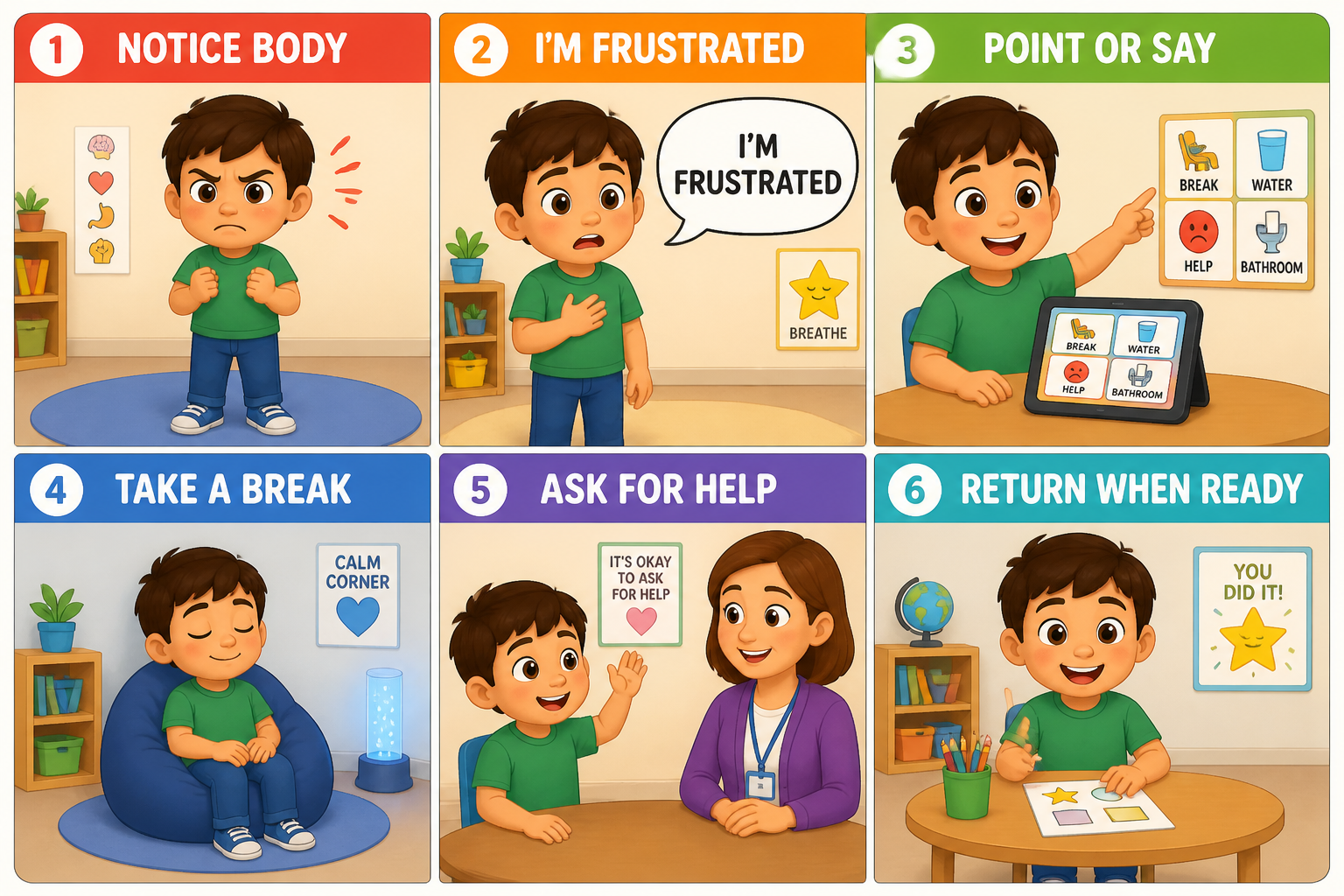
Frustration often shows up with physical signs such as tight hands, a furrowed brow, or a tense body. Helping children notice these body signals is the first step in emotional regulation. When children learn to recognize how frustration feels in their body, they can respond before emotions escalate.
Naming and Communicating Frustration
Once children notice their feelings, teaching them to name the emotion “I’m frustrated” empowers them to communicate their experience. This can be done verbally, through gestures, pointing, or using AAC devices. Clear communication helps adults understand the child’s needs and provides a pathway to support.
Choosing Safe Coping Strategies
Children benefit from learning simple, safe ways to cope with frustration. Taking a break in a quiet corner, deep breathing, or squeezing a soft item are effective strategies. Offering choices respects the child’s preferences and encourages autonomy in managing emotions.
Asking for Help and Returning When Ready
Encouraging children to ask for help when frustrated teaches self-advocacy and builds trust. After a break or support, children should be encouraged to return to the activity when they feel ready, reinforcing confidence and resilience.
Supporting Your Child as a Parent
Parents and caregivers can model these skills by naming their own feelings, noticing body signals, and offering simple coping choices. Respecting the child’s pace, avoiding pressure to “calm down,” and using visuals before challenging situations help build emotional safety. Practice these steps together during calm moments to prepare for times of frustration.
How do you help your child express frustration safely? Share your strategies below!
Download the images in this article