Skip to content
-
Subscribe to our newsletter & never miss our best posts. Subscribe Now!
Love Beyond Words - autismwords.com Love Beyond Words - autismwords.com Love Beyond Words - autismwords.com

Supporting children with autism through education and care

Love Beyond Words - autismwords.com Love Beyond Words - autismwords.com Love Beyond Words - autismwords.com

Supporting children with autism through education and care

  • Learning & Support
    • Communication Skills
    • Daily Living Skills
    • Emotional Regulation
    • Everyday Challenges
    • Learning Through Play
    • Parent Education & Advocacy
    • Positive Behavior Support
    • Routines & Transitions
    • Social Skills
    • Speech & Language
  • Autism News & Perspectives
  • Learning & Support
    • Communication Skills
    • Daily Living Skills
    • Emotional Regulation
    • Everyday Challenges
    • Learning Through Play
    • Parent Education & Advocacy
    • Positive Behavior Support
    • Routines & Transitions
    • Social Skills
    • Speech & Language
  • Autism News & Perspectives
Close

Search

  • https://www.facebook.com/
  • https://twitter.com/
  • https://t.me/
  • https://www.instagram.com/
  • https://youtube.com/
Subscribe
Love Beyond Words - autismwords.com Love Beyond Words - autismwords.com Love Beyond Words - autismwords.com

Supporting children with autism through education and care

Love Beyond Words - autismwords.com Love Beyond Words - autismwords.com Love Beyond Words - autismwords.com

Supporting children with autism through education and care

  • Learning & Support
    • Communication Skills
    • Daily Living Skills
    • Emotional Regulation
    • Everyday Challenges
    • Learning Through Play
    • Parent Education & Advocacy
    • Positive Behavior Support
    • Routines & Transitions
    • Social Skills
    • Speech & Language
  • Autism News & Perspectives
  • Learning & Support
    • Communication Skills
    • Daily Living Skills
    • Emotional Regulation
    • Everyday Challenges
    • Learning Through Play
    • Parent Education & Advocacy
    • Positive Behavior Support
    • Routines & Transitions
    • Social Skills
    • Speech & Language
  • Autism News & Perspectives
Close

Search

  • https://www.facebook.com/
  • https://twitter.com/
  • https://t.me/
  • https://www.instagram.com/
  • https://youtube.com/
Subscribe
Home/Learning & Support/Speech & Language/Managing Bright Lights: 6 Sensory Support Steps for Children
Managing Bright Lights: 6 Sensory Support Steps for Children
Speech & Language

Managing Bright Lights: 6 Sensory Support Steps for Children

August 22, 2026 2 Min Read
0

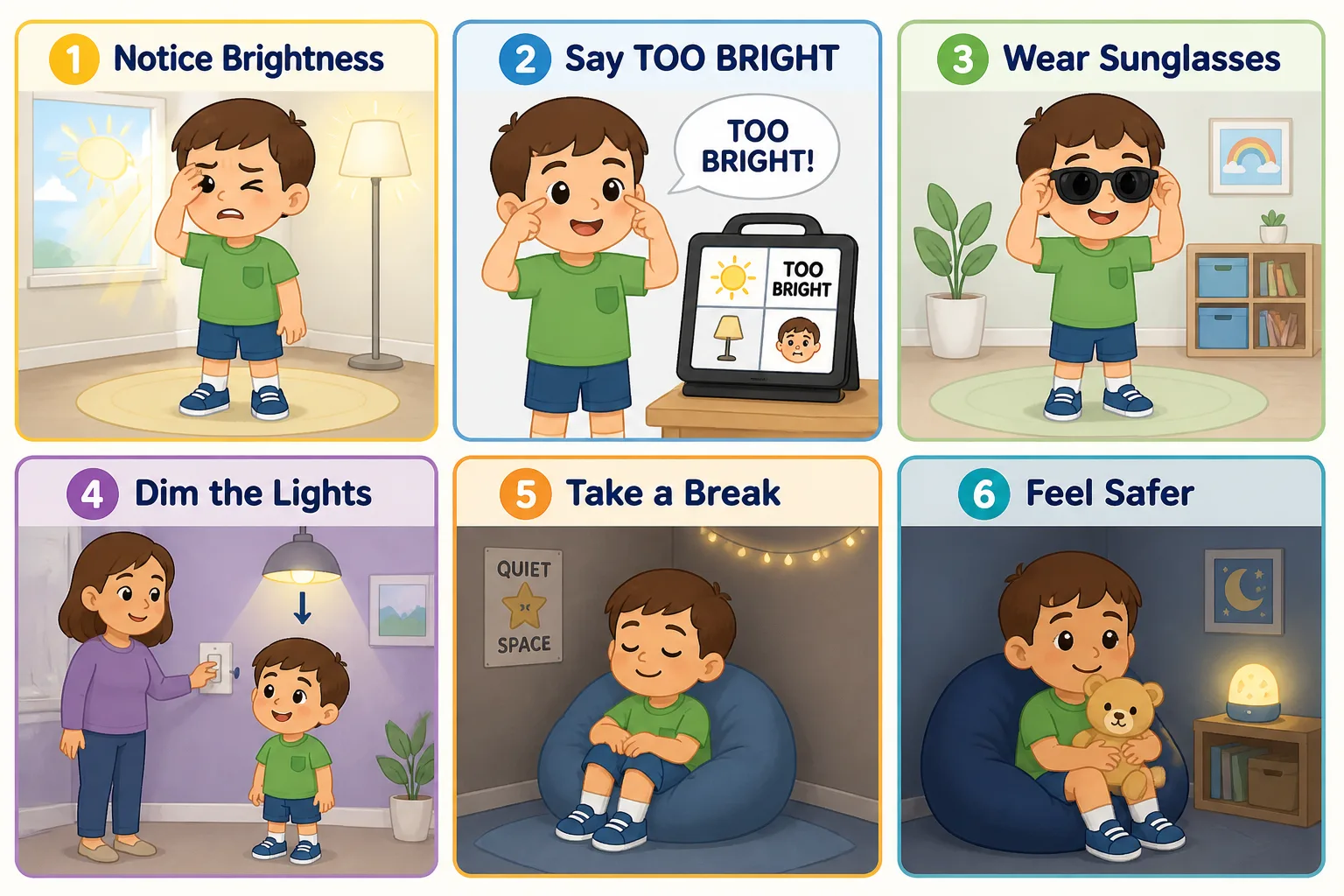
Bright lights can be overwhelming for many children, especially those with sensory sensitivities. Learning to recognize discomfort and use practical strategies to manage bright lighting helps children feel safer and more comfortable. This article presents 6 sensory support steps to help children notice bright lights, communicate their needs, choose supports, and take calming breaks.

1. Notice Brightness

The first step is helping children recognize when lights feel too bright. Signs include squinting, rubbing eyes, or turning away from a light source. Parents can gently point out these feelings and name them, such as “The light is very bright.” This awareness is key to self-regulation.

2. Communicate “Too Bright”

Children should be encouraged to communicate their discomfort using speech, gestures, pointing, picture cards, sign language, or AAC devices. Simple phrases like “Too bright” or “I need a break” empower children to express their needs clearly and get timely support.

3. Wear Sunglasses or Hats

Using sunglasses or wide-brimmed hats indoors or outdoors can reduce light intensity and glare. Allow children to choose their preferred style to increase comfort and control. This is a practical, nonverbal way to manage brightness.

4. Dim the Lights

When possible, dimming overhead lights or switching to softer lamps helps reduce sensory overload. Parents and caregivers can model this by adjusting lighting in shared spaces and explaining the change to the child.

5. Take a Break in a Dim Space

Providing a quiet, dimly lit area where children can take a break supports regulation. This space might have soft cushions, calming visuals, or a favorite comfort item. Breaks allow children to recover from sensory overload without pressure.

6. Feel Safer with Comfort Items

Holding a comforting item like a soft toy or blanket can help children feel secure while managing bright lights. Combining this with dim lighting and a calm environment supports emotional regulation.

Parents can support their child by observing signs of light sensitivity, offering two simple choices for managing brightness, modeling communication phrases, and respecting the child’s pace. Avoid forcing children to endure uncomfortable lighting and allow breaks as needed.

For related sensory support strategies, see our Recognizing and Managing Clothing Discomfort article for more tips on sensory comfort.

How does your child let you know when lights are too bright? Share your experiences or tips below!

Download the images in this article

  • Managing Bright Lights: 6 Sensory Support Steps for Children

Tags:

children sensory strategiescommunicationmanaging bright lightssensory breakssensory comfortsensory overloadsensory support
Other Articles
Nature Scavenger Hunt: A Fun Learning Through Play Activity
Previous

Nature Scavenger Hunt: A Fun Learning Through Play Activity

2024 Advances in Autism Research Highlight Genetic Testing and Personalized Therapies
Next

2024 Advances in Autism Research Highlight Genetic Testing and Personalized Therapies

No Comment! Be the first one.

Leave a Reply Cancel reply

Your email address will not be published. Required fields are marked *

AAC action words for young children asking for a break asking for help autism education autism research Autism Science Foundation autism sensory support autism spectrum disorder autism support being told to wait calming strategies child development child independence classroom accommodations for autistic children communication communication phrases communication skills coping strategies daily living skills documenting progress early childhood development emotional regulation fine motor skills hygiene routine independence language development learning through play neuroscience Outdoor Play parent advocacy parenting tips parent preparation positive behavior support problem solving replacement skills self-advocacy sensory sensitivities sensory support snack time routine special education speech and language visual learning visual learning set young children

  • How Clear Communication Helps Secure Classroom Accommodations for Your Autistic Child
    How Clear Communication Helps Secure Classroom Accommodations for Your Autistic Child
    Clear communication with teachers helps parents secure effective classroom accommodations through the IEP process for their autistic child.
  • Tracking Concerns About My Child: 6 Practical Parent Steps
    Tracking Concerns About My Child: 6 Practical Parent Steps
    Learn 6 practical steps for parents to track concerns about their child effectively. Observe, document, and identify patterns to support advocacy and collaboration with professionals.
  • When I Make a Mistake: 6 Steps to Help Kids Cope
    When I Make a Mistake: 6 Steps to Help Kids Cope
    Help your child cope with mistakes using 6 practical steps: notice, pause, ask for help, fix what I can, try again, and move on. Support emotional growth with these strategies.
  • When I'm Excited: 6 Steps to Recognize and Manage Excitement in Young
    When I’m Excited: 6 Steps to Recognize and Manage Excitement in Young Children
    Help your child recognize and manage excitement with 6 simple steps: notice body signals, say "I'm excited," communicate safely, choose safe actions, ask for help, and take breaks.
  • Study Highlights Ways to Reduce Emotional Strain for Neurodivergent Students in Schools
    Study Highlights Ways to Reduce Emotional Strain for Neurodivergent Students in Schools
    A recent study reveals key factors contributing to emotional challenges faced by neurodivergent students in schools and highlights strategies involving both students and staff to foster supportive environments.
Teaching Describing Words: Colors and Sizes for Young Children
August 21, 2026
Recognizing and Managing Clothing Discomfort: 6 Sensory Support Steps for Children
August 21, 2026
Teaching Action Words: 6 Everyday Verbs for Young Children
August 21, 2026
Preparing for Loud Events: 6 Sensory Support Steps for Children
August 21, 2026
Preparing for Loud Events: 6 Sensory Support Steps for Children
41 views
Expressing Discomfort and Asking for Help: 6 Essential Communication Phrases for Young
Expressing Discomfort and Asking for Help: 6 Essential Communication Phrases for Young Children
39 views
Using a Calm Voice: 5 Positive Steps for Young Children
30 views
Transition from Playtime to Snack Time: 6-Step Visual Routine for Young Children
27 views
Color Sorting Treasure Hunt: A Fun Learning Through Play Activity
26 views

Content on this website is created with the assistance of artificial intelligence (AI), while some portions are still reviewed and overseen by humans. All content and resources are provided completely free of charge.

Some information may be referenced or cited from reputable sources. Whenever possible, we will clearly identify the sources used within each article.

If you have any questions, feedback, or would like to contact us, please email: info@autismwords.com

Copyright 2026 — Love Beyond Words - autismwords.com. All rights reserved. Blogsy WordPress Theme

Cùng đồng hành trên hành trình hiểu về Tự Kỷ

Đăng ký để nhận kiến thức, bài học và tin tức mới nhất về tự kỷ — được chọn lọc và gửi đến bạn đều đặn.

Chúng tôi cam kết chỉ gửi thông tin và kiến thức hữu ích về tự kỷ — không quảng cáo, không spam. Bạn có thể hủy đăng ký bất cứ lúc nào.

Cảm ơn bạn đã đăng ký!