Skip to content
-
Subscribe to our newsletter & never miss our best posts. Subscribe Now!
Love Beyond Words - autismwords.com Love Beyond Words - autismwords.com Love Beyond Words - autismwords.com

Supporting children with autism through education and care

Love Beyond Words - autismwords.com Love Beyond Words - autismwords.com Love Beyond Words - autismwords.com

Supporting children with autism through education and care

  • Learning & Support
    • Communication Skills
    • Daily Living Skills
    • Emotional Regulation
    • Everyday Challenges
    • Learning Through Play
    • Parent Education & Advocacy
    • Positive Behavior Support
    • Routines & Transitions
    • Social Skills
    • Speech & Language
  • Autism News & Perspectives
  • Learning & Support
    • Communication Skills
    • Daily Living Skills
    • Emotional Regulation
    • Everyday Challenges
    • Learning Through Play
    • Parent Education & Advocacy
    • Positive Behavior Support
    • Routines & Transitions
    • Social Skills
    • Speech & Language
  • Autism News & Perspectives
Close

Search

  • https://www.facebook.com/
  • https://twitter.com/
  • https://t.me/
  • https://www.instagram.com/
  • https://youtube.com/
Subscribe
Love Beyond Words - autismwords.com Love Beyond Words - autismwords.com Love Beyond Words - autismwords.com

Supporting children with autism through education and care

Love Beyond Words - autismwords.com Love Beyond Words - autismwords.com Love Beyond Words - autismwords.com

Supporting children with autism through education and care

  • Learning & Support
    • Communication Skills
    • Daily Living Skills
    • Emotional Regulation
    • Everyday Challenges
    • Learning Through Play
    • Parent Education & Advocacy
    • Positive Behavior Support
    • Routines & Transitions
    • Social Skills
    • Speech & Language
  • Autism News & Perspectives
  • Learning & Support
    • Communication Skills
    • Daily Living Skills
    • Emotional Regulation
    • Everyday Challenges
    • Learning Through Play
    • Parent Education & Advocacy
    • Positive Behavior Support
    • Routines & Transitions
    • Social Skills
    • Speech & Language
  • Autism News & Perspectives
Close

Search

  • https://www.facebook.com/
  • https://twitter.com/
  • https://t.me/
  • https://www.instagram.com/
  • https://youtube.com/
Subscribe
Home/Autism News & Perspectives/2024 Advances in Autism Research Highlight Genetic Testing and Personalized Therapies
2024 Advances in Autism Research Highlight Genetic Testing and Personalized Therapies
Autism News & Perspectives

2024 Advances in Autism Research Highlight Genetic Testing and Personalized Therapies

August 22, 2026 4 Min Read
0

Overview of 2024 Autism Research Progress

In 2024, autism research made significant strides, particularly in the areas of genetic testing, personalized medicine, and outcome measurement. Researchers are increasingly focusing on tailoring treatments to individual needs, leveraging advances in technology and genetics to better understand and address the diverse presentations of autism spectrum disorder (ASD). These developments offer new hope for more effective interventions and a deeper understanding of autism’s complexity.

Genetic Testing and Targeted Therapies

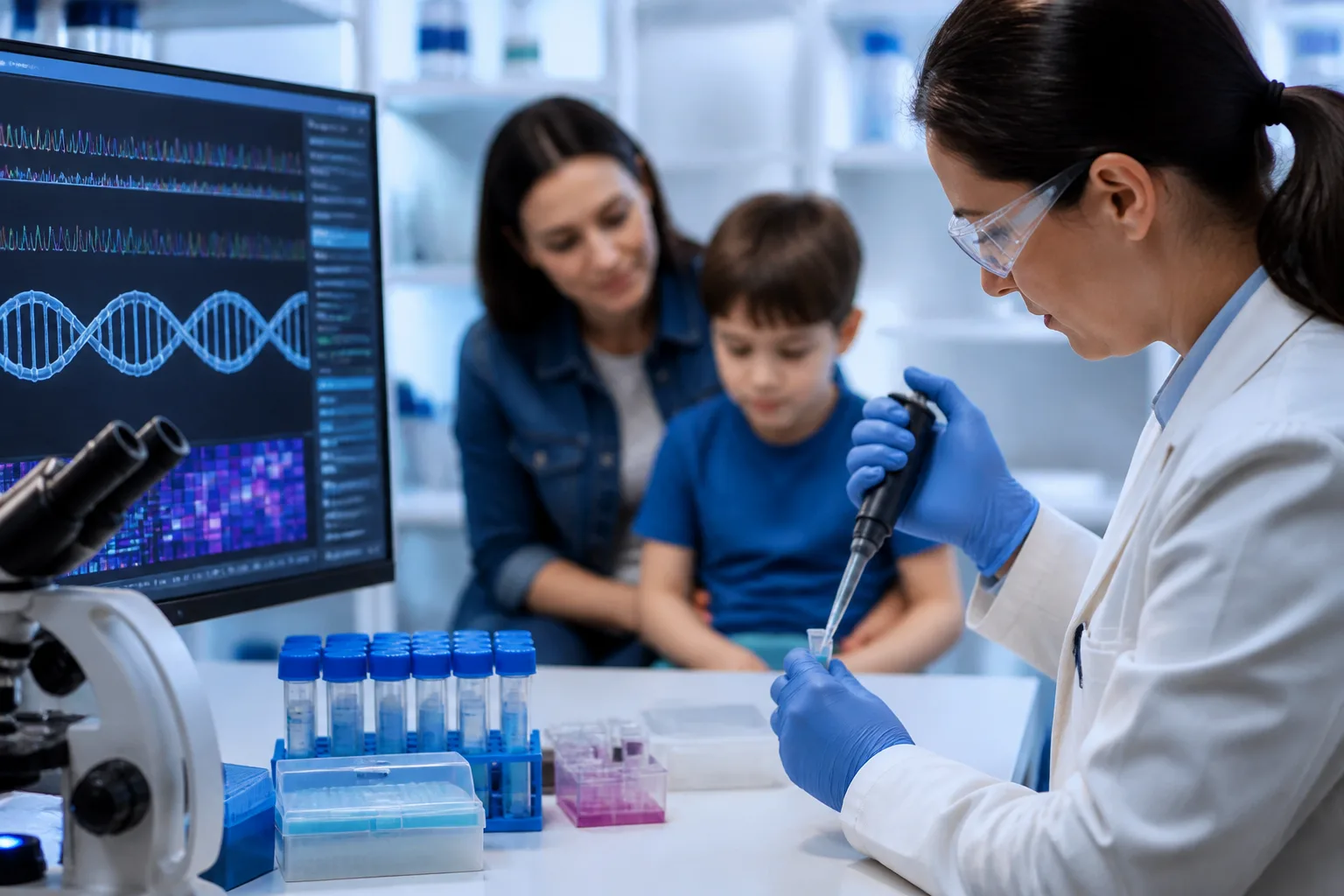
Improved genetic testing techniques have enhanced the ability to identify genetic contributors to autism, with about 20% of cases now linked to specific genetic causes. Professional organizations generally recommend genetic testing for families affected by autism, as it can inform symptom understanding and therapeutic options.

A notable example is the FDA-approved drug trofinetide for Rett Syndrome, a developmental disorder with autistic features, which demonstrated sustained efficacy in long-term studies this year. Additionally, innovative research utilizing brain organoids—miniature brain models grown from patient cells—has enabled the development of personalized gene therapies. For instance, researchers at Stanford University created a targeted gene therapy for Timothy Syndrome, a rare genetic disorder involving autism and heart irregularities, correcting cellular deficits related to the condition.

Beyond organoid models, studies of postmortem brain tissue from individuals with autism have revealed altered gene expression patterns, including decreased activity in genes related to neuronal communication and increased immune gene activation. These findings, confirmed by the Autism BrainNet program at UCLA, continue to refine the biological understanding of autism.

Enhancements in Measuring Treatment Outcomes

Addressing challenges in evaluating behavioral interventions, researchers introduced the Brief Observation of Social Communication Change (BOSCC), a tool designed to measure therapy effectiveness more accurately than traditional diagnostic instruments. The BOSCC has been validated across multiple studies, supporting the benefits of early intervention.

Remote assessment methods, developed during the COVID-19 pandemic, have also proven effective in evaluating social attention in genetic syndromes associated with autism, suggesting broader applicability for monitoring treatment progress outside clinical settings.

Environmental Factors and Autism Risk

Research continues to explore environmental influences on autism risk, though findings remain complex. While prenatal infections and immune challenges are recognized risk factors, recent studies suggest their impact may be moderated by genetic and familial factors. Importantly, concerns about maternal COVID-19 infection, prenatal cannabis use, or maternal diet increasing autism risk were not supported by recent evidence.

However, increased screen time in early childhood was associated with greater autism traits and lower developmental scores, reinforcing the multifactorial nature of autism involving both genetic and environmental components. Emerging theories propose that timing disruptions in brain cell activation during early development may link environmental exposures to autism risk.

Recurrence Risk and Familial Patterns

Updated data from the Baby Siblings Research Consortium indicate that younger siblings of autistic children have about a 20% risk of autism diagnosis, significantly higher than the general population risk of 1 in 36. The risk is even greater in families with multiple autistic children and appears influenced by the sex of the older sibling, with female siblings showing a higher recurrence risk. Extended family histories of autism and related psychiatric conditions also elevate risk, as shown by large-scale registry studies.

Prevalence and Phenotypic Diversity

The CDC’s Autism and Developmental Disabilities Monitoring Network estimates autism prevalence at 1 in 36 among eight-year-olds. Recent studies confirm rising diagnosis rates in both children and adults, with increased recognition of autism in females, although females remain underdiagnosed compared to males. Late-diagnosed individuals often exhibit different symptom profiles, including greater capacity for social camouflaging.

Understanding the Spectrum: Profound Versus Non-Profound Autism

Research emphasizes the heterogeneity within autism, distinguishing “profound autism” characterized by severe intellectual disability, limited language, and high support needs from less severe forms. Brain imaging studies reveal distinct neurological differences in individuals with profound autism, including brain overgrowth. Families of those with profound autism face unique challenges, including stigma and access to support, underscoring the need for nuanced approaches to care and public awareness.

Language Development and Gender Differences

Language impairments remain a critical aspect of autism, with genetic factors such as neurexin gene family variants influencing language abilities. Studies show minimally verbal individuals often have stronger receptive than expressive language skills, highlighting the importance of individualized language support. Additionally, significant gender differences exist in autism, with males more frequently diagnosed and females more likely to have intellectual disabilities. Biological differences in gene expression and brain connectivity may contribute to these disparities, which also relate to higher rates of anxiety and suicide in autistic females.

Implications for Families and Future Research

These advances underscore the importance of personalized approaches in autism diagnosis and treatment, recognizing the spectrum’s diversity. Genetic testing can guide targeted therapies, while improved outcome measures enhance evaluation of interventions. Families benefit from clearer information on recurrence risks and the broad range of autism presentations.

However, ongoing research is needed to clarify environmental contributions, refine diagnostic tools, and address disparities, particularly in females and individuals with profound autism. Continued collaboration between researchers, clinicians, and families will be essential to translating scientific progress into meaningful support.

For more detailed information, see the original 2024 Autism Science Review by the Autism Science Foundation: Autism Science Foundation 2024 Year-End Summary.

Download the images in this article

  • 2024 Advances in Autism Research Highlight Genetic Testing and Personalized Therapies

Tags:

autism prevalenceautism research 2024autism spectrum disorderautism therapiesenvironmental factors autismgenetic testingoutcome measurementpersonalized medicine
Other Articles
Managing Bright Lights: 6 Sensory Support Steps for Children
Previous

Managing Bright Lights: 6 Sensory Support Steps for Children

Exploring Connections Between Tuberous Sclerosis Complex and Autism Spectrum Disorder
Next

Exploring Connections Between Tuberous Sclerosis Complex and Autism Spectrum Disorder

No Comment! Be the first one.

Leave a Reply Cancel reply

Your email address will not be published. Required fields are marked *

AAC asking for a break asking for help autism education autism research Autism Science Foundation autism spectrum disorder autism support child development child independence clothing textures comfort item communication communication phrases communication skills coping strategies daily living skills documenting progress early childhood development early vocabulary emotional regulation fine motor skills handling frustration hygiene routine independence language development learning through play neuroscience observing behavior parent advocacy parenting tips parent preparation positive behavior support problem solving replacement skills self-advocacy sensory sensitivities sensory support slow breathing snack time routine special education speech and language visual learning visual learning set young children

  • How Clear Communication Helps Secure Classroom Accommodations for Your Autistic Child
    How Clear Communication Helps Secure Classroom Accommodations for Your Autistic Child
    Clear communication with teachers helps parents secure effective classroom accommodations through the IEP process for their autistic child.
  • Tracking Concerns About My Child: 6 Practical Parent Steps
    Tracking Concerns About My Child: 6 Practical Parent Steps
    Learn 6 practical steps for parents to track concerns about their child effectively. Observe, document, and identify patterns to support advocacy and collaboration with professionals.
  • When I Make a Mistake: 6 Steps to Help Kids Cope
    When I Make a Mistake: 6 Steps to Help Kids Cope
    Help your child cope with mistakes using 6 practical steps: notice, pause, ask for help, fix what I can, try again, and move on. Support emotional growth with these strategies.
  • When I'm Excited: 6 Steps to Recognize and Manage Excitement in Young
    When I’m Excited: 6 Steps to Recognize and Manage Excitement in Young Children
    Help your child recognize and manage excitement with 6 simple steps: notice body signals, say "I'm excited," communicate safely, choose safe actions, ask for help, and take breaks.
  • Study Highlights Ways to Reduce Emotional Strain for Neurodivergent Students in Schools
    Study Highlights Ways to Reduce Emotional Strain for Neurodivergent Students in Schools
    A recent study reveals key factors contributing to emotional challenges faced by neurodivergent students in schools and highlights strategies involving both students and staff to foster supportive environments.
Study Highlights Ways to Reduce Emotional Strain for Neurodivergent Students in Schools
August 22, 2026
Avanço técnico em estudos da memória destaca reativação neuronal durante a recuperação
August 22, 2026
2023 Advances in Autism Research Highlight Diagnosis, Gender Differences, and Genetic Insights
August 22, 2026
Hidden Markov Models Reveal Distinct Brain Network Dynamics in Autism Spectrum Disorder
August 22, 2026
Preparing for Loud Events: 6 Sensory Support Steps for Children
41 views
Expressing Discomfort and Asking for Help: 6 Essential Communication Phrases for Young
Expressing Discomfort and Asking for Help: 6 Essential Communication Phrases for Young Children
39 views
Using a Calm Voice: 5 Positive Steps for Young Children
30 views
Transition from Playtime to Snack Time: 6-Step Visual Routine for Young Children
27 views
Color Sorting Treasure Hunt: A Fun Learning Through Play Activity
26 views

Content on this website is created with the assistance of artificial intelligence (AI), while some portions are still reviewed and overseen by humans. All content and resources are provided completely free of charge.

Some information may be referenced or cited from reputable sources. Whenever possible, we will clearly identify the sources used within each article.

If you have any questions, feedback, or would like to contact us, please email: info@autismwords.com

Copyright 2026 — Love Beyond Words - autismwords.com. All rights reserved. Blogsy WordPress Theme

Cùng đồng hành trên hành trình hiểu về Tự Kỷ

Đăng ký để nhận kiến thức, bài học và tin tức mới nhất về tự kỷ — được chọn lọc và gửi đến bạn đều đặn.

Chúng tôi cam kết chỉ gửi thông tin và kiến thức hữu ích về tự kỷ — không quảng cáo, không spam. Bạn có thể hủy đăng ký bất cứ lúc nào.

Cảm ơn bạn đã đăng ký!