Skip to content
-
Subscribe to our newsletter & never miss our best posts. Subscribe Now!
Love Beyond Words - autismwords.com Love Beyond Words - autismwords.com Love Beyond Words - autismwords.com

Supporting children with autism through education and care

Love Beyond Words - autismwords.com Love Beyond Words - autismwords.com Love Beyond Words - autismwords.com

Supporting children with autism through education and care

  • Learning & Support
    • Communication Skills
    • Daily Living Skills
    • Emotional Regulation
    • Everyday Challenges
    • Learning Through Play
    • Parent Education & Advocacy
    • Positive Behavior Support
    • Routines & Transitions
    • Social Skills
    • Speech & Language
  • Learning & Support
    • Communication Skills
    • Daily Living Skills
    • Emotional Regulation
    • Everyday Challenges
    • Learning Through Play
    • Parent Education & Advocacy
    • Positive Behavior Support
    • Routines & Transitions
    • Social Skills
    • Speech & Language
Close

Search

  • https://www.facebook.com/
  • https://twitter.com/
  • https://t.me/
  • https://www.instagram.com/
  • https://youtube.com/
Subscribe
Love Beyond Words - autismwords.com Love Beyond Words - autismwords.com Love Beyond Words - autismwords.com

Supporting children with autism through education and care

Love Beyond Words - autismwords.com Love Beyond Words - autismwords.com Love Beyond Words - autismwords.com

Supporting children with autism through education and care

  • Learning & Support
    • Communication Skills
    • Daily Living Skills
    • Emotional Regulation
    • Everyday Challenges
    • Learning Through Play
    • Parent Education & Advocacy
    • Positive Behavior Support
    • Routines & Transitions
    • Social Skills
    • Speech & Language
  • Learning & Support
    • Communication Skills
    • Daily Living Skills
    • Emotional Regulation
    • Everyday Challenges
    • Learning Through Play
    • Parent Education & Advocacy
    • Positive Behavior Support
    • Routines & Transitions
    • Social Skills
    • Speech & Language
Close

Search

  • https://www.facebook.com/
  • https://twitter.com/
  • https://t.me/
  • https://www.instagram.com/
  • https://youtube.com/
Subscribe
Home/Learning & Support/Speech & Language/Recognizing and Managing Clothing Discomfort: 6 Sensory Support Steps for Children
Recognizing and Managing Clothing Discomfort: 6 Sensory Support Steps for Children
Speech & Language

Recognizing and Managing Clothing Discomfort: 6 Sensory Support Steps for Children

By Andyle
August 21, 2026 2 Min Read
0

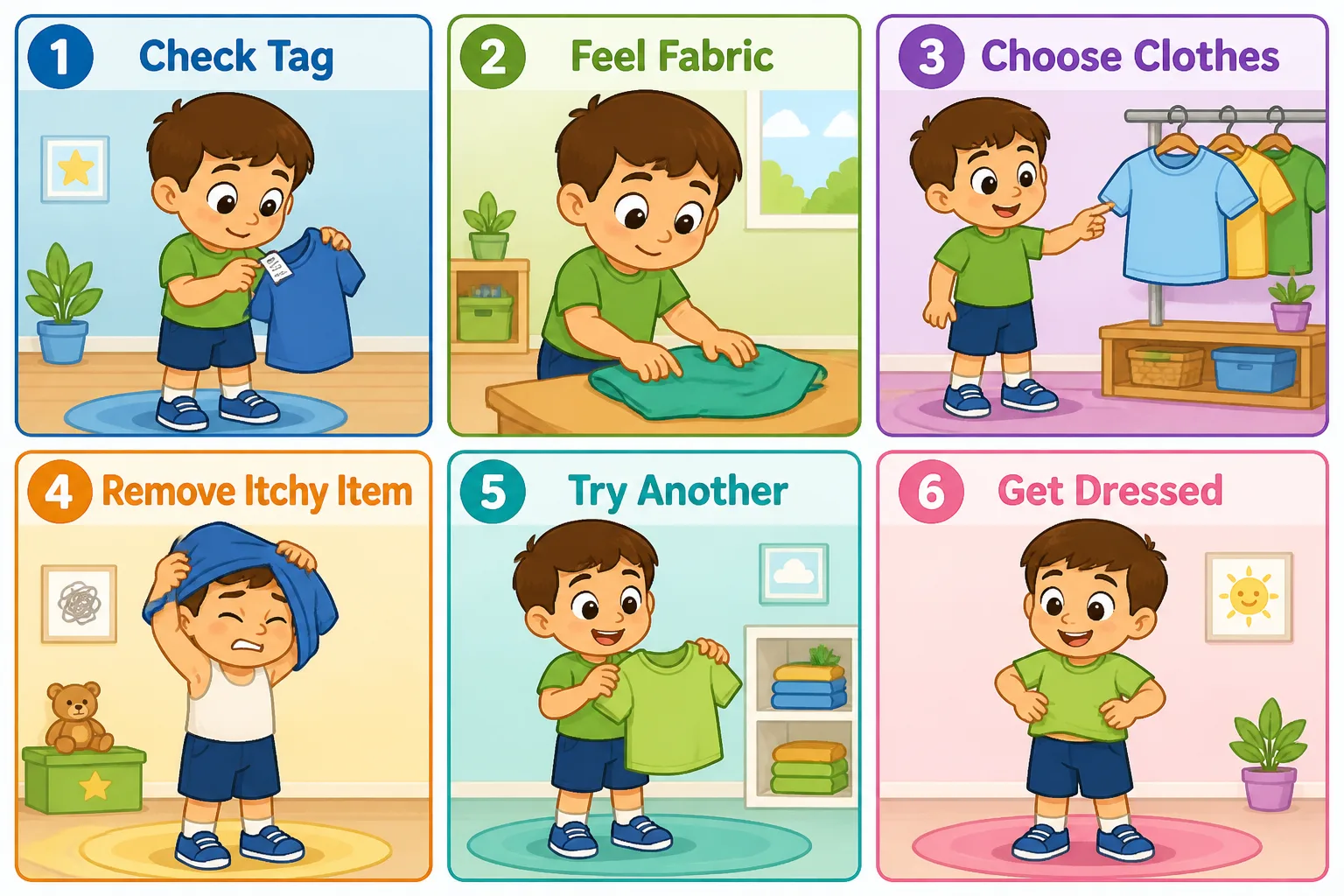
Clothing textures and tags can cause sensory discomfort for many young children, especially those with sensory sensitivities or autism. Recognizing clothing discomfort and learning how to communicate and manage it can help children feel more comfortable and confident during daily routines. This article explains 6 practical sensory support steps to help children notice discomfort, express their needs, and choose comfortable clothing options.

1. Check Tag

Many children find clothing tags itchy or irritating. Encourage your child to look at the tag and gently touch it. This helps them recognize the source of discomfort early before putting on the garment.

2. Feel Fabric

Let the child feel the fabric with their hands. Soft, smooth fabrics are usually more comfortable. Feeling the fabric helps children make informed choices about what they want to wear.

3. Choose Clothes

Offer simple choices between two or three clothing items. Use clear language or visuals to support communication. Giving children control supports their sensory preferences and reduces distress.

4. Remove Itchy Item

If the child feels uncomfortable after dressing, encourage them to communicate by speech, gesture, or AAC that the clothing feels itchy or uncomfortable. Help them remove the item calmly without pressure or frustration.

5. Try Another

Provide an alternative clothing option that is softer or tag-free. Allow the child to try this new item and observe their comfort level. This reinforces positive sensory experiences.

6. Get Dressed

Once a comfortable item is chosen, support the child to get dressed independently or with help. Celebrate their success and comfort to build confidence.

Parents can support these steps by observing their child’s signals, offering simple choices, modeling sensory language like “too itchy” or “soft please,” and respecting the child’s pace. Avoid forcing uncomfortable clothing or ignoring distress signals. Gradual introduction and positive reinforcement help children feel safe and supported.

For related sensory support on daily routines, see our article on Teaching Action Words: 6 Everyday Verbs for Young Children.

Parent question: What clothing textures does your child prefer, and how do you help them communicate when something feels uncomfortable?

Download the images in this article

  • Recognizing and Managing Clothing Discomfort: 6 Sensory Support Steps for Children

Tags:

autism sensory supportchild sensory communicationclothing discomfort sensory supportclothing texturessensory clothingsensory sensitivitiessensory support for children
Author

Andyle

Follow Me
Other Articles
Shape Stacking Tower: A Fun Learning Through Play Activity
Previous

Shape Stacking Tower: A Fun Learning Through Play Activity

Preparing for Your Child’s IEP Meeting: A Practical Tip for Parents
Next

Preparing for Your Child’s IEP Meeting: A Practical Tip for Parents

No Comment! Be the first one.

Leave a Reply Cancel reply

Your email address will not be published. Required fields are marked *

AAC action words asking for a break asking for help autism education autism parenting autism support child development child independence child transitions clothing discomfort sensory support communication phrases communication skills communication support daily living skills early childhood development early language emotional regulation hygiene routine IEP advocacy independence learning through play parent advocacy parenting tips positive behavior support predictable routines problem solving replacement skills school support self-advocacy sensory clothing sensory sensitivities sensory support for children shape recognition snack time routine spatial awareness special education speech and language step-by-step routine transition from playtime to snack time verbs for kids visual communication visual learning visual routine young children

  • Preparing for Your Child’s IEP Meeting: A Practical Tip for Parents
    Preparing for Your Child’s IEP Meeting: A Practical Tip for Parents
    Preparing a clear list of specific accommodations before your child's IEP meeting helps you advocate effectively and supports your child's learning.
  • Recognizing and Managing Clothing Discomfort: 6 Sensory Support Steps for Children
    Recognizing and Managing Clothing Discomfort: 6 Sensory Support Steps for Children
    Learn 6 practical sensory support steps to help children recognize and manage clothing discomfort, communicate needs, and choose comfortable clothes with confidence.
  • Shape Stacking Tower: A Fun Learning Through Play Activity
    Shape Stacking Tower: A Fun Learning Through Play Activity
    Explore fine motor skills and shape recognition with the Shape Stacking Tower activity. Learn 6 playful steps to build, balance, and knock down towers with colorful shapes.
  • Teaching Action Words: 6 Everyday Verbs for Young Children
    Teaching Action Words: 6 Everyday Verbs for Young Children
    Teach young children 6 common action verbs—eating, running, sleeping, drinking, reading, washing—with clear cartoon visuals to build vocabulary and expressive language.
  • Asking for a Break: 6 Essential Communication Phrases for Young Children
    Asking for a Break: 6 Essential Communication Phrases for Young Children
    Help your child communicate their need for a pause with 6 essential asking for a break phrases. Practical, everyday messages to support self-advocacy and emotional regulation.
Teaching Action Words: 6 Everyday Verbs for Young Children Teaching Action Words: 6 Everyday Verbs for Young Children
August 21, 2026
Preparing for Loud Events: 6 Sensory Support Steps for Children Preparing for Loud Events: 6 Sensory Support Steps for Children
August 21, 2026
Teaching Prepositions: IN, ON, UNDER, NEXT TO Teaching Prepositions: IN, ON, UNDER, NEXT TO
August 21, 2026
Expressing Discomfort and Asking for Help: 6 Essential Communication Phrases for Young Expressing Discomfort and Asking for Help: 6 Essential Communication Phrases for Young Children
31 views
Preparing for Loud Events: 6 Sensory Support Steps for Children Preparing for Loud Events: 6 Sensory Support Steps for Children
28 views
Using a Calm Voice: 5 Positive Steps for Young Children Using a Calm Voice: 5 Positive Steps for Young Children
20 views
Teaching Action Words: 6 Everyday Verbs for Young Children Teaching Action Words: 6 Everyday Verbs for Young Children
16 views
Handling Frustration: 6 Positive Steps for Young Children Handling Frustration: 6 Positive Steps for Young Children
14 views

Content on this website is created with the assistance of artificial intelligence (AI), while some portions are still reviewed and overseen by humans. All content and resources are provided completely free of charge.

Some information may be referenced or cited from reputable sources. Whenever possible, we will clearly identify the sources used within each article.

If you have any questions, feedback, or would like to contact us, please email: info@autismwords.com

Copyright 2026 — Love Beyond Words - autismwords.com. All rights reserved. Blogsy WordPress Theme