
Changing plans can be confusing and upsetting for young children, especially those who thrive on routine and predictability. Teaching children practical coping steps helps them understand they have choices and ways to handle unexpected changes calmly and confidently. This article explores six related responses to support children when plans change, using simple language and clear visuals.
Why Teaching Coping Steps for Changing Plans Matters
Children with autism or other developmental differences often find changes to familiar routines challenging. Learning to pause, communicate, and adapt helps reduce anxiety and frustration. Visual supports and step-by-step guidance empower children to manage changes without feeling overwhelmed or pressured to comply blindly.
6 Practical Steps for Children When Plans Change
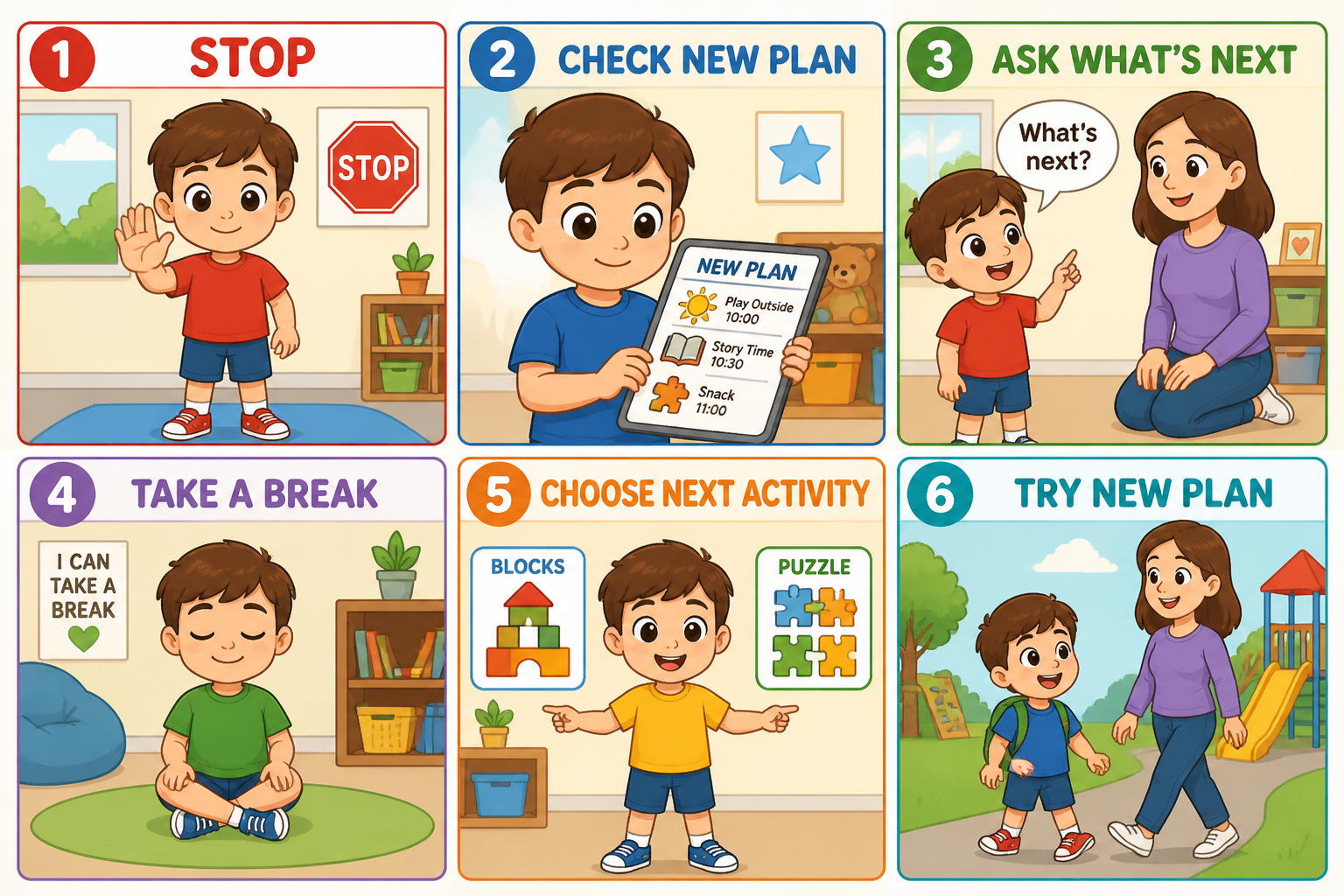
1. STOP
Encourage the child to pause and take a deep breath when they notice plans have changed. This moment of stopping prevents impulsive reactions and helps the child regain calm.
2. CHECK NEW PLAN
Help the child look at the new plan or schedule. Using a visual aid like a picture schedule or tablet can make the change concrete and easier to understand.
3. ASK WHAT’S NEXT
Teach the child to ask a trusted adult what will happen next. Simple phrases like “What’s next?” or “Can you tell me?” support communication and reduce uncertainty.
4. TAKE A BREAK
If the child feels overwhelmed, taking a short break in a quiet space can help them regulate emotions before continuing.
5. CHOOSE NEXT ACTIVITY
Offer the child two realistic options for what to do next. Giving choices increases their sense of control and cooperation.
6. TRY NEW PLAN
Encourage the child to try the new plan or activity when ready. Celebrate small successes to build confidence and flexibility.
Supporting Your Child Through Changing Plans
Parents and caregivers can preview possible changes ahead of time, use simple visual steps, and model helpful phrases. Allow processing time and acknowledge any disappointment without pressure. Practicing these steps when calm helps the child feel prepared and supported.
Remember, the goal is to teach children that “Something is hard. I have options. I can communicate. I can get support.”
Key Takeaways
- Pause and notice when plans change.
- Use visuals to clarify the new plan.
- Encourage communication to reduce uncertainty.
- Allow breaks to manage emotions.
- Offer choices to increase cooperation.
- Celebrate trying new plans to build flexibility.
For more on supporting children with flexibility and transitions, see resources like the Autism Speaks Transition Tool Kit and NICHD Autism Treatment Information.
Download the images in this article