
Getting ready for bedtime can be a challenging everyday routine for many young children, especially those who are autistic or have additional sensory, communication, or emotional needs. This article explores why bedtime may be difficult, what children might be communicating through their behavior, and practical strategies parents can use to make the bedtime routine smoother and less stressful for everyone involved.
Why This May Be Difficult
Bedtime involves multiple transitions and sensory changes that can be overwhelming. The shift from active daytime to a quieter, darker environment may cause anxiety or sensory discomfort. Children may struggle with the unpredictability of the routine or feel uncertain about what is expected next. Sensory sensitivities to pajamas, lighting, or sounds can also make getting ready for bed uncomfortable. Additionally, communication challenges may prevent children from expressing their feelings or needs clearly.
What Parents May Notice
- Resistance to changing clothes or putting on pajamas
- Difficulty settling down or calming before bed
- Increased anxiety, meltdowns, or avoidance behaviors
- Requests for extra time, breaks, or specific sensory preferences
- Nonverbal cues such as pulling away, covering ears, or restlessness
What the Child May Be Communicating
Behaviors during bedtime routines often communicate unmet needs or discomfort. A child might be saying:
- “I need more time to finish what I’m doing.”
- “This feels uncomfortable or overwhelming.”
- “I’m unsure what comes next.”
- “I need help or a break.”
- “I want some control or choice.”
How to Prepare Beforehand
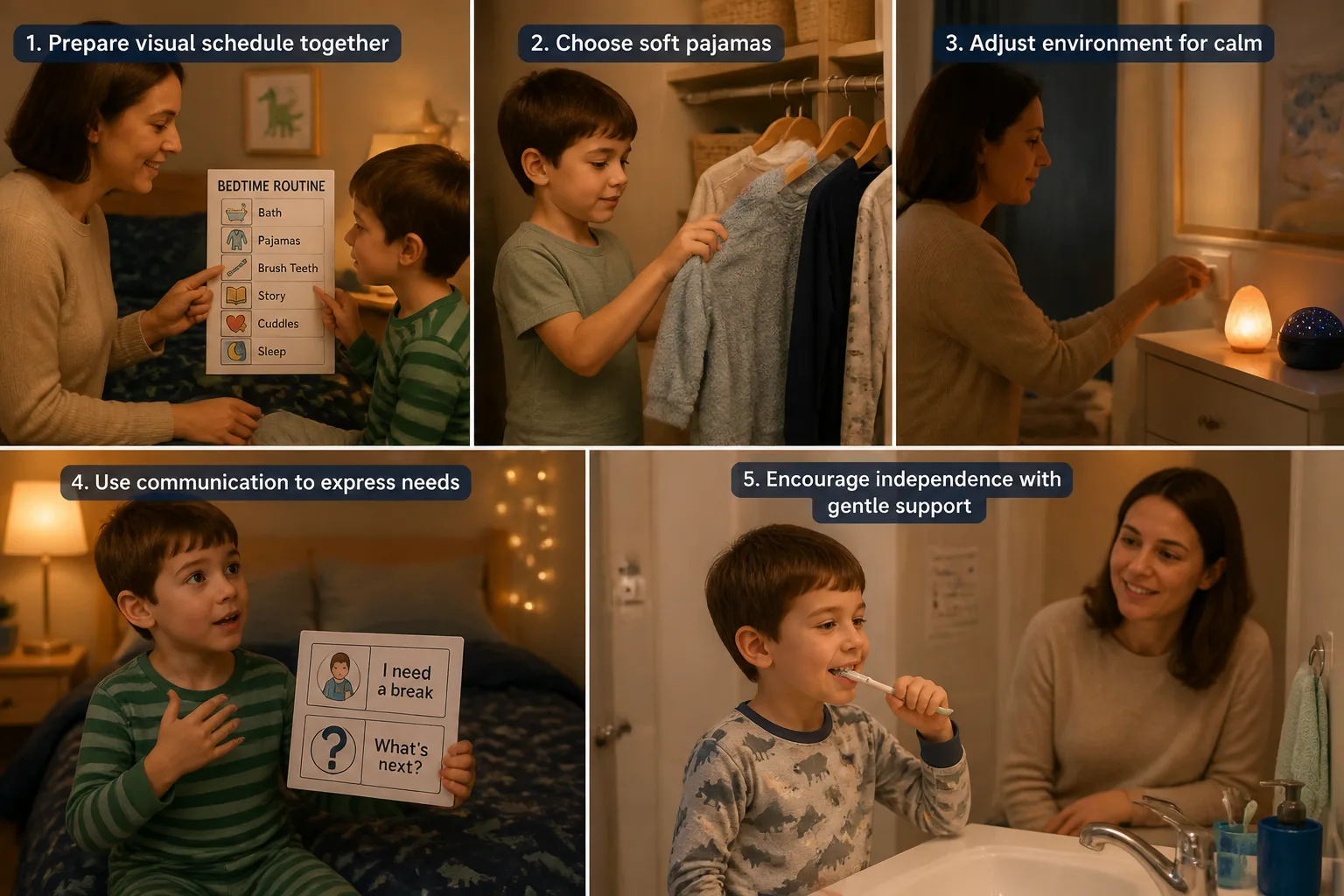
- Create a visual bedtime schedule: Use pictures or simple words to outline each step of the routine. This helps set clear expectations and reduces uncertainty.
- Choose sensory-friendly pajamas: Let your child pick pajamas made of soft, comfortable fabrics that don’t irritate their skin.
- Establish a calming environment: Dim the lights, reduce noise, and use familiar objects like a favorite blanket or stuffed animal.
- Practice the routine during the day: Role-play or go through the steps when the child is calm to build familiarity.
- Prepare communication supports: Have AAC tools, picture cards, or simple signs ready to help your child express needs like “I need a break” or “What’s next?”
What Can Help During the Situation
- Offer choices: Allow your child to choose the order of some steps or which pajamas to wear to increase their sense of control.
- Use clear, calm language: Speak slowly and give your child extra processing time.
- Respect breaks: If your child needs a moment to pause or calm down, provide a quiet space.
- Use positive reinforcement: Praise efforts and small successes to encourage cooperation.
- Stay consistent: Keep the routine predictable while allowing flexibility for your child’s needs.
Helpful Words or Communication Supports
Model and encourage use of simple phrases or signs such as:
- “I’m ready.”
- “I need help.”
- “I need a break.”
- “What’s next?”
- “I don’t like this.”
Using AAC devices, picture cards, or gestures can support children who have difficulty with spoken language.
Building Independence Gradually
- Break the routine into small, manageable steps and teach each one separately.
- Encourage your child to do parts of the routine independently, such as putting on pajamas or brushing teeth, with gentle guidance.
- Use visual schedules to help your child anticipate and complete each step.
- Celebrate progress, no matter how small, to build confidence.
- Adjust supports as your child grows and their skills develop.
What Adults Should Avoid
- Don’t rush or pressure the child, which can increase anxiety.
- Avoid punishment or shaming for resistance or meltdowns.
- Don’t ignore sensory discomfort or communication attempts.
- Avoid sudden changes without preparation.
- Don’t force eye contact or speech if it causes distress.
Real-Life Example
Emma, a 5-year-old autistic girl, struggled with bedtime because she disliked the feeling of certain pajamas and was unsure about the order of steps. Her parents created a visual schedule with pictures showing each step: putting on pajamas, brushing teeth, reading a story, and lights out. They let Emma choose between two pairs of soft pajamas. They also used a small communication board where Emma could point to “I need a break” or “What’s next?” When Emma felt overwhelmed, her parents offered a quiet corner with dim lighting. Over time, Emma began putting on pajamas independently and used the communication board to express her needs, making bedtime less stressful for the whole family.
When Extra Support May Help
If bedtime challenges persist despite these strategies, consider consulting occupational therapists for sensory support or speech therapists for communication assistance. Professional guidance can tailor supports to your child’s unique needs.
Key Takeaway
Bedtime routines can be smoother and less stressful by understanding your child’s sensory and communication needs, preparing the environment, using visual supports, offering choices, and building independence gradually. Patience and respect for your child’s pace make a big difference.
How do you currently help your child feel calm and ready for bed? What small change could you try tonight?
For more on managing transitions and waiting, see our articles on Managing Transitions Between Activities with Less Stress and Waiting in Line at a Store: Supporting Your Child Through the Challenge.
Download the images in this article