Preparing for a Doctor Visit with Your Child: 6 Parent Steps for Success

Preparing for a doctor visit with your child can feel challenging, especially when your child has unique communication or sensory needs. Taking practical steps before, during, and after the appointment helps ensure the visit is productive, respectful, and centered on your child’s well-being. This guide shares six essential parent actions to prepare effectively and advocate for your child’s health needs.
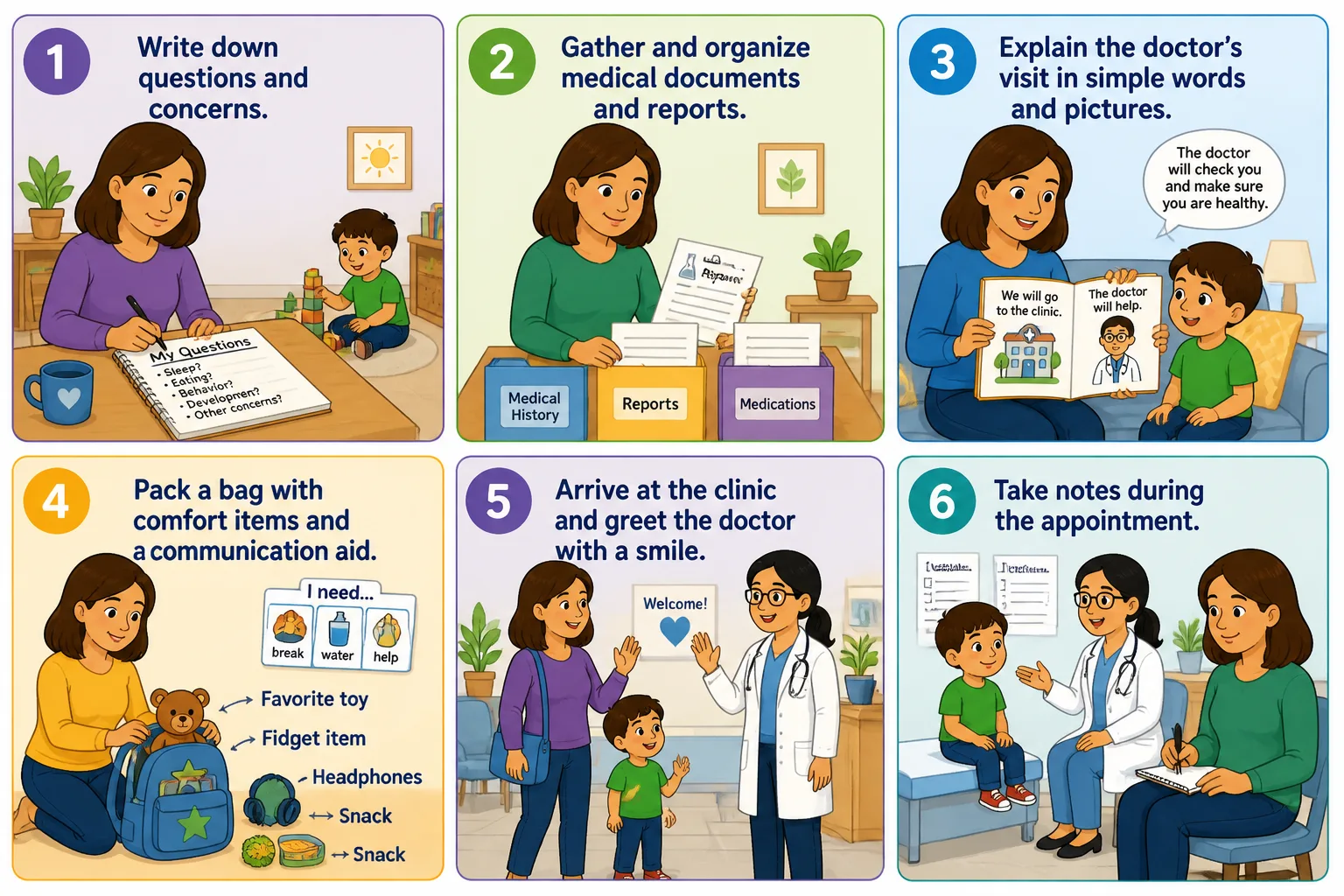
1. Write Down Questions and Concerns
Before the visit, jot down any questions, symptoms, or concerns you want to discuss with the doctor. This helps you remember important points and makes the conversation focused and clear. Include observations about your child’s behavior, sleep, eating, or any new changes.
2. Gather Relevant Medical Documents
Bring any recent reports, test results, therapy notes, or medication lists to share with the doctor. Having these documents handy supports accurate assessment and avoids repeating information.
3. Prepare Your Child for the Visit
Use simple language or visual supports to explain what will happen during the appointment. This reduces anxiety and helps your child understand the purpose of the visit. For children with sensory sensitivities, discuss strategies to manage waiting rooms or examinations.
4. Pack Comfort and Communication Tools
Bring familiar items like a favorite toy, headphones, or a communication aid your child uses. These can help your child stay calm and express needs during the visit.
5. Collaborate Respectfully During the Appointment
Greet the doctor warmly and share your prepared notes. Be clear about your child’s strengths and challenges, and ask for explanations if medical terms or plans are unclear. This respectful collaboration supports better care.
6. Take Notes and Plan Follow-Up
During the visit, write down key information, recommendations, or next steps. After the appointment, review these notes and schedule follow-up if needed. Keeping records helps track your child’s health over time.
By following these steps, parents can feel more confident and prepared, supporting their child’s health and communication with medical professionals.
For more practical parent guides on supporting your child, see our communication phrases for young children and sensory support steps for loud events.
What is one question you want to remember to ask at your child’s next doctor visit?
Download the images in this article