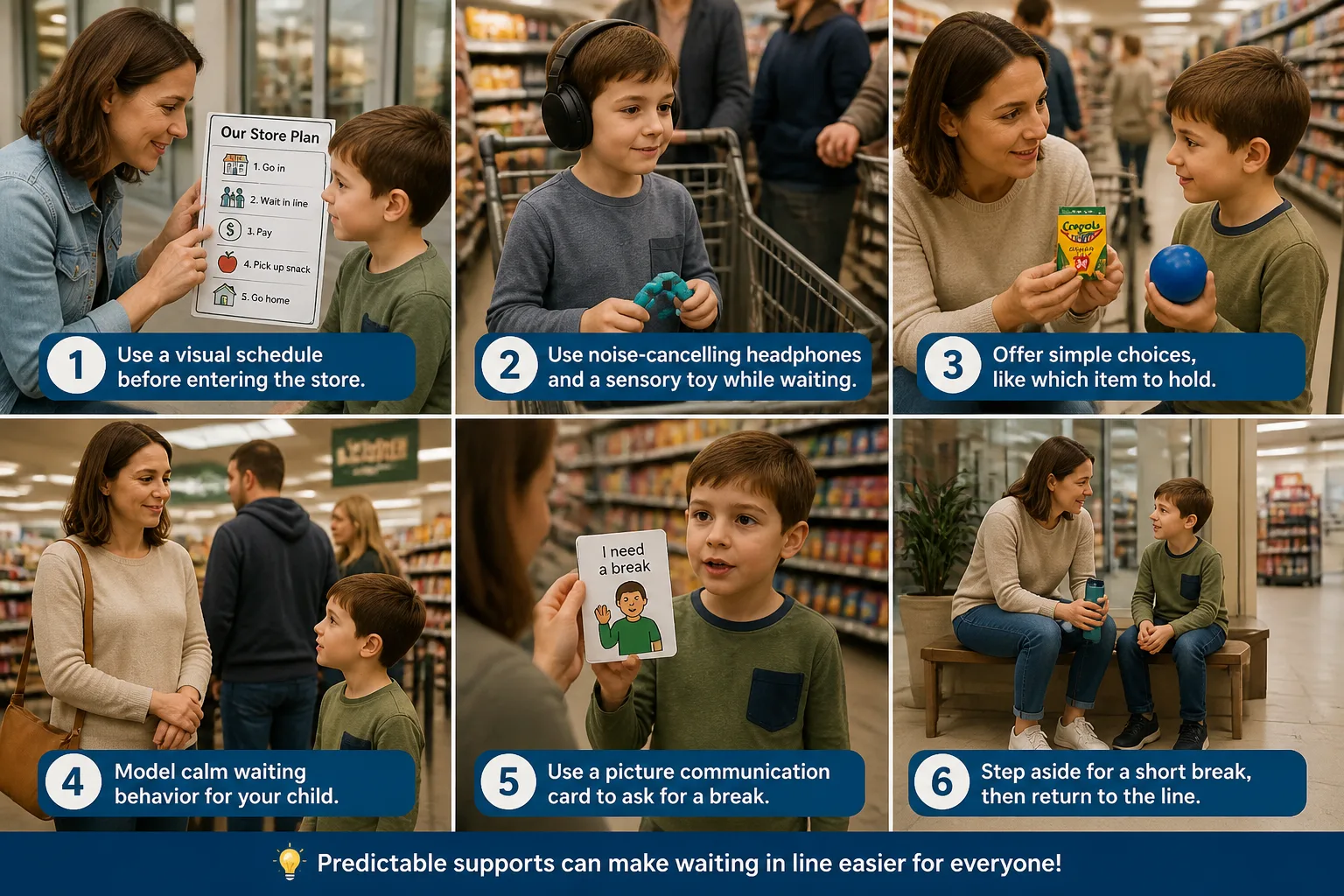

Waiting in line at a store can be a challenging everyday situation for young children, especially those with autism or additional communication and sensory needs. This article explores why waiting in line may be difficult, what your child might be communicating through their behavior, and six practical strategies to support your child before and during the experience. These supports aim to reduce stress, improve communication, and build your child’s independence gradually.
Why This May Be Difficult
Waiting requires patience, attention, and managing uncertainty — skills that can be hard for young children and those with developmental differences. The environment of a store line can be noisy, crowded, and unpredictable, causing sensory overload or anxiety. The lack of clear information about how long the wait will be can increase frustration. Additionally, children with communication challenges may struggle to express their needs or understand what is expected during waiting.
What Parents May Notice
- Fidgeting, restlessness, or attempts to leave the line
- Vocal protests, crying, or tantrums
- Covering ears, shutting eyes, or other sensory responses
- Difficulty understanding or following the waiting process
- Use of gestures or AAC to indicate discomfort or needs
What the Child May Be Communicating
Behaviors during waiting often communicate unmet needs such as:
- I need a break or space
- It’s too noisy or bright
- I don’t understand how long I have to wait
- I want to leave or do something else
- I feel overwhelmed or anxious
How to Prepare Beforehand
- Use Visual Schedules: Show your child a picture or simple schedule of the store visit including the waiting in line step. This helps set clear expectations and reduces uncertainty.
- Practice Waiting: At home, play simple waiting games with timers to build tolerance and understanding.
- Gather Sensory Supports: Bring noise-cancelling headphones, fidget toys, or comfort items your child prefers.
- Discuss Communication Tools: Review any AAC devices, picture cards, or phrases your child can use to express needs like “I need a break” or “Too loud.”
What Can Help During the Situation
- Offer Simple Choices: Let your child hold a preferred item or choose where to stand in line if possible. This increases their sense of control.
- Model Calm Waiting: Use calm body language and verbal cues like “We wait here until it’s our turn.”
- Use Communication Supports: Encourage your child to use their AAC or gestures to express feelings or needs.
- Allow Breaks: If waiting becomes overwhelming, step aside briefly to a quiet spot before returning.
Helpful Words or Communication Supports
Teach and model simple phrases or signs such as:
- “I need a break”
- “Too loud”
- “I’m ready”
- “What’s next?”
- “Help me”
Using picture cards or AAC devices with these phrases can empower your child to communicate effectively.
Building Independence Gradually
- Start with short waits and gradually increase time as your child becomes more comfortable.
- Encourage your child to use communication supports independently.
- Practice waiting in different settings to generalize skills.
- Celebrate successes and provide positive reinforcement.
What Adults Should Avoid
- Yelling, punishment, or shaming for difficulty waiting
- Forcing eye contact or speech if the child is uncomfortable
- Ignoring signs of sensory overload or distress
- Rushing or pressuring the child without preparation
Real-Life Example
Maria’s 4-year-old son, Leo, often became upset when waiting in line at the grocery store. Maria started using a simple picture schedule showing the steps of the store visit, including waiting in line. She brought Leo’s favorite fidget toy and noise-cancelling headphones. When they reached the line, Maria offered Leo a choice of which hand to hold the toy in and gently explained how long they might wait. Leo used a picture card to say “I need a break” when he felt overwhelmed, and Maria took a short break outside the line. Over time, Leo became more comfortable and able to wait calmly for short periods.
When Extra Support May Help
If waiting in line consistently causes high distress or meltdowns, consider consulting a speech therapist, occupational therapist, or behavioral specialist. They can provide tailored strategies and supports for your child’s unique needs.
Key Takeaway
Waiting in line at a store can be challenging but with preparation, communication supports, sensory adjustments, and patience, parents can help their child navigate this everyday situation more comfortably and build independence over time.
What strategies have you found helpful when your child needs to wait in public places?
Download the images in this article