
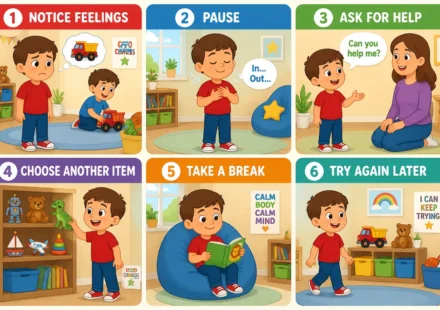
When Someone Else is Using My Favorite Item: 6 Helpful Steps for Kids to Cope

Help your child cope when someone else is using their favorite item with 6 practical steps: notice feelings, pause, ask for help, choose another item, take a break, and try again later.
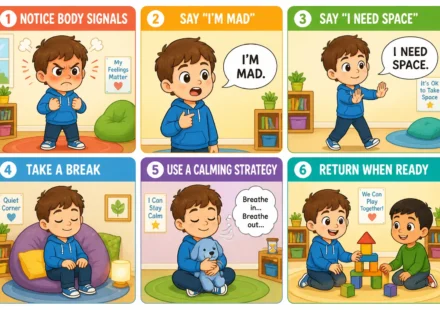
When I’m Mad: 6 Steps to Recognize and Manage Anger in Young Children

Learn 6 practical steps to help young children recognize and manage anger safely. This visual guide teaches noticing body signals, naming feelings, asking for space, taking breaks, calming strategies, and returning when ready.
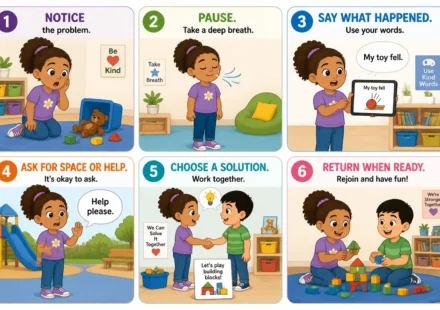
Handling Disagreement: 6 Clear Steps to Support Your Child’s Social Skills

Teach your child 6 clear steps to handle disagreement calmly and respectfully: notice the problem, pause, say what happened, ask for space or help, choose a solution, and return when ready.
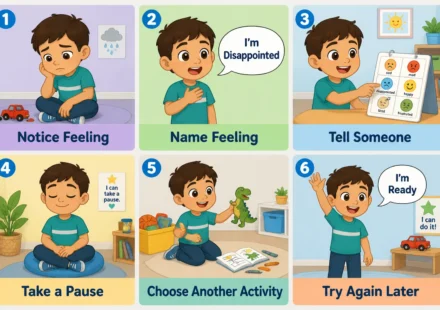
When I’m Disappointed: 6 Steps to Recognize and Manage Disappointment in Young Children
Help young children recognize and manage disappointment with 6 clear steps: notice feeling, name it, communicate, pause, choose another activity, and try again later.
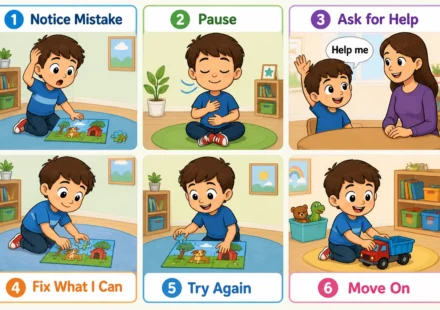
When I Make a Mistake: 6 Steps to Help Kids Cope
Help your child cope with mistakes using 6 practical steps: notice, pause, ask for help, fix what I can, try again, and move on. Support emotional growth with these strategies.
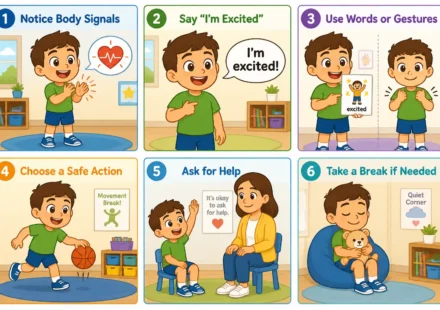
When I’m Excited: 6 Steps to Recognize and Manage Excitement in Young Children
Help your child recognize and manage excitement with 6 simple steps: notice body signals, say "I'm excited," communicate safely, choose safe actions, ask for help, and take breaks.
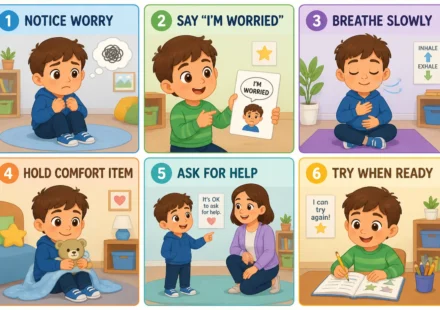
Feeling Worried: 6 Steps to Help Young Children Recognize and Manage Worry

Teach young children 6 practical steps to recognize and manage worry with this friendly visual post. Help children notice feelings, communicate needs, choose coping strategies, and ask for help.
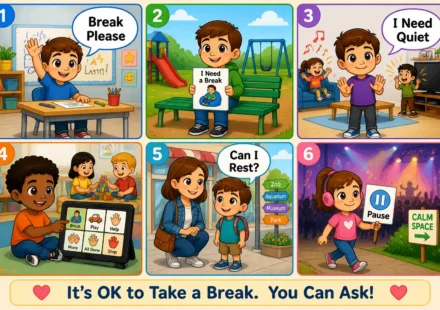
Asking for a Break: 6 Essential Communication Phrases for Young Children

Help your child communicate their need for a pause with 6 essential asking for a break phrases. Practical, everyday messages to support self-advocacy and emotional regulation.
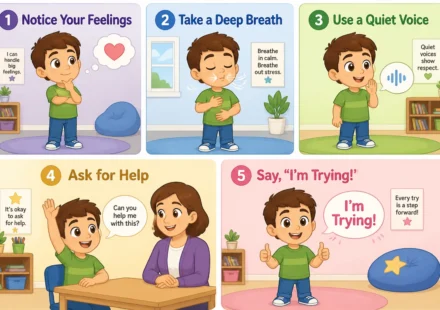
Using a Calm Voice: 5 Positive Steps for Young Children

Help your child learn to use a calm voice with 5 positive steps: notice feelings, take a deep breath, use a quiet voice, ask for help, and say "I'm trying!"
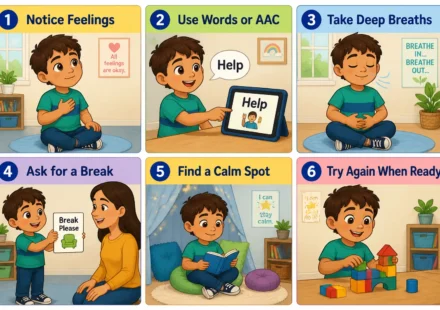
Handling Frustration: 6 Positive Steps for Young Children
Teach children 6 positive, practical steps to handle frustration: notice feelings, communicate, breathe, ask for a break, find calm, and try again.