
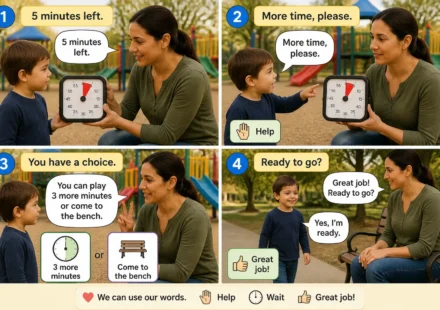
Leaving the Playground: 6 Positive Steps for Young Children

Leaving the playground can be challenging for young children, especially those with additional needs. Learn 6 positive steps to prevent meltdowns and teach useful communication skills to support smoother transitions.
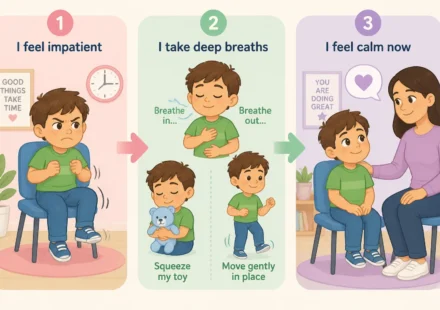
Waiting Can Feel Hard: Helping Young Children Understand and Manage Waiting

Waiting can feel hard for young children, including autistic children. Learn how to recognize feelings, use coping strategies, and support your child through waiting moments.
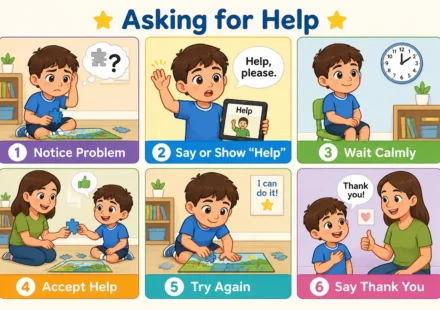
Asking for Help: 6 Positive Steps for Young Children

Learn 6 positive steps for young children to ask for help using clear communication, patience, and gratitude. Support independence and safe problem-solving.
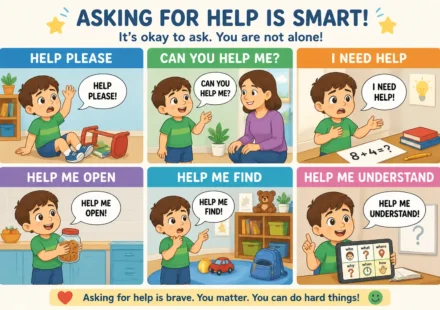
Asking for Help: 6 Essential Communication Phrases for Young Children

Help your child communicate their needs with 6 essential asking for help phrases. Learn practical ways to teach and practice these key communication skills.
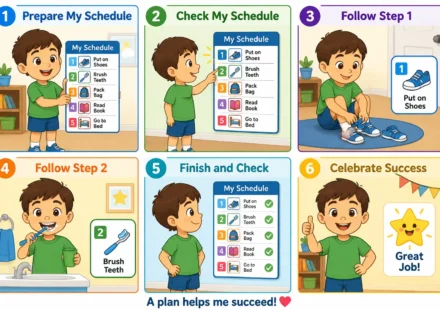
Using Visual Schedules: 6 Positive Steps for Young Children

Learn 6 positive steps to help young children use visual schedules for independence and smoother routines. Support your child with clear expectations and praise.
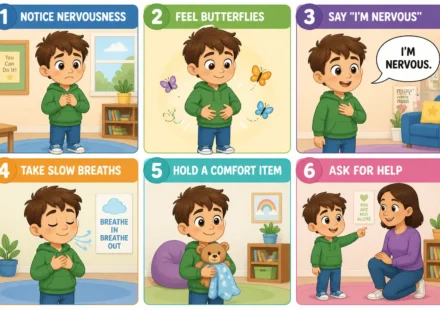
When I’m Nervous: 6 Steps to Recognize and Manage Nervousness in Young Children

Learn 6 practical steps to help young children recognize and manage nervousness, including noticing feelings, body signals, communicating needs, and safe coping strategies.
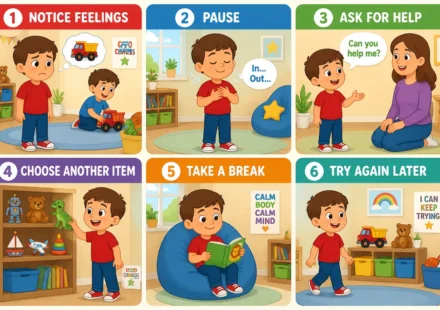
When Someone Else is Using My Favorite Item: 6 Helpful Steps for Kids to Cope
Help your child cope when someone else is using their favorite item with 6 practical steps: notice feelings, pause, ask for help, choose another item, take a break, and try again later.
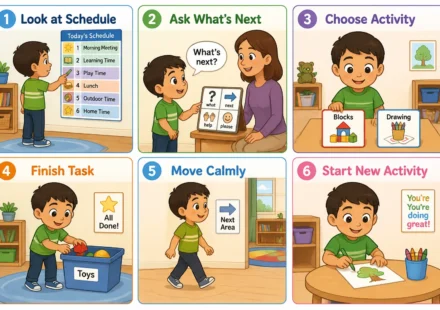
Transitioning Activities: 6 Positive Steps for Young Children

Learn 6 positive steps to help young children transition smoothly between activities using clear schedules, communication, choice, and calm movement.
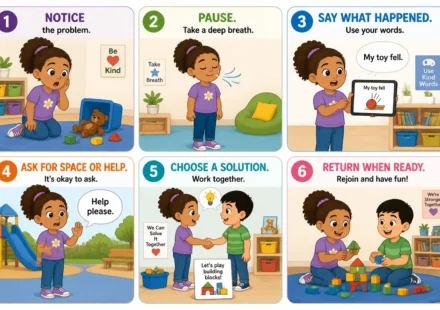
Handling Disagreement: 6 Clear Steps to Support Your Child’s Social Skills

Teach your child 6 clear steps to handle disagreement calmly and respectfully: notice the problem, pause, say what happened, ask for space or help, choose a solution, and return when ready.
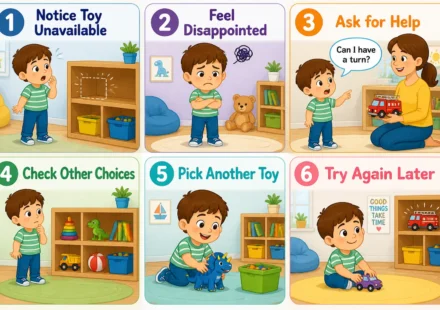
When a Toy is Unavailable: 6 Helpful Steps for Kids to Cope

Help your child cope when a toy is unavailable with 6 practical steps: notice, feel, ask for help, check choices, pick another, and try again later.