
Using visual schedules is a powerful way to support young children in following routines, building independence, and reducing anxiety around daily activities. This approach works especially well for children who benefit from clear, predictable expectations, including those with autism or other developmental differences. In this article, we’ll explore 6 positive steps that teach children how to use visual schedules effectively, helping them understand what to do and when.
What Is a Visual Schedule?
A visual schedule is a set of pictures, symbols, or words arranged in order to show the steps of a routine or the sequence of activities during the day. It provides a concrete, visual way for children to anticipate what comes next, which can reduce confusion and frustration.
6 Positive Steps to Using Visual Schedules
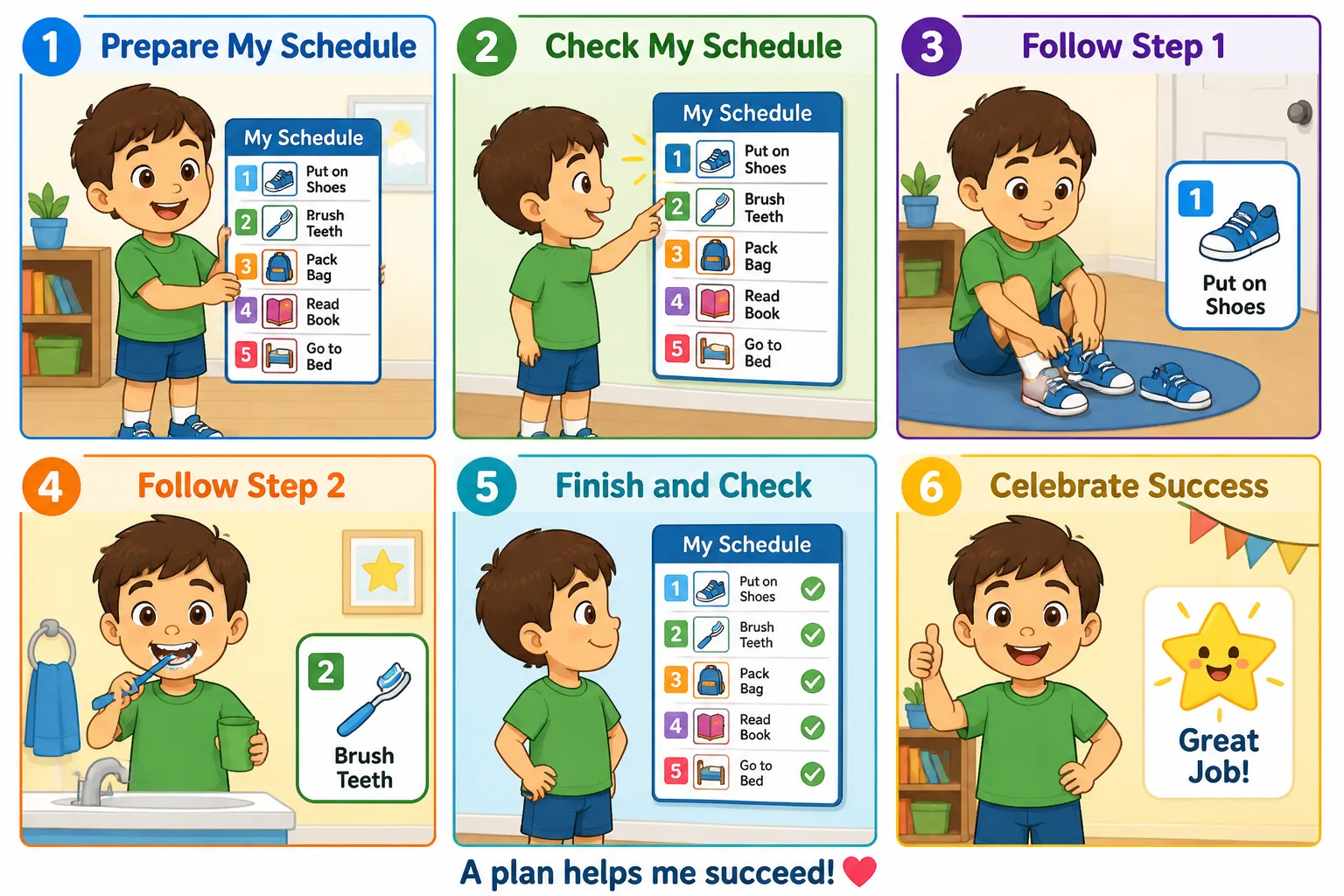
1. Prepare My Schedule
Before starting the day or a new routine, show the child their visual schedule. Use clear, simple pictures or icons that represent each activity. Let the child hold or touch the schedule to build familiarity and ownership.
2. Check My Schedule
Encourage the child to look at the schedule regularly to see what activity is next. This helps them anticipate transitions and reduces surprises.
3. Follow Step 1
Guide the child to complete the first activity on the schedule. Use simple language and visual cues to support understanding. Praise their effort and participation.
4. Follow Step 2
After completing the first step, help the child move on to the next activity on the schedule. Continue using clear communication and encouragement.
5. Finish and Check
Once all steps are done, revisit the schedule together to confirm completion. This reinforces the concept of following a sequence and builds confidence.
6. Celebrate Success
Celebrate the child’s success with positive reinforcement, such as praise, a high-five, or a small reward. This encourages motivation and a positive attitude toward routines.
How Parents Can Support Visual Schedule Use
To help your child benefit from visual schedules, introduce them during calm moments. Keep instructions short and clear, and use consistent pictures or symbols. Offer choices when possible to increase engagement. Model checking and following the schedule yourself. Give your child time to process and respond. Notice and praise specific positive actions, like “You checked your schedule all by yourself!” Reduce demands if your child seems overwhelmed, and always respect their communication style, whether verbal, gestural, or AAC.
Visual schedules are a practical tool that can make daily routines smoother and more enjoyable for both children and adults.
For more strategies on supporting young children’s positive behavior, see our articles on Transitioning Activities and Waiting My Turn.
Key Takeaways
- Visual schedules provide clear, predictable routines that reduce anxiety.
- Teaching children to prepare, check, follow, and finish steps builds independence.
- Positive reinforcement encourages motivation and participation.
- Parents can support by modeling, offering choices, and respecting communication styles.
How do you use visual supports like schedules at home or school? Share your experiences or questions below!
Download the images in this article