
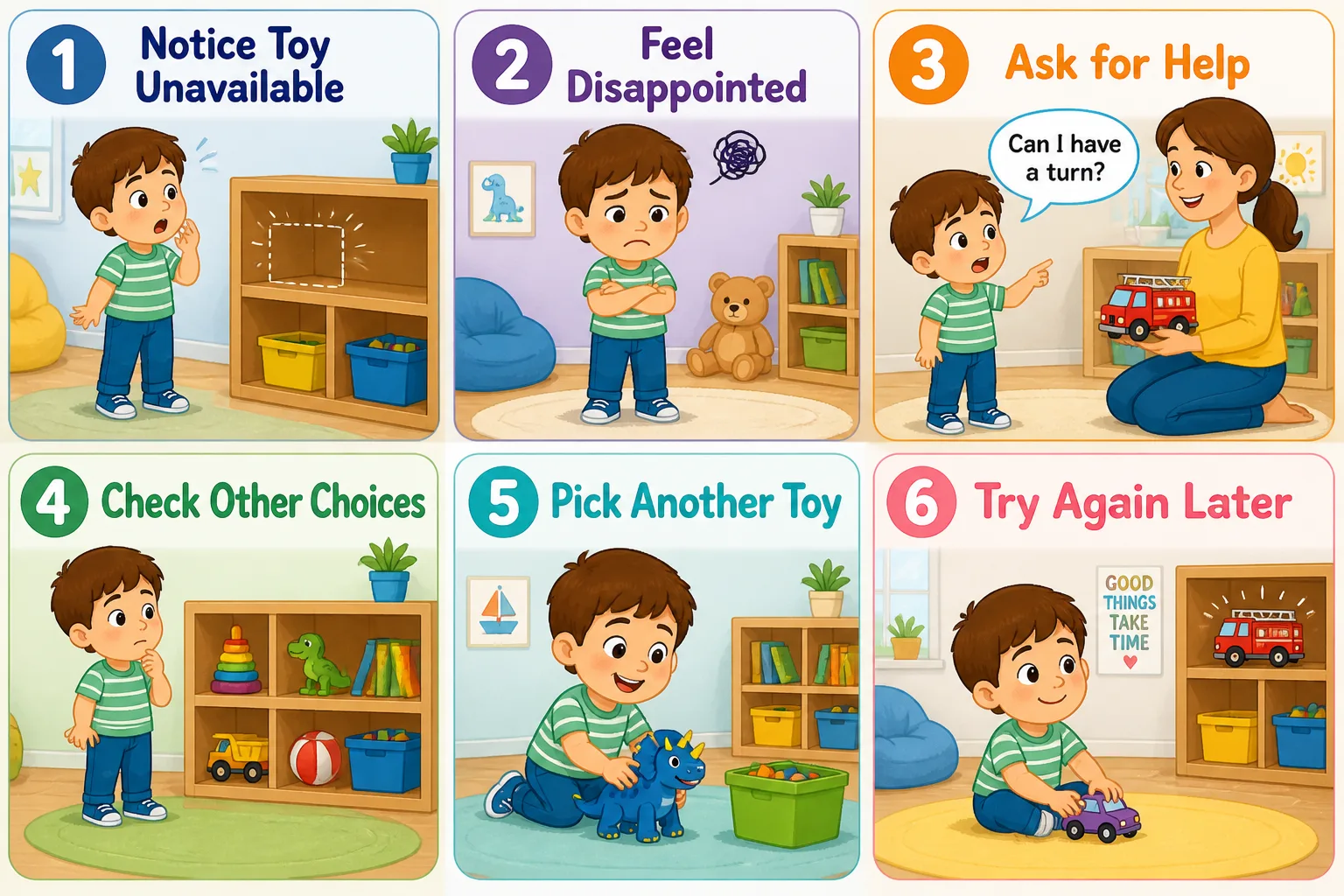

When a toy your child wants is unavailable, it can be a frustrating and confusing moment. This everyday challenge is common in homes, classrooms, and playgroups. Teaching children practical coping steps helps them understand their feelings, communicate their needs, and find positive alternatives. Here are 6 helpful steps to support your child when a toy is not available.
1. Notice Toy Unavailable
Help your child recognize the situation by calmly pointing out that the toy is not there or is being used by someone else. This awareness is the first step toward coping.
2. Feel Disappointed
It’s okay for children to feel sad or frustrated. Acknowledge their feelings without judgment. Saying something like, “I see you’re upset because the toy isn’t here,” validates their emotions.
3. Ask for Help
Encourage your child to communicate their need by asking an adult or caregiver for help. This can be through words, gestures, or AAC methods. For example, “Can I have help finding another toy?”
4. Check Other Choices
Guide your child to look at other available toys or activities. Offering two realistic options can empower them to make a choice without feeling overwhelmed.
5. Pick Another Toy
Support your child in selecting an alternative toy or activity. Celebrate this choice to reinforce positive problem-solving.
6. Try Again Later
Help your child understand that they can return to the preferred toy later. Using a timer or a visual schedule can assist in managing expectations.
Parents can support this process by previewing play situations, using simple language, and modeling helpful phrases like “Can I try again later?” or “Different please.” Allow your child time to process and offer breaks if needed. Avoid pressure or shaming, and remember that practice helps build flexibility and communication skills.
For related strategies on coping with disappointment and flexibility, see Changing Plans: 6 Helpful Steps for Kids to Cope and When I Make a Mistake: 6 Steps to Help Kids Cope.
Parent question: What other choices or phrases help your child when a favorite toy isn’t available?
Download the images in this article