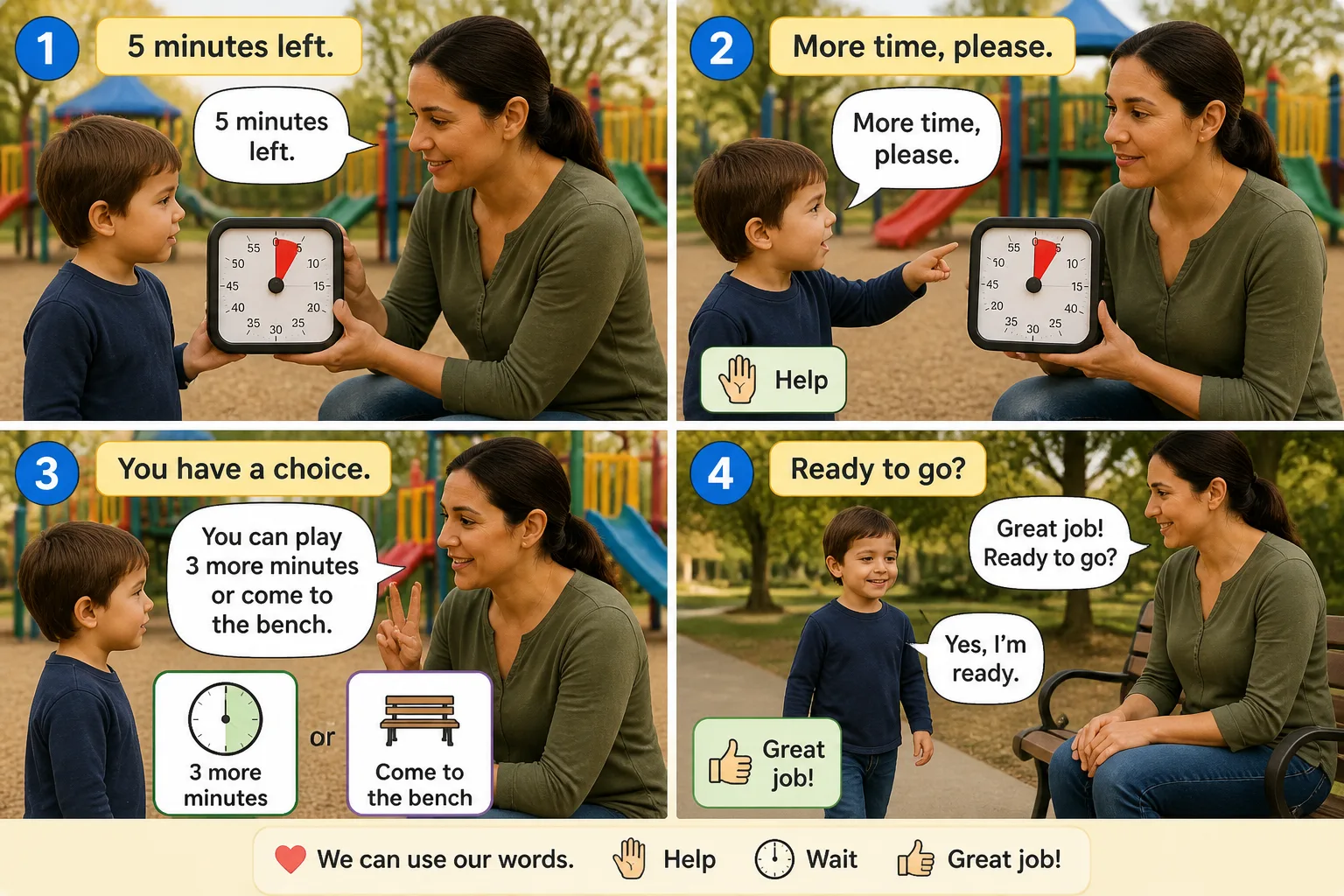

Leaving the playground can be a challenging moment for many young children, especially those who are autistic or have additional communication, sensory, or emotional support needs. The behavior might include resistance, crying, yelling, or even physical attempts to stay. Understanding why this happens and how to support your child through this transition can make leaving the playground a smoother, more positive experience for everyone involved.
What Leaving the Playground Behavior May Look Like
Common behaviors include refusal to leave, crying, tantrums, clinging to playground equipment, or running away. These actions often occur suddenly when the adult announces it is time to go. For children who struggle with change or have sensory preferences, the playground may feel like a safe, enjoyable space they are reluctant to leave.
Possible Reasons and Common Triggers
Before the behavior starts, several triggers may be at play:
- Unexpected transitions: Sudden announcements without warning can cause distress.
- Loss of control: The child may feel powerless when told to stop an activity they enjoy.
- Sensory needs: The playground may fulfill sensory seeking or regulation needs.
- Communication challenges: The child may want more time or help but lacks the words or tools to express this.
- Emotional attachment: Leaving a preferred place can cause anxiety or sadness.
What the Child May Be Communicating
Behaviors often communicate needs such as:
- I need more time to play.
- I don’t understand why I have to leave now.
- I need help to transition.
- I’m feeling overwhelmed or upset.
- I want to stay where I feel safe and happy.
What Adults Can Change Beforehand: Prevention Strategies
Prevention is key to reducing difficult behaviors when leaving the playground. Consider these strategies:
- Use visual timers or countdowns: Show your child how much time is left before leaving. Visual supports help children understand and prepare for transitions (National Autistic Society).
- Give advance warnings: Verbally or visually remind your child 5, 3, and 1 minute before leaving.
- Offer choices: Let your child choose between leaving immediately or playing a few more minutes, or choosing the route to leave.
- Keep routines consistent: Establish a regular playground schedule so your child knows what to expect.
- Prepare for sensory needs: Bring preferred sensory toys or allow a calming break before leaving.
Replacement Skills to Teach
Teaching your child useful ways to communicate their needs can reduce frustration and improve cooperation:
- Requesting “More time” or “Help”: Use words, signs, AAC devices, or pictures to express needing extra playtime or assistance.
- Requesting a “Break” or “Space”: Help your child ask for a calming moment if feeling overwhelmed.
- Using simple phrases like “Ready to go?” and “Okay”: Practice these to build understanding of the transition process.
- Pointing or gesturing to the timer or clock: Reinforces awareness of time limits.
What Adults Can Do During the Difficult Moment
When your child resists leaving, try these supportive responses:
- Stay calm and patient: Your calm presence helps regulate your child’s emotions.
- Acknowledge feelings: Say, “I see you want to keep playing. It’s hard to stop when you’re having fun.” This validates their emotions.
- Offer choices or alternatives: “Would you like to play for 3 more minutes or come sit with me on the bench?”
- Use the visual timer: Point to the timer to remind them of the agreed ending time.
- Provide physical support if needed: Walk alongside your child rather than pulling or forcing.
What to Do After the Child Is Calm
Once your child has transitioned, reinforce the positive behavior:
- Praise efforts: “Thank you for coming when it was time. You did a great job!”
- Offer a preferred activity: A quiet game or snack can help shift focus.
- Reflect together: Talk about what helped and what can be easier next time.
How to Practice During Calm Times
Practice these skills outside of playground visits:
- Role-play transitions: Use toys or pictures to simulate leaving scenarios.
- Use social stories: Read or create stories about playground visits and leaving.
- Practice using visual timers and communication tools: Build familiarity and confidence.
Environmental Adjustments
Consider these environmental changes to support smoother transitions:
- Choose playgrounds with quiet areas: Allows breaks if overwhelmed.
- Bring sensory tools: Fidget toys, headphones, or weighted items can help regulation.
- Plan visits during less busy times: Reduces sensory overload and distractions.
What Adults Should Avoid
Avoid strategies that increase stress or confusion, such as:
- Sudden, unexpected commands to leave.
- Threats, punishment, or shaming for resisting.
- Forcing physical compliance or using harsh tones.
- Ignoring the child’s communication attempts.
Individual Differences and When Professional Support May Be Needed
Every child is unique. Some may need more time, support, or alternative strategies. If your child’s behavior is frequent, intense, or dangerous, or if you feel overwhelmed, consider consulting a behavior specialist, occupational therapist, or speech-language pathologist for tailored guidance.
Key Takeaway
Leaving the playground is a transition that can be made easier by understanding your child’s needs, using prevention strategies like visual timers and choices, teaching communication skills to request more time or help, and responding calmly and respectfully during difficult moments.
How have you supported your child during playground transitions? What strategies have worked best for your family?
For related strategies on supporting communication and routines, see our articles on Asking for Help: 6 Positive Steps for Young Children and Using Visual Schedules: 6 Positive Steps for Young Children.
Download the images in this article