
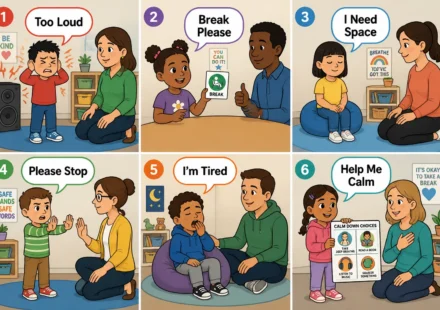
When I Need a Break: 6 Helpful Phrases for Young Children

Learn 6 helpful phrases young children can use to communicate when they need a break. Teach practical, respectful ways to say "Too Loud," "Break Please," and more.
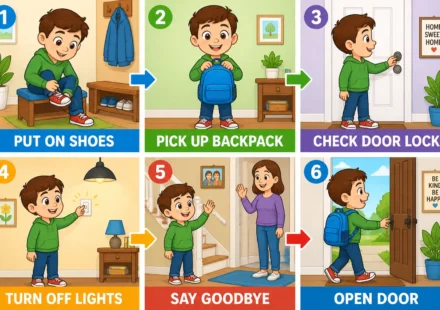
Leaving Home Routine Visual Learning Set: 6 Steps to Help Your Child Build Independence

Help your child build independence with this Leaving Home Routine visual learning set featuring 6 simple steps to prepare and leave the house safely.
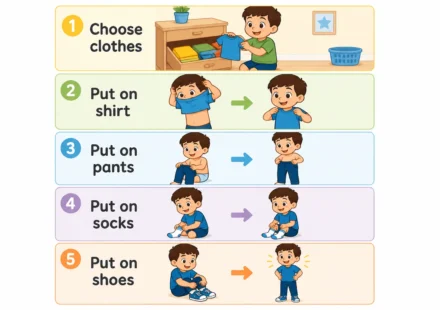
Getting Dressed: A 5-Step Visual Routine for Young Children

Learn a clear 5-step visual routine to support young children, including autistic children, in the daily transition of getting dressed with practical strategies and communication tools.
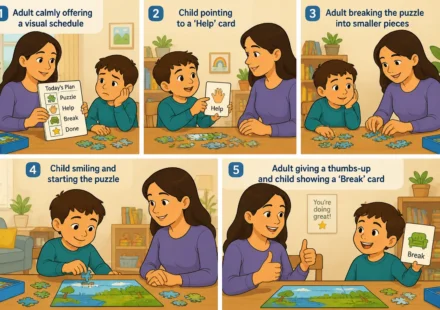
Difficulty Starting Tasks: 6 Positive Steps for Young Children

Difficulty starting tasks can be challenging for young children, especially those with autism or additional needs. Learn 6 positive steps to support your child with prevention, communication, and calm responses.
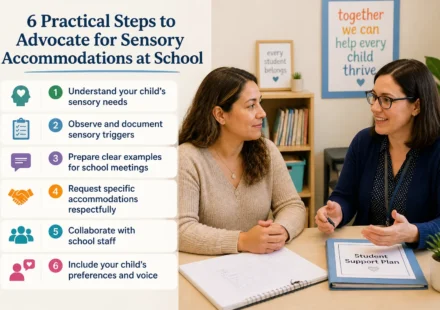
Advocating for Sensory Accommodations at School: A Practical Parent Guide

Learn practical steps to advocate for sensory accommodations at school that respect your autistic child's dignity and support their learning and comfort.
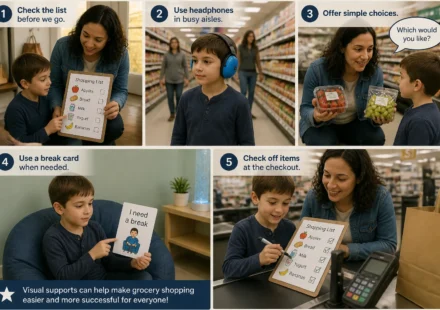
Making Grocery Shopping More Predictable

Discover practical strategies to make grocery shopping more predictable and manageable for young children with sensory or communication needs, turning a challenging outing into a positive experience.

Clothing Texture and Tag Sensitivity: Practical Sensory Support for Young Children

Learn how to support young children sensitive to clothing textures and tags with practical strategies that respect their sensory needs and comfort.
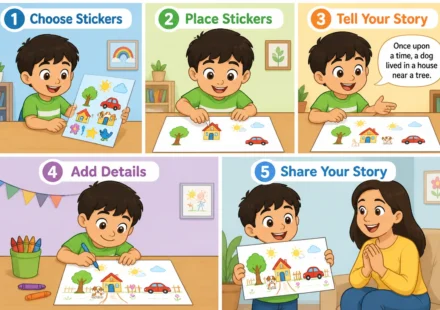
Simple Sticker Storytelling: A Fun Learning Through Play Activity

Discover Simple Sticker Storytelling, a fun learning through play activity that builds fine motor skills, language, and creativity in young children.
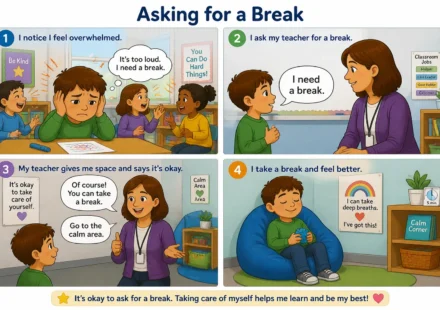
Asking for a Break

Learn how to help your child ask for a break when feeling overwhelmed. This guide teaches four key social skills to communicate needs and respect boundaries effectively.
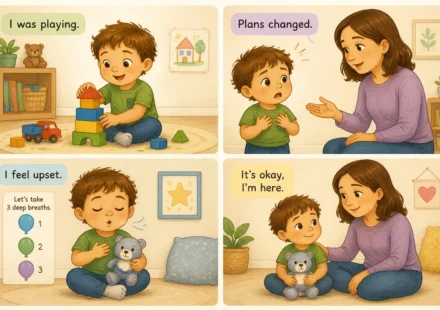
When Plans Suddenly Change: Helping Young Children Cope with Unexpected Changes
Learn practical ways to help young children, including autistic children, cope with unexpected changes in plans through supportive strategies and calm communication.