
Getting dressed is a daily routine that many young children experience, but for some, especially autistic children or those with sensory or communication needs, it can be a challenging transition. This article explains why getting dressed might be difficult, signs parents and caregivers may notice, and offers a clear 5-step visual routine with practical strategies to support children through this important daily task.
Why Getting Dressed Can Be Difficult
Getting dressed involves multiple steps and sensory experiences that can feel overwhelming. Children may face:
- Uncertainty: Not knowing what clothes to wear or what comes next can cause anxiety.
- Sensory sensitivities: Tags, seams, or fabrics may feel uncomfortable or irritating.
- Communication challenges: Difficulty understanding verbal instructions or expressing preferences.
- Processing time: Needing more time to understand and complete each step.
- Transition from preferred activities: Stopping play or screen time to get dressed can be hard.
Signs Parents May Notice
Children struggling with getting dressed might show:
- Resistance or refusal to start dressing.
- Fidgeting, pulling at clothes, or removing items repeatedly.
- Meltdowns or anxiety when asked to change clothes.
- Slow progress or needing repeated prompts.
- Requests for comfort items or extra time.
What the Child May Be Experiencing
Behind these behaviors, children might feel overwhelmed by sensory discomfort, uncertainty about the sequence, or frustration from communication barriers. They may need clear guidance, reassurance, and control over the process to feel safe and successful.
Preparing Beforehand
- Choose clothes together: Allow the child to pick from limited options to reduce overwhelm and increase choice.
- Prepare the environment: Lay out clothes in order or use a visual schedule nearby.
- Practice during calm times: Role-play dressing or use dolls to demonstrate steps.
- Use simple language: Keep instructions clear and concise.
Visual Supports and Communication Tools
Visual schedules and step-by-step pictures help children understand and anticipate what happens next. Communication tools like signs, gestures, or AAC devices can allow children to express preferences or ask for help. Examples of helpful phrases include:
- “What’s next?”
- “Help me.”
- “I need more time.”
- “All done.”
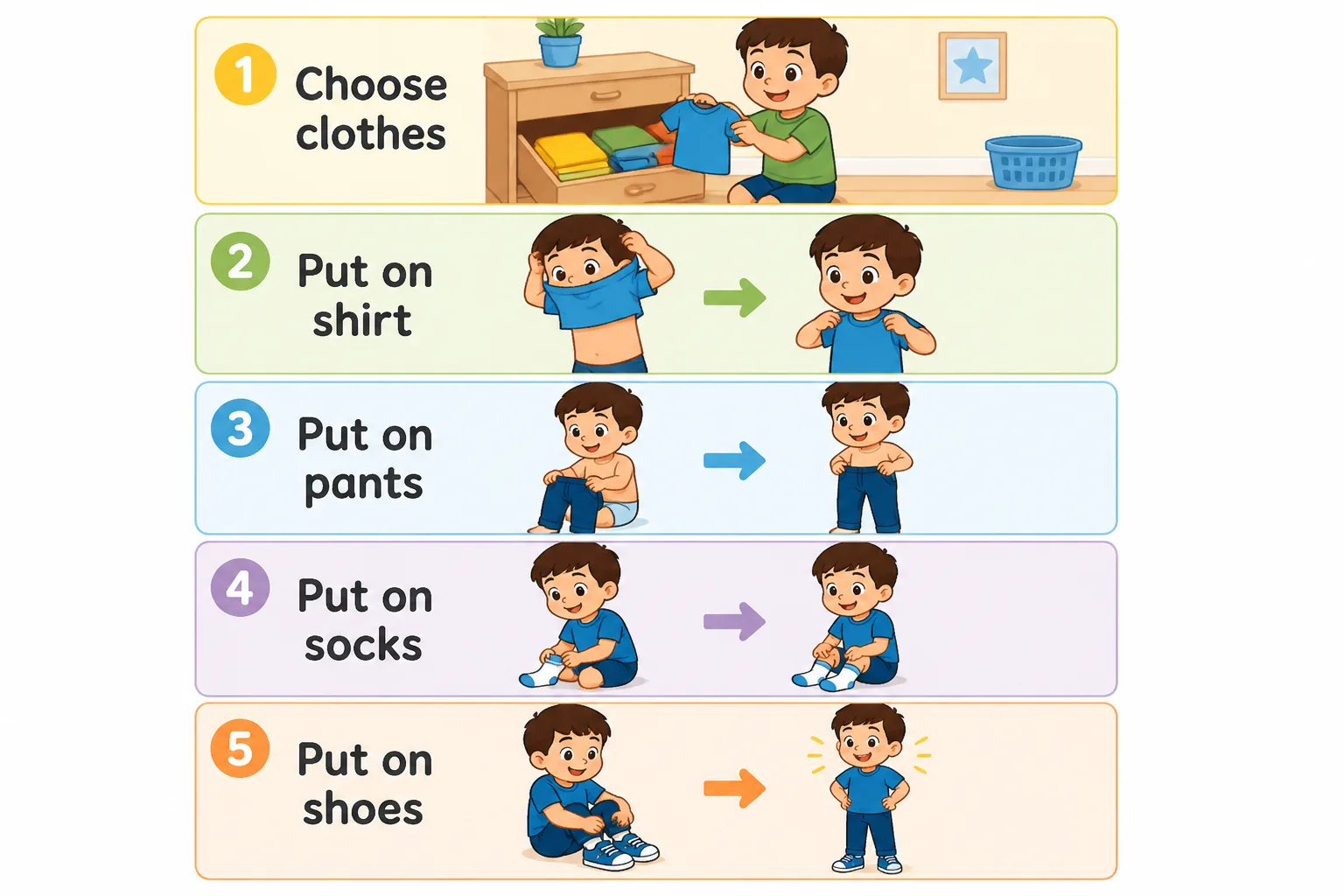
5-Step Visual Routine for Getting Dressed
- Choose Clothes: The child selects clothes from a small, manageable set.
- Put on Shirt: The child puts on their shirt, with adult support if needed.
- Put on Pants: The child puts on pants or skirt, encouraged to try independently.
- Put on Socks: The child puts on socks, which may require extra help for some.
- Put on Shoes: The child finishes by putting on shoes or slippers.
What Adults Can Say and Do
- Use calm, encouraging language: “First, choose your shirt. Then, we put it on together.”
- Give advance notice: “In five minutes, it will be time to get dressed.”
- Offer limited choices: “Do you want the red shirt or the blue one?”
- Allow processing time: Pause between steps and watch for readiness.
- Respect communication: Respond to signs, gestures, or AAC requests promptly.
Responding If the Transition Becomes Difficult
If the child resists or becomes upset, try to stay calm and supportive. Offer a break or use a countdown timer to signal when to start again. Avoid forcing or rushing. Instead, say, “I see you need a break. Let’s try again in a few minutes.”
Practicing During Calm Moments
Practice the routine when the child is relaxed, using play or storybooks about dressing. Repetition builds familiarity and reduces anxiety.
Environmental Adjustments
- Keep the dressing area quiet and free from distractions.
- Use soft lighting and comfortable seating.
- Have clothes organized and easy to reach.
Building Independence Gradually
Start by assisting with difficult steps and gradually encourage the child to do more independently. Celebrate successes to boost confidence.
What Adults Should Avoid
- Rushing or forcing the child to comply immediately.
- Using threats, punishment, or shaming.
- Ignoring the child’s communication or sensory needs.
- Expecting perfect performance every time.
Individual Differences and When to Seek Support
Every child is unique. Some may need more sensory accommodations or communication supports. If dressing remains a significant challenge causing distress, consulting occupational therapists or speech-language pathologists can provide tailored strategies.
Key Takeaway
Getting dressed can be a complex transition for many young children. Using a clear, predictable 5-step visual routine combined with communication supports and patience helps children feel safe, understood, and increasingly independent.
What strategies have you found helpful when supporting your child with getting dressed?
Download the images in this article