
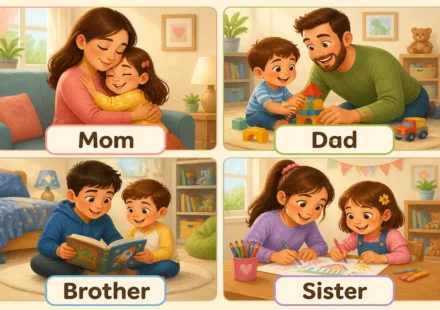
Learning Words for Family Members

Help your child learn and use important family member words like mom, dad, brother, and sister with practical tips and everyday examples.
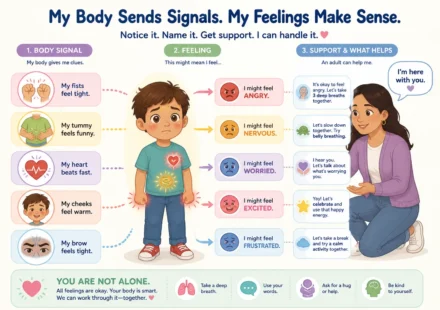
My Body Gives Me Clues: Helping Young Children Recognize Body Signals of Emotions

Discover how young children can recognize body signals of emotions and how adults can support this key step in emotional regulation with practical strategies.
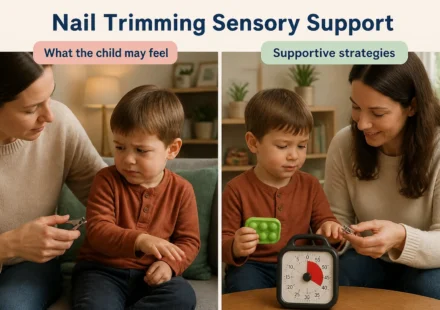
Nail Trimming Sensory Support: Helping Children Feel Comfortable

Nail trimming can be a sensory challenge for many children. Learn what your child may experience and practical strategies to make nail care comfortable and respectful.
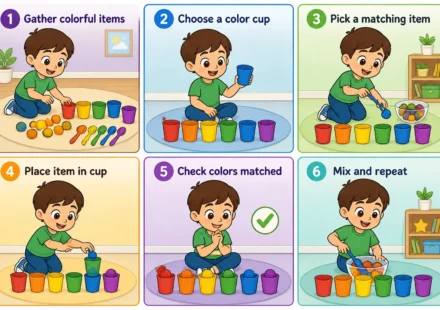
Simple Color Sorting: A Fun Learning Through Play Activity

Discover a simple color sorting activity that builds fine motor skills, color recognition, and problem solving in young children through playful learning.
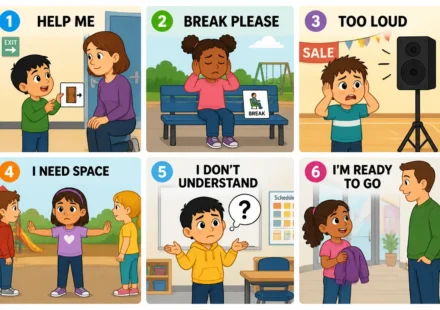
Words for Busy Places
Teach your child 6 practical phrases to communicate their needs and feelings in busy places like playgrounds or stores, using speech, gestures, or AAC.
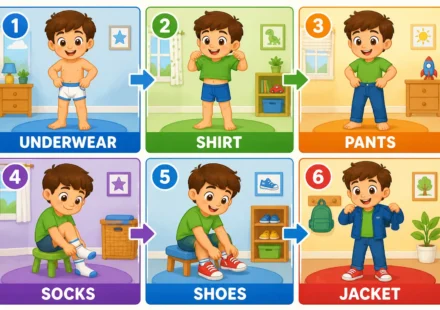
Getting Dressed Routine Visual Learning Set: 6 Steps to Help Your Child Build Independence

Teach your child to get dressed independently with this visual learning set showing 6 clear steps: underwear, shirt, pants, socks, shoes, jacket. Practical tips included.
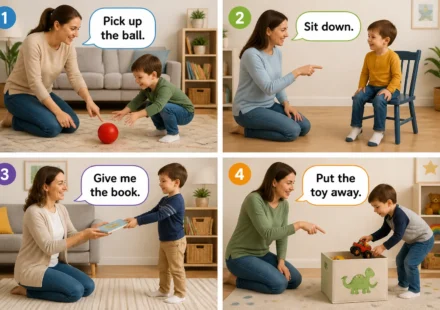
Following One-Step Directions
Learn how to help your child follow one-step directions with clear, simple language and everyday practice. This skill supports communication and independence.
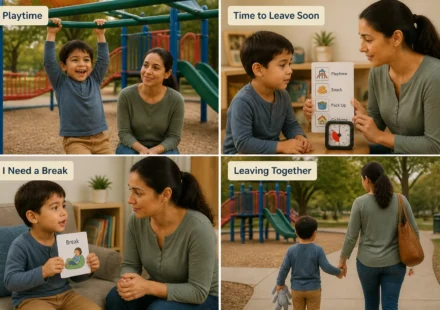
Leaving the Playground: Supporting Your Child Through a Difficult Transition

Leaving the playground can be tough for young children, especially those with autism. Learn four key supports to prepare, communicate, and support your child through this transition.
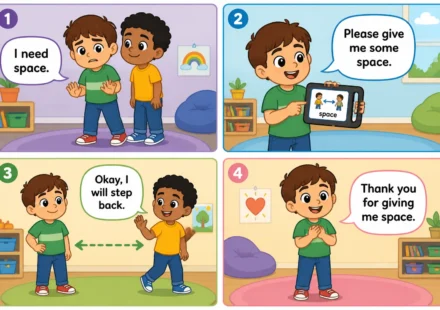
Asking for Personal Space
Learn how to help your child ask for personal space with 4 clear social skills that respect boundaries and communication preferences.
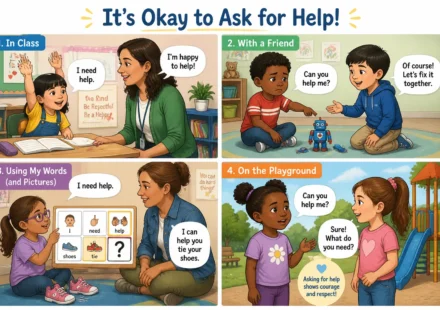
How to Ask for Help: 5 Clear Social Steps for Children

Learn how to teach young children, including autistic children, to ask for help with 5 clear social steps, practical communication options, and respectful support.