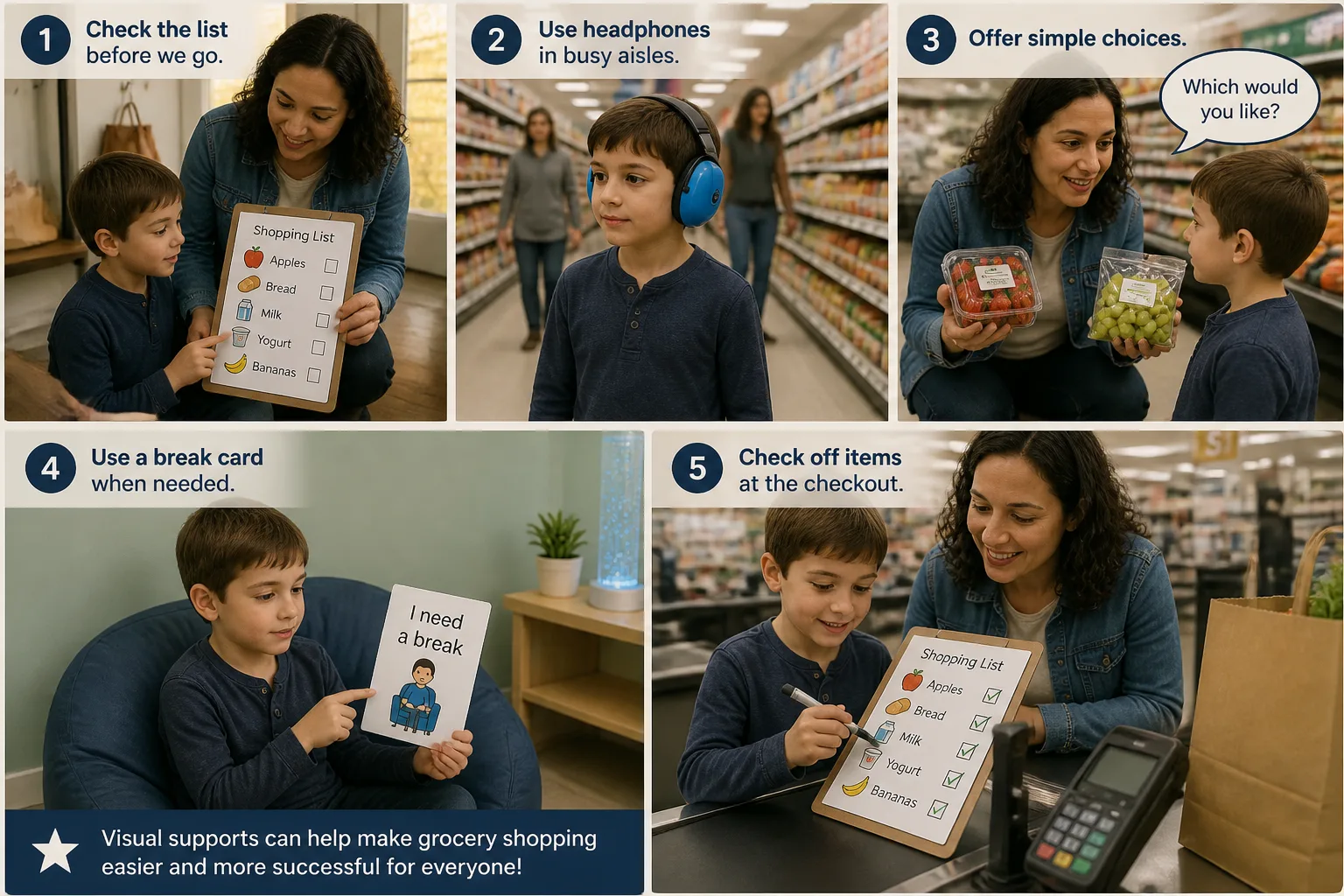

Grocery shopping can be a challenging everyday activity for many young children, especially those with autism or additional sensory, communication, or emotional needs. Making grocery shopping more predictable helps reduce anxiety, sensory overload, and behavioral challenges, making the experience smoother and more enjoyable for both children and parents.
Why This May Be Difficult
The grocery store is a complex environment with bright lights, loud noises, crowds, unfamiliar smells, and many unpredictable elements. For children who are sensitive to sensory input or who struggle with changes in routine, this can be overwhelming. Additionally, the social expectations and demands to wait, follow instructions, or make choices can add to the difficulty.
What Parents May Notice
- Child becoming anxious or distressed when entering the store.
- Meltdowns or withdrawal in busy aisles.
- Difficulty waiting in line or following directions.
- Resistance to touching or choosing items.
- Attempts to leave suddenly or avoid the trip altogether.
What the Child May Be Communicating
Children may express discomfort or overwhelm in ways that are not verbal. They might be saying, “This is too loud,” “I need a break,” or “I don’t understand what’s happening.” Recognizing these messages through behavior or communication supports is key to responding appropriately.
How to Prepare Beforehand
- Create a visual shopping list: Use pictures or simple words to show what will be bought, helping the child anticipate the trip.
- Discuss the plan: Talk about the trip, what to expect, and how long it will take.
- Practice at home: Role-play shopping scenarios or use storybooks about grocery shopping.
- Choose a quiet time: Shop during less busy hours to reduce sensory overload.
- Pack comfort items: Bring headphones, fidget toys, or preferred snacks.
What Can Help During the Situation
- Use noise-cancelling headphones: To reduce overwhelming sounds.
- Offer simple choices: Let the child pick between two items to increase engagement and autonomy.
- Provide clear communication: Use AAC devices, picture cards, signs, or gestures to support understanding.
- Allow breaks: Find a quiet spot or step outside if needed to calm down.
- Use positive reinforcement: Praise efforts and cooperation to encourage participation.
Helpful Words or Communication Supports
- “I need a break” (with picture card or sign)
- “What’s next?” (to prepare for the next step)
- “I want to help” (to encourage involvement)
- “Too loud” (to express sensory discomfort)
- “I’m ready” (to signal readiness to continue)
Building Independence Gradually
Start by involving the child in small tasks like holding the list or choosing one item. Gradually increase responsibilities as confidence grows, such as pushing the cart or paying at the register. Celebrate successes and be patient with setbacks.
What Adults Should Avoid
- Don’t rush the child or force participation.
- Avoid yelling or punishment for distress.
- Don’t ignore signs of overwhelm or communication attempts.
- Avoid unpredictable changes without warning.
- Don’t expect immediate compliance without support.
Real-Life Example
Emma, a 5-year-old with sensory sensitivities, used to refuse grocery trips. Her parents started using a picture shopping list and let her wear noise-cancelling headphones. They shopped during quiet hours and allowed her to choose between two snacks. Emma began to enjoy shopping and even helped check off items on the list.
When Extra Support May Help
If grocery shopping remains very challenging despite these strategies, consider consulting an occupational therapist for sensory strategies or a speech therapist for communication supports. Some families benefit from social stories or video modeling tailored to their child’s needs.
Key Takeaway
Making grocery shopping more predictable through preparation, communication, sensory supports, and gradual independence can transform a stressful outing into a positive experience for children and families.
What small change could you try on your next grocery trip to support your child’s comfort and participation?
For related strategies on managing transitions and big feelings, see Leaving the Playground: Supporting Your Child Through a Difficult Transition and Recognizing and Managing Big Feelings: Emotional Regulation for Young Children.
Download the images in this article