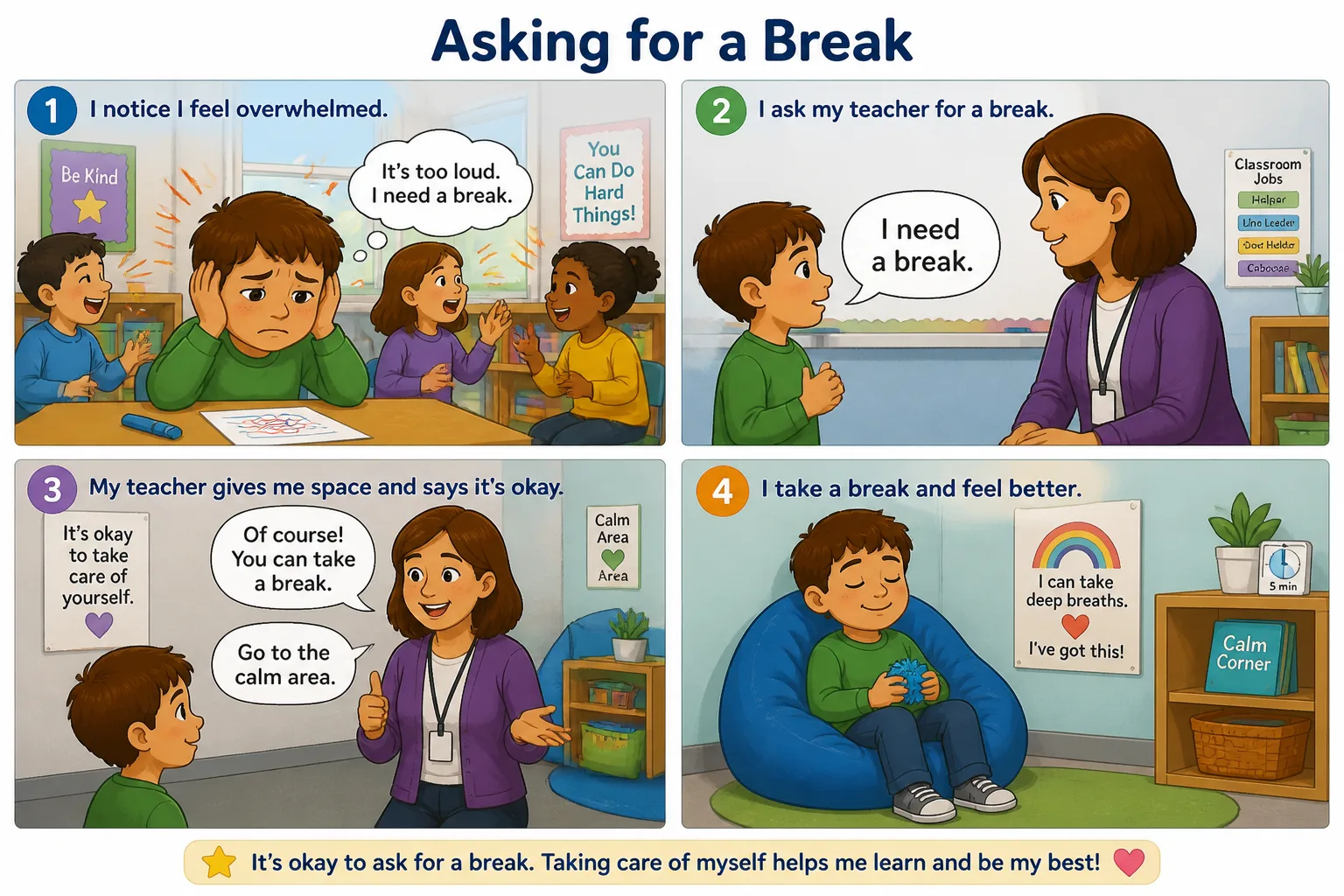

Asking for a break is an important social skill that helps children manage feelings of overwhelm, sensory overload, or tiredness in busy or challenging situations. This skill supports children to communicate their needs clearly and take care of themselves while respecting others around them.
Why This Skill Matters
Children often face environments that can be noisy, crowded, or emotionally intense, such as classrooms, playgrounds, or family gatherings. Knowing how to ask for a break helps them avoid feeling overwhelmed and supports their well-being. It also teaches others to respect their needs and boundaries, fostering positive social interactions and self-advocacy.
What May Make This Hard
- Difficulty recognizing or naming feelings of overwhelm or tiredness.
- Challenges with communication, such as limited speech or difficulty finding words.
- Uncertainty about how others will respond to a request for a break.
- Fear of missing out or being misunderstood by peers or adults.
What Parents May Notice
- The child withdrawing suddenly or becoming quiet in busy settings.
- Signs of distress like covering ears, fidgeting, or avoiding eye contact.
- Difficulty expressing the need to pause or leave an activity.
- Frustration or meltdowns when overwhelmed without a clear way to communicate.
What the Child Can Learn
Here are four key social skills related to asking for a break:
- Recognizing the Need for a Break: Understanding internal signals like feeling tired, anxious, or overwhelmed.
- Communicating the Need Clearly: Using speech, AAC, gestures, signs, or pictures to say phrases like “I need a break” or “Can I have some quiet time?”
- Respecting Personal Boundaries: Asking politely and calmly without feeling pressured to explain too much or apologize.
- Responding to the Request: Adults and peers offering support by allowing the child space and time to rest without judgment.
Helpful Words or Phrases
- “I need a break.”
- “Can I have some quiet time?”
- “I’m feeling tired.”
- “Please, I need space.”
- “I want to sit down for a while.”
How Parents Can Practice
- Model asking for breaks yourself in everyday situations and explain why it helps.
- Role-play scenarios where the child can practice using their preferred communication method to ask for a break.
- Create a calm, safe space at home or school where the child can go when they need a break.
- Use visual supports like break cards or timers to help the child understand and request breaks.
What Adults Can Say
- “It’s okay to take a break when you need one.”
- “Thank you for telling me you need some quiet time.”
- “You can go to your calm spot whenever you feel overwhelmed.”
- “Let me know if you want me to come check on you later.”
What to Avoid
- Pressuring the child to stay in a situation when they feel overwhelmed.
- Ignoring or dismissing the child’s request for a break.
- Forcing eye contact or speech when the child is uncomfortable.
- Making the child feel guilty or ashamed for needing time away.
Real-Life Example
During a noisy classroom activity, Emma starts covering her ears and looks anxious. She uses her AAC device to say, “I need a break.” Her teacher nods and says, “Thank you for telling me, Emma. You can go to the quiet corner until you feel ready to join us again.” Emma moves calmly to the quiet corner and relaxes, feeling safe and respected.
Key Takeaway
Teaching children how to ask for a break empowers them to manage their needs and communicate clearly in social settings. This skill supports their emotional well-being and helps others understand and respect their boundaries.
How do you support your child when they need a break in busy or challenging situations?
For related skills, see our articles on Teaching Children to Ask for Space and Handling Disagreement.
Download the images in this article