

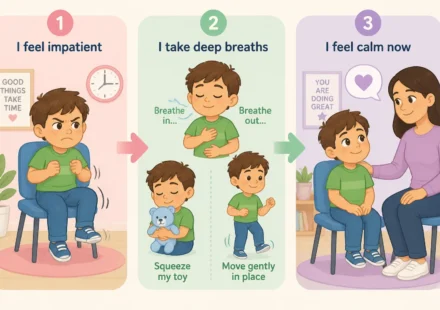
Waiting Can Feel Hard: Helping Young Children Understand and Manage Waiting

Waiting can feel hard for young children, including autistic children. Learn how to recognize feelings, use coping strategies, and support your child through waiting moments.
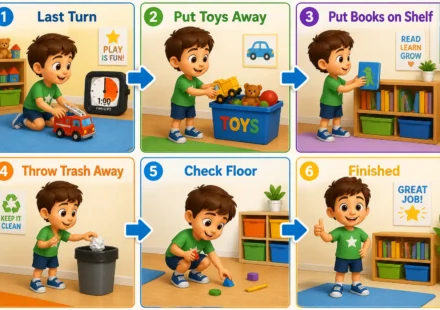
Transition from Playtime to Cleanup: 6-Step Visual Routine for Young Children
Support your child's smooth transition from playtime to cleanup with this 6-step visual routine that promotes predictability, communication, and independence.
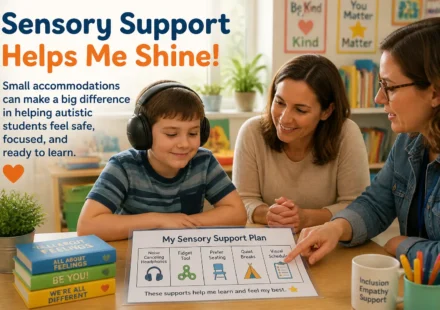
How to Advocate for Sensory Accommodations in Your Child’s IEP
Learn how to advocate for sensory accommodations in your child's IEP to help them feel comfortable and succeed at school.
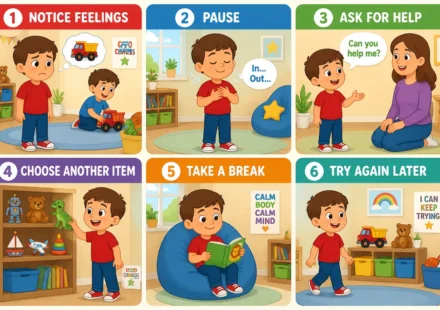
When Someone Else is Using My Favorite Item: 6 Helpful Steps for Kids to Cope
Help your child cope when someone else is using their favorite item with 6 practical steps: notice feelings, pause, ask for help, choose another item, take a break, and try again later.
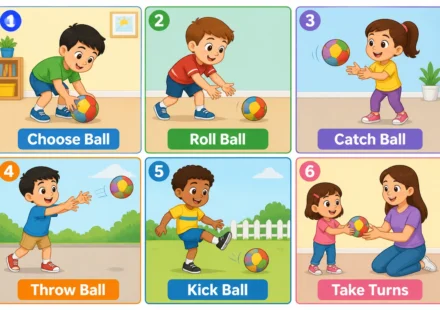
Ball Play: A Fun Learning Through Play Activity
Explore a fun ball play activity with 6 easy steps that help children develop gross motor skills, hand-eye coordination, and turn-taking through play.

Study Explores Shared Genetic Factors in Childhood Heart Defects and Neurodevelopmental Disorders
A recent study using multiomic profiling highlights shared genetic and epigenetic factors in children with congenital heart disease and neurodevelopmental disorders, offering new insights into their co-occurrence.
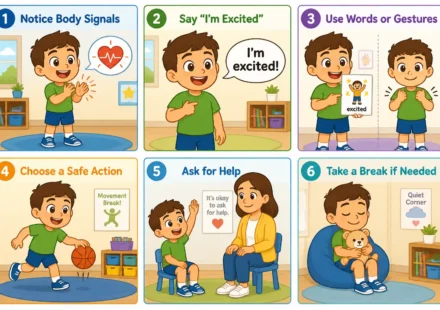
When I’m Excited: 6 Steps to Recognize and Manage Excitement in Young Children
Help your child recognize and manage excitement with 6 simple steps: notice body signals, say "I'm excited," communicate safely, choose safe actions, ask for help, and take breaks.

Top 10 Autism Research Publications Sponsored by ASF in 2024
The Autism Science Foundation highlights ten key autism research studies from 2024, covering genetic risks, interventions, assessments, and lived experiences to inform families and professionals.
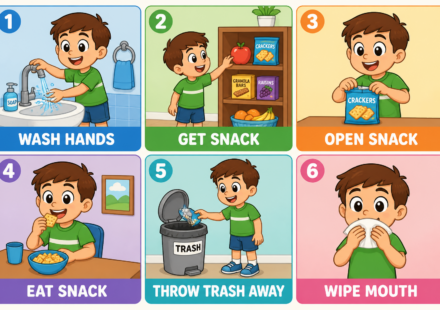
Snack Time Routine Visual Learning Set: 6 Steps to Help Your Child Build Independence
Teach your child the snack time routine with 6 simple steps: wash hands, get snack, open snack, eat, throw trash away, and wipe mouth. Build independence with this visual guide.