
As a mom raising an autistic child, one of the biggest challenges I faced was helping my child feel comfortable in the classroom. Sensory overload can make school overwhelming, but sensory accommodations in your child’s IEP can make a real difference.
What Are Sensory Accommodations?
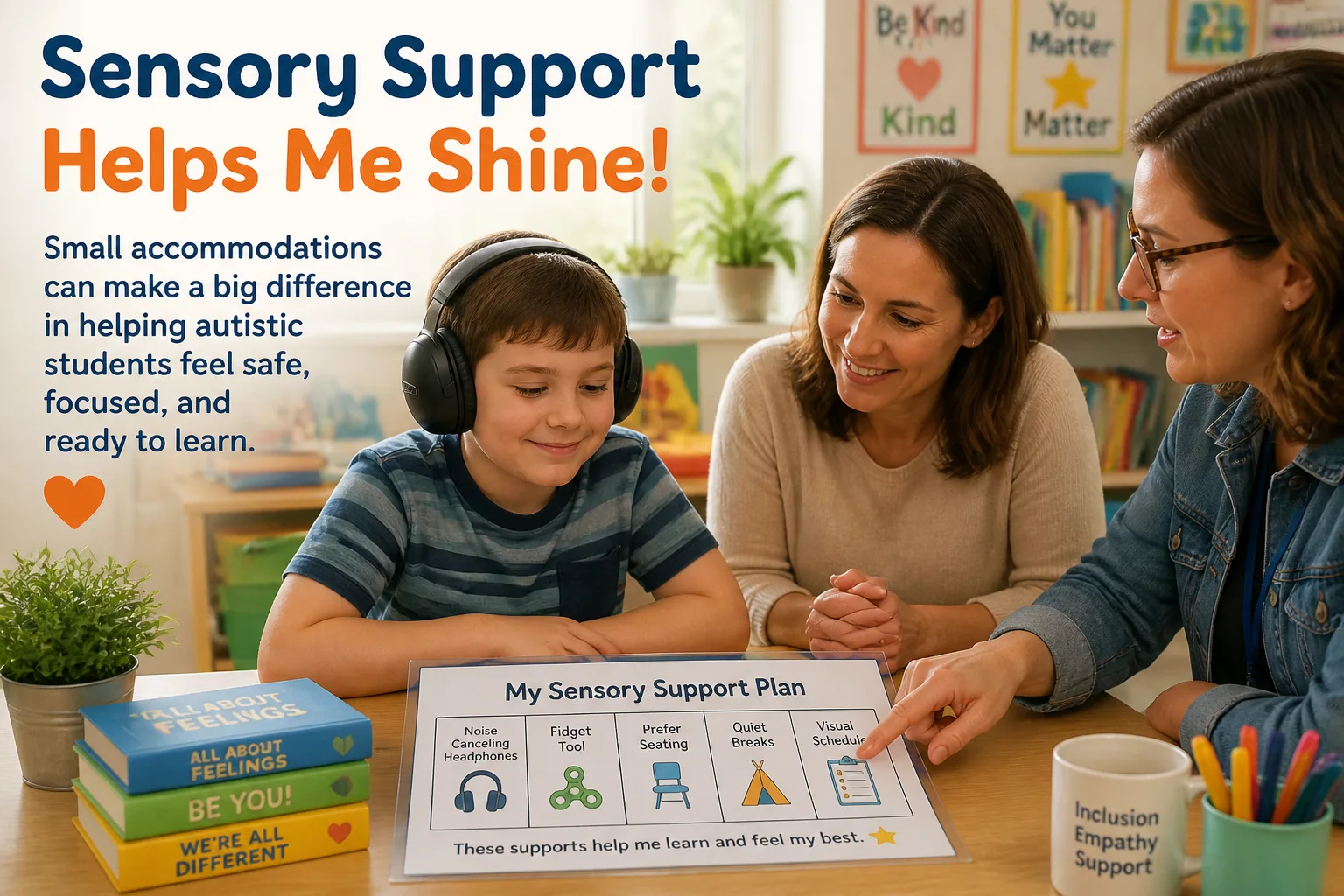
Sensory accommodations are supports that help manage sensory input your child finds difficult—like loud noises, bright lights, or tactile distractions. These might include noise-canceling headphones, a quiet corner, or fidget tools.
How to Advocate for Sensory Accommodations in Your Child’s IEP
- Observe and Note: Pay attention to when your child seems overwhelmed at school. Are there specific triggers like loud hallways or fluorescent lighting?
- Talk with Teachers and Therapists: Share your observations and ask if they’ve noticed similar challenges. Collaboration is key.
- Request an IEP Meeting: Ask to discuss adding sensory accommodations tailored to your child’s needs.
- Be Specific: Suggest concrete accommodations, like noise-canceling headphones during assemblies or scheduled breaks in a quiet space.
- Follow Up: After the IEP meeting, check in regularly to see how the accommodations are working and adjust as needed.
Why It Helps
When sensory challenges are addressed, your child can focus better, feel less anxious, and participate more fully in class. It’s about creating a learning environment where they can thrive.
Every child is unique, so what works for one may not work for another. The key is to keep advocating and communicating openly with your child’s school team.
Have you tried sensory accommodations in your child’s IEP? What strategies have helped your family?
Follow Love Beyond Words for more practical autism parenting tips and support.
Download the images in this article for your reference and sharing purposes.