Transition from Playtime to Cleanup: 6-Step Visual Routine for Young Children

Helping young children transition smoothly from playtime to cleanup can reduce frustration and build independence. This Transition from Playtime to Cleanup routine breaks down the process into six clear, manageable steps that children can understand and follow. Using a visual routine like this supports predictability, communication, and gradual learning of responsibility.
Why Visual Routines Help with Transitions
Transitions can be challenging because children may not know what is expected next or feel overwhelmed by sudden changes. Visual routines provide a clear sequence of actions, reducing uncertainty and supporting communication for children who may have difficulty with verbal instructions alone. This approach is especially helpful for autistic children or those needing extra support with flexibility and predictability.
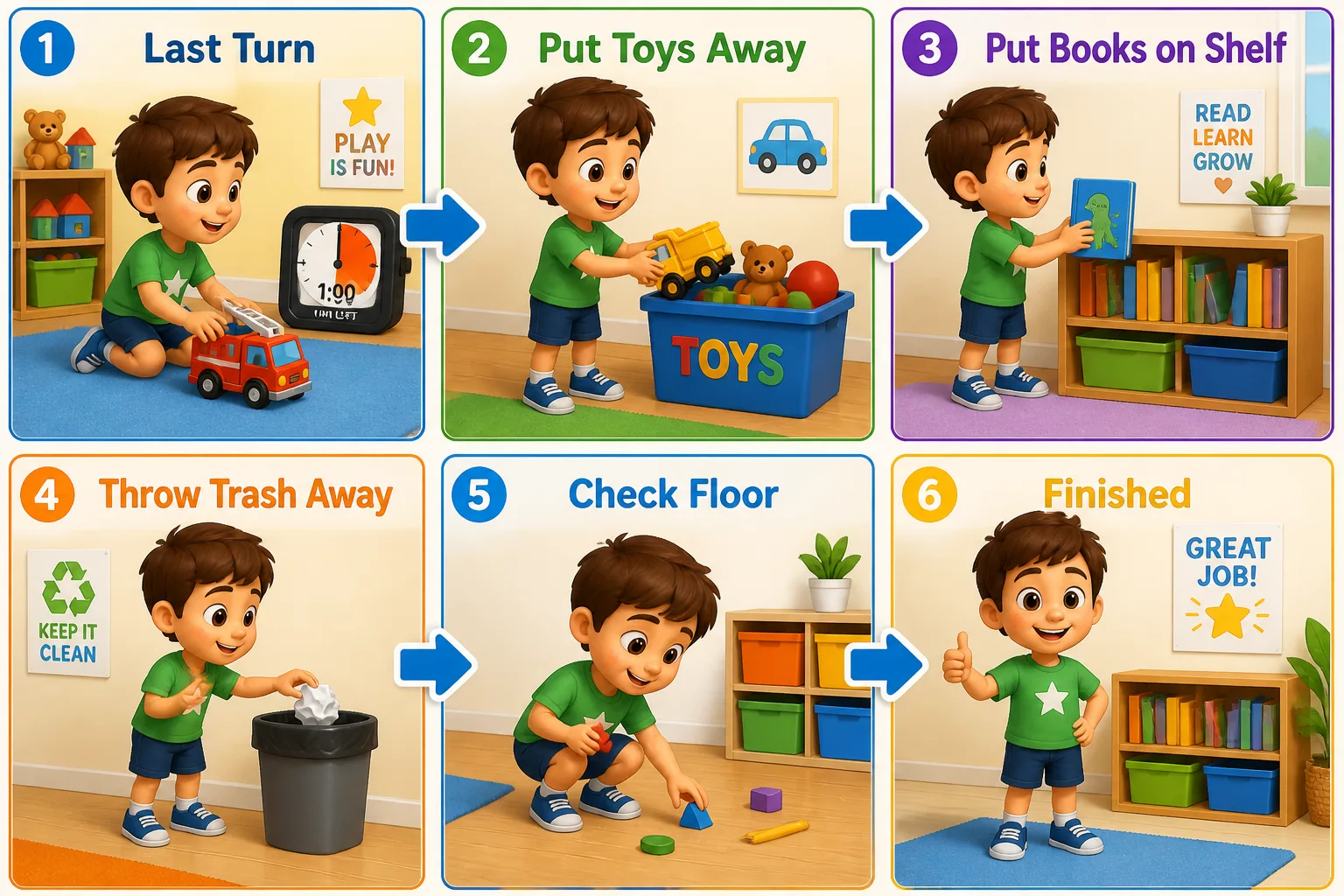
6-Step Transition from Playtime to Cleanup Routine
1. Last Turn
Give a gentle warning that playtime is ending soon. Using a timer or countdown helps the child prepare mentally. For example, “One more turn, then cleanup.”
2. Put Toys Away
Encourage the child to place toys back into their designated bins or boxes. Use clear labels or pictures on bins if helpful.
3. Put Books on Shelf
Guide the child to put books neatly back on the shelf, reinforcing order and care for belongings.
4. Throw Trash Away
If any scraps or trash are present, show the child how to throw them into the trash bin.
5. Check Floor
Help the child scan the floor for any remaining items and pick them up to complete the cleanup.
6. Finished
Celebrate completion with a positive gesture like a thumbs up or a smile. Praise participation and effort.
Supporting Your Child Through This Transition
Parents can preview the visual routine before starting playtime and remind the child about the upcoming cleanup. Use consistent, simple language and give advance warnings. Visual timers or countdowns can help signal when playtime is almost over. Allow the child to finish an appropriate final step before moving on. Praise their efforts and gradually reduce assistance as they become more independent.
For more ideas on supporting smooth transitions, see our Leaving the House: 6-Step Visual Routine to Support Smooth Transitions.
Key Takeaways
- Break transitions into clear, manageable steps.
- Use visual supports to enhance predictability and communication.
- Give advance warnings and use timers when helpful.
- Praise participation and allow processing time.
Download the images in this article