
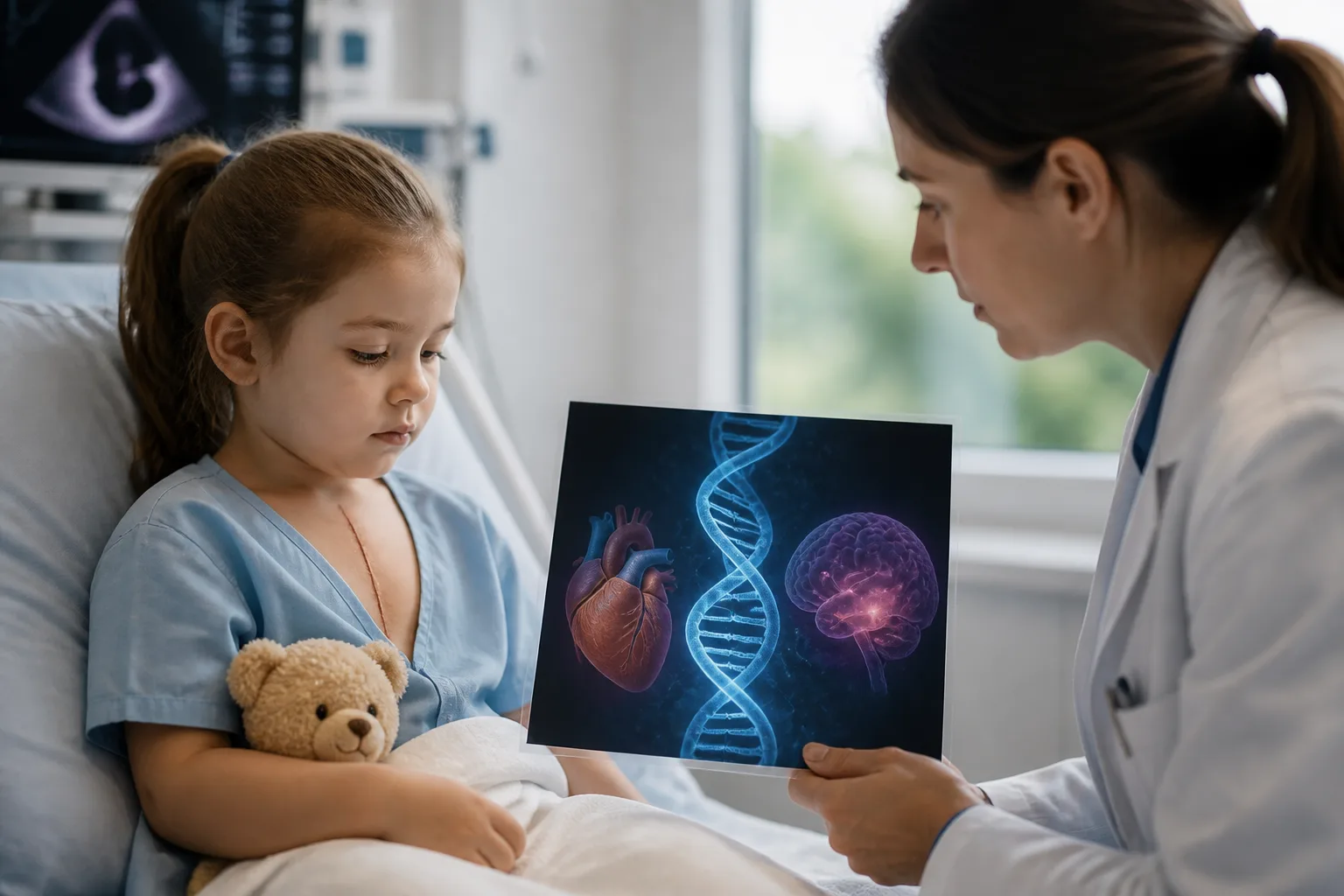
Study Explores Shared Genetic Factors in Childhood Heart Defects and Neurodevelopmental Disorders

New Research Links Genetic Pathways in Pediatric Heart and Neurodevelopmental Conditions
Recent scientific investigation has shed light on potential genetic connections between congenital heart disease (CHD) and neurodevelopmental disorders (NDD) in children. This study, published in Human Mutation, used a comprehensive multiomic approach to analyze genetic, transcriptomic, and epigenomic data from affected children and their families. The findings suggest overlapping biological mechanisms that may contribute to both conditions, which often co-occur in pediatric patients.
Key Findings from Multiomic Analysis
The research team examined a cohort consisting of 14 family trios and one duo, including children diagnosed with CHD, NDD, or both. Blood samples underwent whole-genome sequencing, RNA sequencing, and DNA methylation profiling to uncover genetic variants and epigenetic changes.
Among the results, researchers identified one large chromosomal deletion of approximately 2.5 million base pairs and seven variants classified as likely pathogenic or pathogenic. Two of these variants were in autosomal dominant genes relevant to the children’s clinical features, while five were in autosomal recessive genes consistent with carrier status.
Notably, a de novo splice-disrupting variant was found in the ARID1B gene, which plays a role in chromatin remodeling. This variant was confirmed through RNA sequencing and is considered likely pathogenic. DNA methylation analysis further revealed distinct epigenetic patterns between CHD and NDD patients, with those having CHD showing signs of accelerated biological aging.
When compared to a control group of 178 individuals, four patients exhibited extreme methylation abnormalities, including the child carrying the ARID1B mutation. These epigenetic differences may provide insight into disease mechanisms and potential biomarkers.
Context and Implications for Families
Children born with congenital heart defects often face higher risks of neurodevelopmental challenges such as attention-deficit/hyperactivity disorder (ADHD) and autism spectrum disorder (ASD). While environmental factors during pregnancy and after birth—such as placental issues, oxygen deprivation, and cardiac surgery—have been implicated, this study emphasizes the importance of shared genetic influences.
Understanding these genetic and epigenetic links could improve diagnostic accuracy and inform personalized care strategies. Integrative multiomic profiling holds promise for uncovering the complex biology underlying these co-occurring conditions, potentially guiding early interventions and family counseling.
Limitations and Considerations
While the study provides valuable insights, it involved a relatively small sample size, which may limit the generalizability of the findings. Further research with larger cohorts is necessary to validate these genetic associations and clarify their clinical significance.
Moreover, the presence of genetic variants and epigenetic changes does not establish direct causation but rather indicates associations that warrant deeper investigation.
Source
For more detailed information, see the original research report: Multiomic Investigation of Shared Genetic Pathways in Paediatric Congenital Heart Disease and Neurodevelopmental Disorders.
Download the images in this article