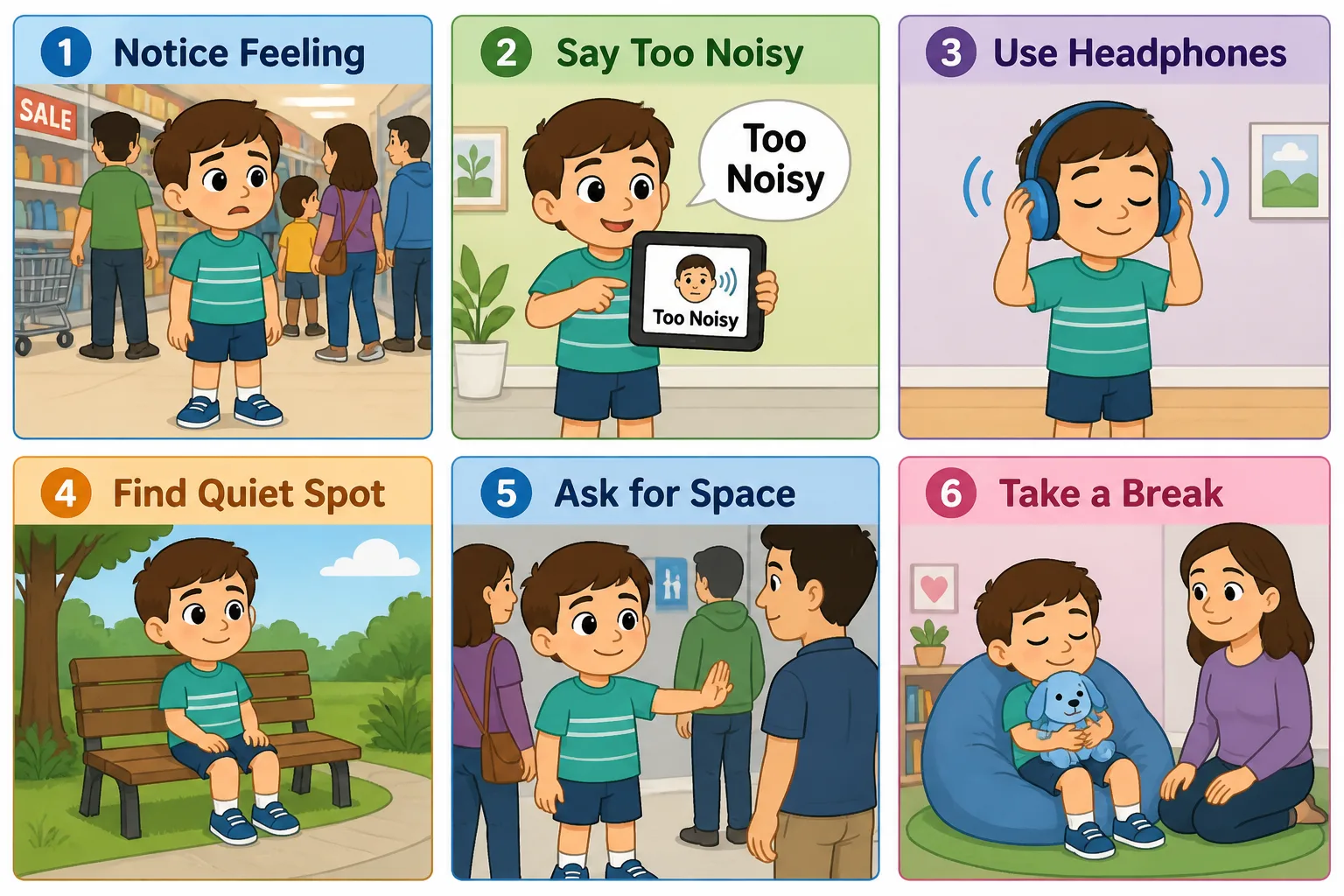

Managing crowded spaces can be overwhelming for many children, especially those with sensory sensitivities. This visual sensory support guide teaches 6 practical steps to help children recognize discomfort, communicate their needs, and find ways to feel safer and more comfortable in busy environments like stores, playgrounds, or events.
1. Notice Feeling
Encourage children to pay attention to their body signals when in a crowded place. Signs like feeling overwhelmed, anxious, or restless can mean the environment is too much right now.
2. Say “Too Noisy”
Teach children to communicate their discomfort using words, gestures, or AAC tools. Saying “Too Noisy” or a similar phrase lets adults and others know the child needs support.
3. Use Headphones
Offering noise-cancelling headphones or earbuds can help reduce overwhelming sounds. This simple tool can make a big difference in noisy spaces.
4. Find Quiet Spot
Help children identify and move to a quieter area nearby, such as a bench, corner, or less crowded room, to regain calm and reduce sensory input.
5. Ask for Space
Teach children to ask for physical space by using calm gestures or phrases like “Please give me space.” This helps them avoid feeling crowded or touched unexpectedly.
6. Take a Break
Encourage taking short breaks away from the crowd, sitting down with a comforting item, or resting with a trusted adult to help regulate sensory overload.
Parents can support their child by observing their signals, preparing for outings with simple plans, offering choices like headphones or breaks, and respecting their child’s pace and communication style. Remember, the goal is to help the child feel safe and understood, not to force them to tolerate discomfort.
What is one way you help your child feel comfortable in busy places?
For more sensory support strategies, see our Managing Bright Lights: 6 Sensory Support Steps for Children and Teaching Common Household Items: 6 Everyday Words for Young Children.
Download the images in this article