
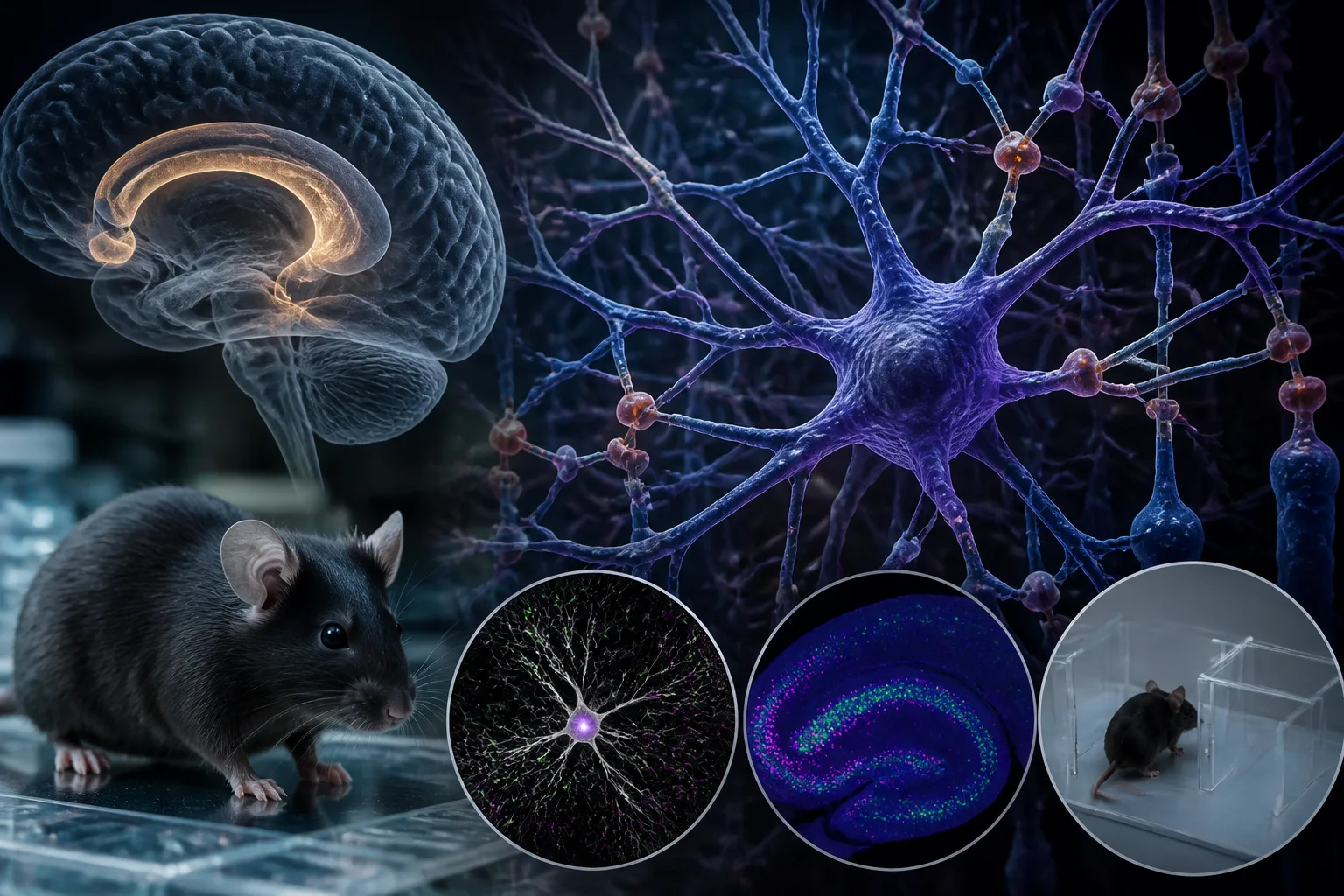
Astrocytes in the Hippocampus Influence Inhibitory Circuit Development and Behavior in Fragile X Syndrome Mouse Model

New Insights into Fragile X Syndrome and Astrocyte Function
Fragile X Syndrome (FXS), a common inherited cause of autism spectrum traits and intellectual disability, arises from the silencing of the Fmr1 gene. While previous research has largely focused on neurons, recent findings highlight a significant role for astrocytes—star-shaped glial cells—in the development of inhibitory brain circuits affected in FXS.
Study Focus and Methods
A study published in Journal of Neurochemistry investigated how astrocyte-specific deletion of the Fmr1 gene affects inhibitory signaling in the hippocampus, a brain region critical for spatial learning and social behaviors often impaired in FXS. Using slice electrophysiology in a mouse model with conditional knockout (cKO) of Fmr1 in astrocytes, researchers examined changes in inhibitory synapses and receptor expression in the CA1 hippocampal area.
Key Findings on Inhibitory Synapses and GABA Signaling
The study found that although the density of perisomatic GABAergic synapses and expression of synaptic GABAA receptor subunits were reduced in cKO mice, the amplitude of spontaneous inhibitory postsynaptic currents (sIPSCs) in pyramidal neurons was paradoxically increased. This suggests enhanced phasic inhibition despite fewer synapses.
In contrast, tonic inhibition and extrasynaptic GABAA receptor expression, which were impaired in global Fmr1 knockout mice, remained unaffected in astrocyte-specific cKO mice. This distinction points to a unique astrocyte-related mechanism influencing phasic but not tonic inhibition in the hippocampus.
Role of GABA Transport and Parvalbumin-Expressing Cells
The researchers propose that abnormal GABA transport by astrocytes lacking Fmr1 leads to elevated extracellular GABA levels, enhancing sIPSC amplitude. This altered GABA environment may impact the function of parvalbumin (PV)-expressing interneurons, which are crucial for inhibitory control.
Importantly, acute pharmacological inhibition of GABA transport in astrocytes increased PV expression and improved both spatial memory and social behaviors in the cKO mice, suggesting potential therapeutic avenues.
Implications for Understanding FXS and Potential Treatments
This study highlights astrocytes as active contributors to the development and regulation of hippocampal inhibitory circuits in Fragile X Syndrome, particularly through their role in GABA transport. These findings broaden the understanding of FXS pathophysiology beyond neurons alone and may inform strategies targeting astrocyte function to alleviate cognitive and social deficits.
Considerations and Future Directions
While these results are promising, they derive from a mouse model with selective gene deletion in astrocytes, and further research is needed to translate these findings to human FXS. The complex interplay between neurons and glial cells in inhibitory signaling warrants additional investigation to fully elucidate mechanisms and therapeutic targets.
For more detailed information, see the original study published in the Journal of Neurochemistry: source article.
Download the images in this article