
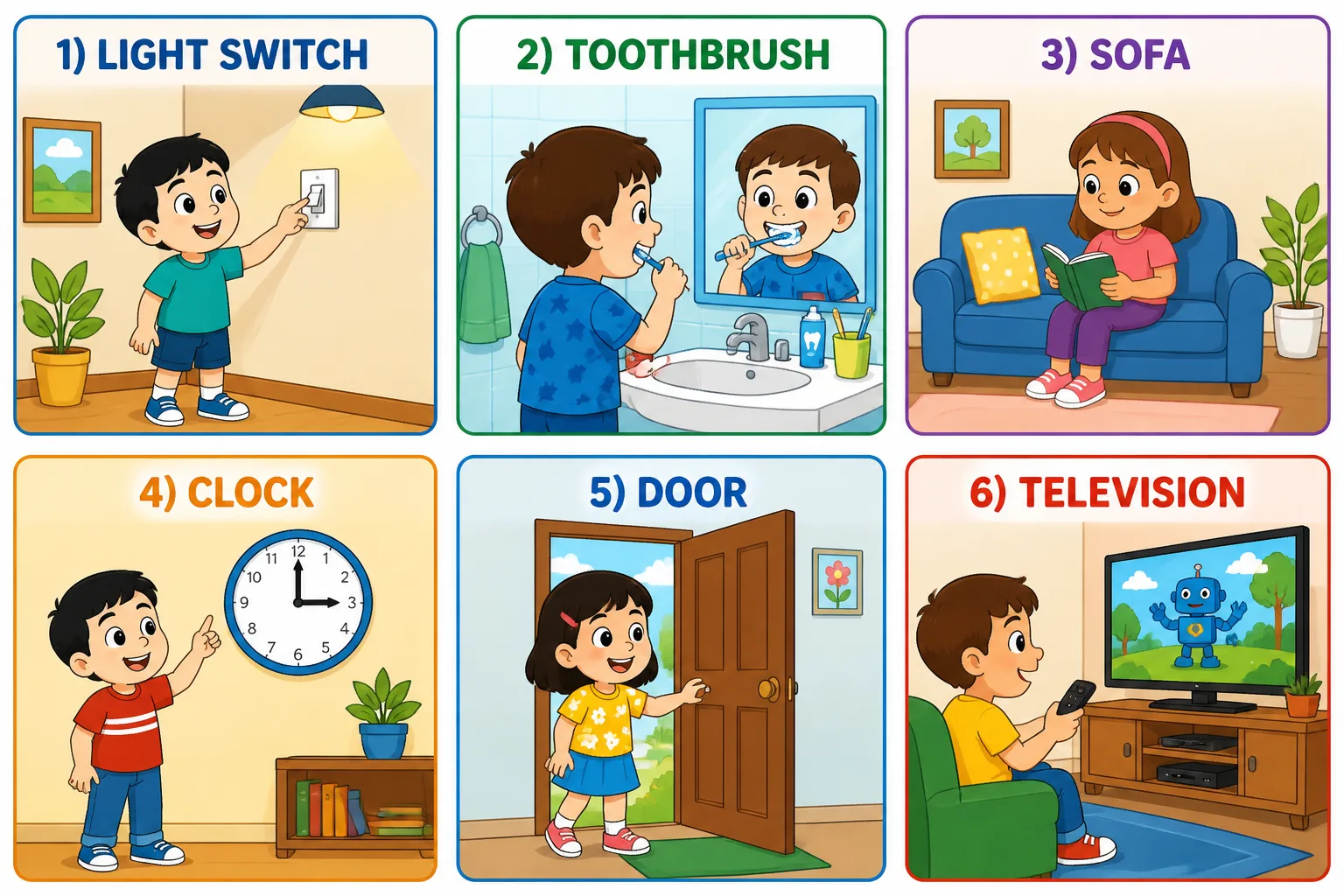

Introducing young children to common household items is a practical way to build vocabulary and support language development. This visual learning post teaches six everyday household words that children often see and use. Each panel shows a clear cartoon example paired with a simple label to help children understand and express these words. These words are useful for naming, describing, and forming simple sentences about daily routines.
Why Teach Household Items?
Household items are part of a child’s daily environment, making them perfect for natural language learning. Naming these objects helps children connect words to their surroundings, improving comprehension and expressive language skills. Recognizing and talking about familiar items also supports following directions and answering questions.
6 Common Household Items to Learn
- Light Switch: A child reaching to turn on the light switch. Use phrases like “Turn on the light” or “The light switch is here.”
- Toothbrush: A child brushing teeth. Model phrases such as “Brush your teeth” or “This is your toothbrush.”
- Sofa: A child sitting on a sofa. Say “Sit on the sofa” or “The sofa is soft.”
- Clock: A child pointing at a wall clock. Use “Look at the clock” or “What time is it?”
- Door: A child opening a door. Model “Open the door” or “Close the door.”
- Television: A child watching TV with a remote. Say “Turn on the TV” or “Watch the television.”
How Parents Can Practice at Home
Parents can naturally practice these words by naming items during daily routines. For example, say “Let’s turn on the light” when entering a room or “Time to brush your teeth” before bed. Encourage your child to point, gesture, or say the words. Expand their language by adding simple phrases like “The clock is big” or “Sit on the soft sofa.” Use questions like “Where is the door?” to build comprehension without pressure. Repeat words naturally and praise participation.
For more sensory support tips related to lighting, see Managing Bright Lights: 6 Sensory Support Steps for Children.
Try This at Home
Can you find these household items with your child today? What words does your child use to describe them?
Download the images in this article