
Recognizing and Managing Clothing Discomfort: 6 Sensory Support Steps for Children

Clothing textures and tags can cause sensory discomfort for many young children, especially those with sensory sensitivities or autism. Recognizing clothing discomfort and learning how to communicate and manage it can help children feel more comfortable and confident during daily routines. This article explains 6 practical sensory support steps to help children notice discomfort, express their needs, and choose comfortable clothing options.
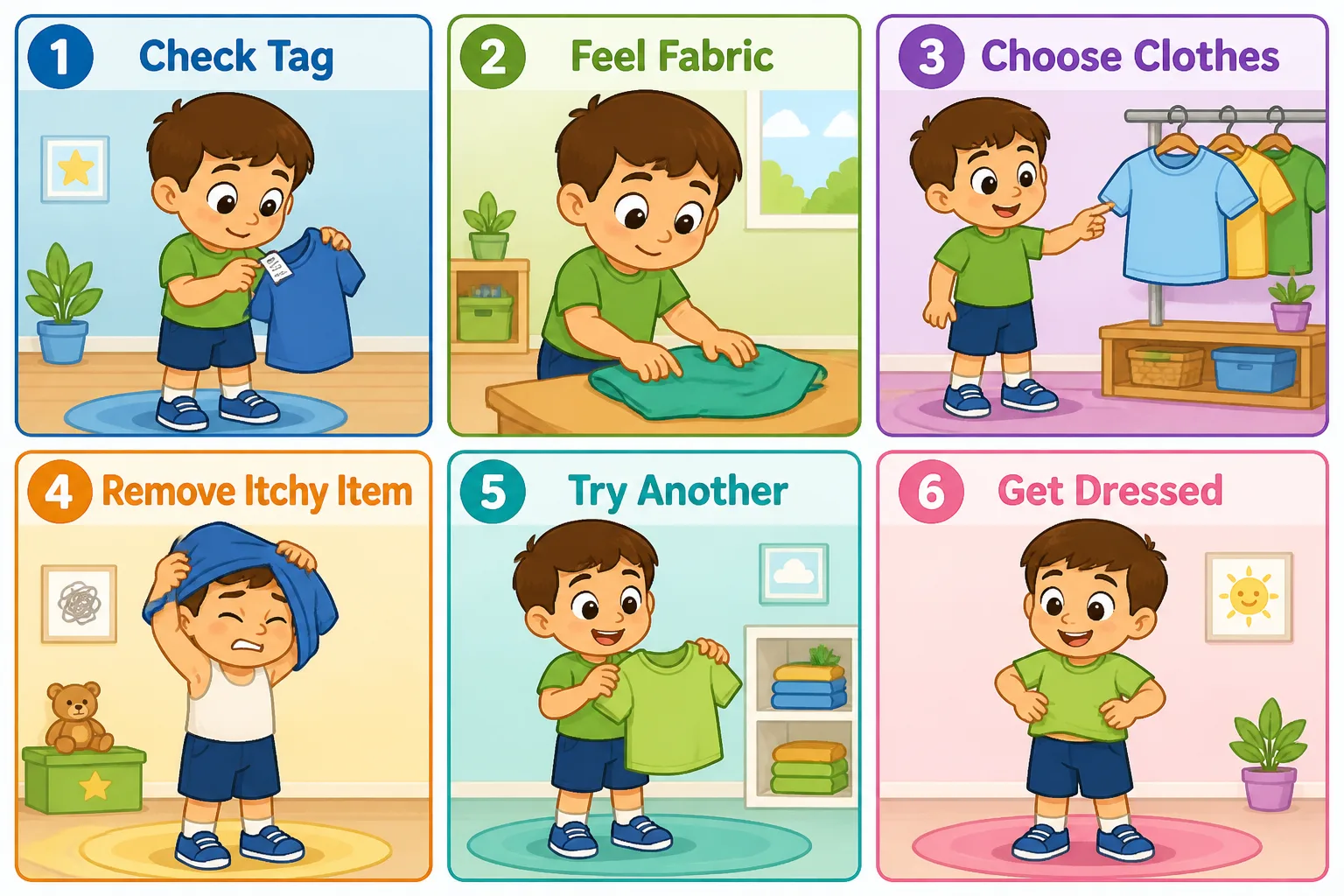
1. Check Tag
Many children find clothing tags itchy or irritating. Encourage your child to look at the tag and gently touch it. This helps them recognize the source of discomfort early before putting on the garment.
2. Feel Fabric
Let the child feel the fabric with their hands. Soft, smooth fabrics are usually more comfortable. Feeling the fabric helps children make informed choices about what they want to wear.
3. Choose Clothes
Offer simple choices between two or three clothing items. Use clear language or visuals to support communication. Giving children control supports their sensory preferences and reduces distress.
4. Remove Itchy Item
If the child feels uncomfortable after dressing, encourage them to communicate by speech, gesture, or AAC that the clothing feels itchy or uncomfortable. Help them remove the item calmly without pressure or frustration.
5. Try Another
Provide an alternative clothing option that is softer or tag-free. Allow the child to try this new item and observe their comfort level. This reinforces positive sensory experiences.
6. Get Dressed
Once a comfortable item is chosen, support the child to get dressed independently or with help. Celebrate their success and comfort to build confidence.
Parents can support these steps by observing their child’s signals, offering simple choices, modeling sensory language like “too itchy” or “soft please,” and respecting the child’s pace. Avoid forcing uncomfortable clothing or ignoring distress signals. Gradual introduction and positive reinforcement help children feel safe and supported.
For related sensory support on daily routines, see our article on Teaching Action Words: 6 Everyday Verbs for Young Children.
Parent question: What clothing textures does your child prefer, and how do you help them communicate when something feels uncomfortable?
Download the images in this article