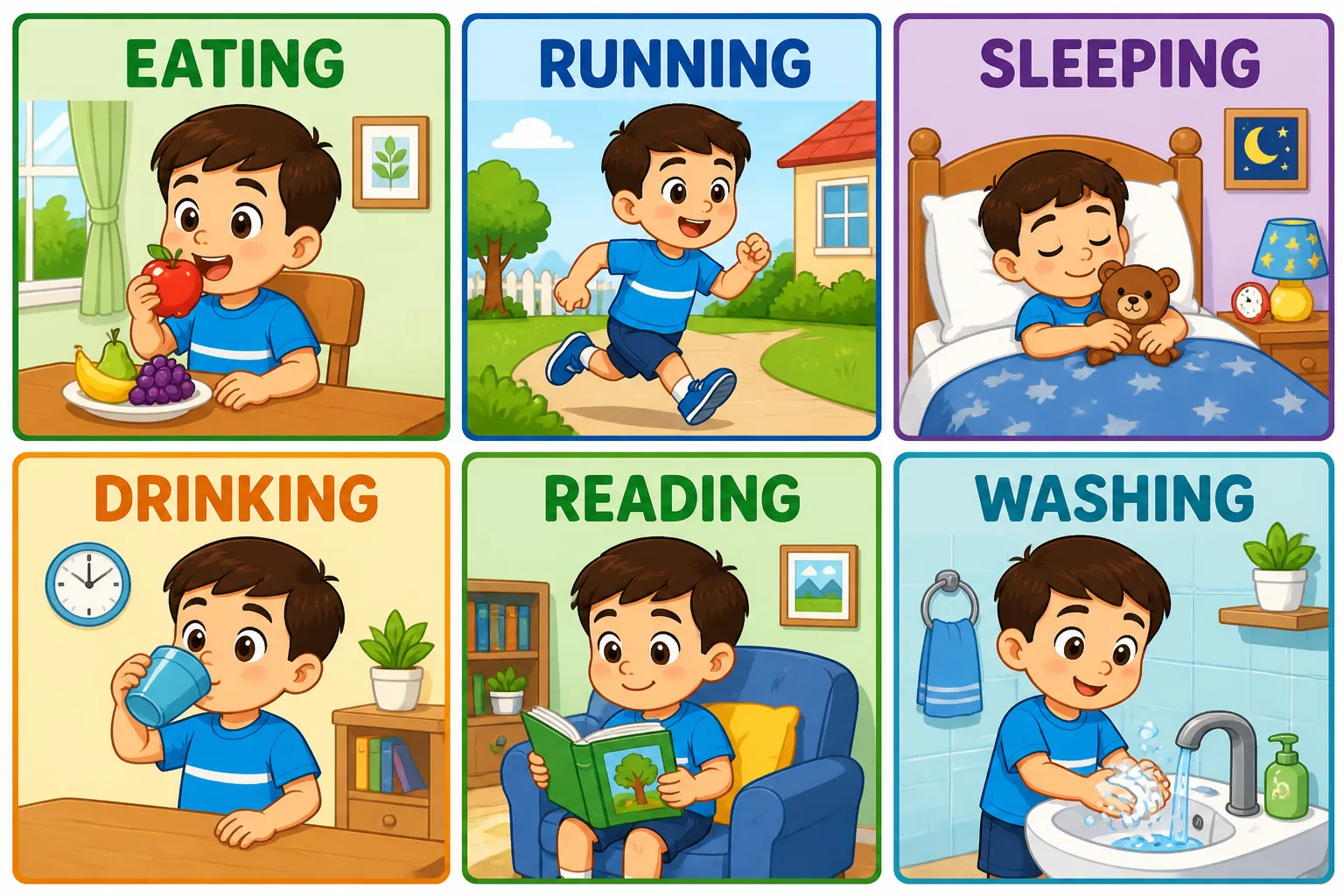

Teaching young children common action words is a key step in building their vocabulary and language skills. This visual learning set features 6 everyday action verbs that children encounter frequently: eating, running, sleeping, drinking, reading, and washing. Each panel shows a clear cartoon example of the action, helping children understand and express these verbs in daily life.
Why Teach Action Words?
Action words, or verbs, are essential for children to describe what is happening around them and to communicate their own activities. Learning these verbs supports sentence building and expressive language development, foundational for effective communication.
6 Everyday Action Verbs to Teach
- Eating: Shows a child eating an apple. Parents can say, “The boy is eating an apple.”
- Running: A child running happily outside. Model, “She is running fast!”
- Sleeping: Child sleeping in bed with a teddy bear. Say, “The girl is sleeping.”
- Drinking: Child drinking from a cup. Model, “He is drinking juice.”
- Reading: Child looking at a book. Say, “The boy is reading a book.”
- Washing: Child washing hands at a sink. Model, “She is washing her hands.”
How Parents Can Practice These Verbs Naturally
Use everyday routines to name and describe actions. For example, during snack time, say “You are eating your apple,” or when going outside, say “Let’s go running!” Encourage your child to point, gesture, or use words to indicate the action. Expand their attempts by adding one or two words, like turning “eat” into “eat apple.” Avoid pressuring your child to repeat perfectly; instead, model language naturally and praise participation.
For children who benefit from visual supports, you might pair this learning set with other practical activities like the sensory support steps for children or the handwashing routine visual learning set to build independence and communication skills.
Try This At Home
Show your child the pictures and say the action word. Ask simple questions like, “What is he doing?” or “Can you show me running?” Celebrate all responses, whether spoken, signed, or gestured. Repeat often during daily activities to help your child connect words to actions.
Parent question: Which action word does your child like to say or show the most?
Download the images in this article