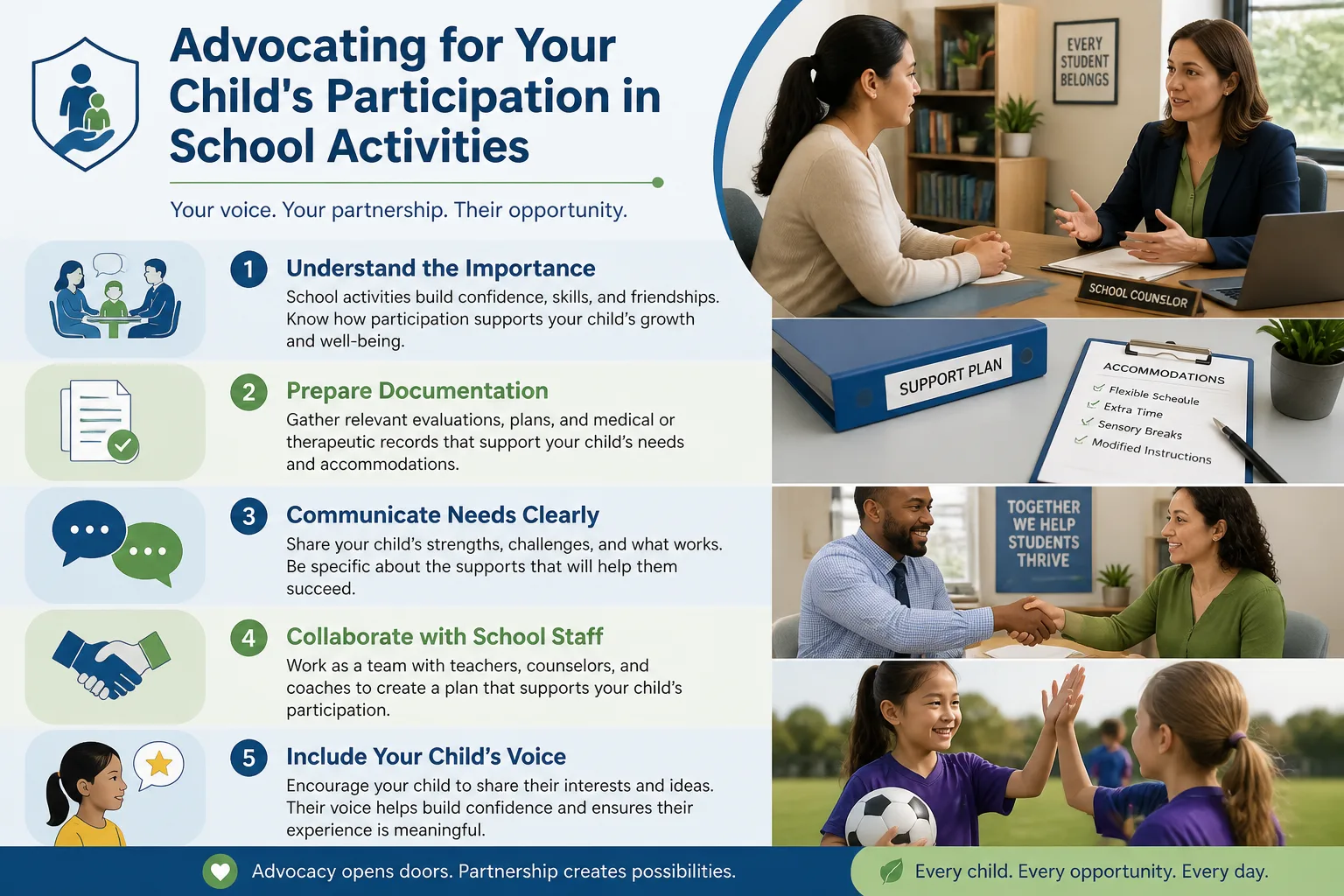
Advocating for Your Child’s Participation in School Activities: A Practical Parent Guide

Advocating for your child’s participation in school activities is a vital aspect of supporting their social development, inclusion, and overall well-being. For parents of autistic children or those with additional support needs, ensuring access to extracurricular activities can sometimes be challenging, yet it is essential for fostering friendships, building confidence, and enhancing communication skills.
Why Advocating for Participation Matters
School activities such as clubs, sports, arts, and social groups offer opportunities beyond academics that help children develop social skills, sensory regulation, and a sense of belonging. However, children with autism or sensory and communication differences may face barriers such as lack of accommodations, misunderstandings, or exclusion. Advocacy helps ensure your child’s dignity and needs are respected, enabling meaningful participation.
Common Challenges Parents May Encounter
- Lack of awareness or training: School staff may not fully understand your child’s sensory or communication needs.
- Inadequate accommodations: Activities may not be adapted for sensory sensitivities or communication preferences.
- Social exclusion or bullying fears: Concerns about your child’s safety or acceptance may arise.
- Limited communication: Your child’s preferred communication method (AAC, gestures, sign) might not be supported during activities.
Preparing to Advocate Effectively
Preparation is key to successful advocacy. Consider these steps:
- Document your child’s strengths and needs: Keep notes on what activities your child enjoys or shows interest in, along with any sensory or communication supports they require.
- Gather relevant reports: Bring recent evaluations, therapy notes, or IEP/504 plans that describe accommodations and goals related to social participation.
- Observe and record: If your child has tried activities before, note what worked well and what challenges occurred.
- Learn about the activity: Understand the structure, environment, and typical demands of the activity to identify potential barriers.
Questions to Ask School Staff
When discussing your child’s participation with teachers, coaches, or activity leaders, consider asking:
- “How are sensory and communication needs typically supported in this activity?”
- “What accommodations can be made to help my child participate comfortably and safely?”
- “Are staff trained to support children with autism or communication differences?”
- “How can we collaborate to include my child’s preferred communication methods?”
- “What strategies are in place to prevent exclusion or bullying?”
Advocacy Strategies for Collaboration and Respect
Approach advocacy as a partnership with school staff, focusing on shared goals for your child’s success:
- Use clear, respectful language: For example, “My child uses a communication device and benefits from quiet spaces during sensory overload. How can we support this in the club setting?”
- Offer to provide resources or training: Share helpful materials about autism or communication supports if staff are unfamiliar.
- Request measurable accommodations: Ask for specific supports documented in writing, such as “allowing use of noise-cancelling headphones” or “providing visual schedules.”
- Include your child’s voice: When appropriate, ask your child what they want and how they prefer to participate. Share their input with staff.
- Follow up in writing: Summarize conversations via email to create a record and clarify next steps.
Common Pitfalls to Avoid
- Avoid assuming staff know your child’s needs without clear communication.
- Don’t accept vague promises; seek written agreements on accommodations.
- Refrain from pushing for participation that causes distress or discomfort to your child.
- Don’t hesitate to seek additional professional advice or advocacy support if needed.
Including Your Child’s Voice and Respecting Autonomy
Whenever possible, involve your child in decisions about activities. Respect their preferences, communication style, and comfort level. This supports their dignity and fosters self-advocacy skills. For example, if your child uses AAC, encourage them to express what they enjoy or find challenging about an activity.
When to Seek Additional Guidance
If you encounter persistent barriers or feel your child is unfairly excluded, consider consulting a special education advocate, legal expert, or your child’s therapy team. Understanding your rights under laws like IDEA or Section 504 can empower you to request appropriate accommodations.
Key Takeaway
Advocating for your child’s participation in school activities is about preparing thoughtfully, communicating clearly, collaborating respectfully, and centering your child’s needs and voice. This approach helps ensure your child can enjoy meaningful, inclusive experiences that support their growth and happiness.
Have you noticed any particular school activities your child is interested in but hasn’t been able to join? What steps have you taken to support their participation?
Download the images in this article