
What This Skill Teaches
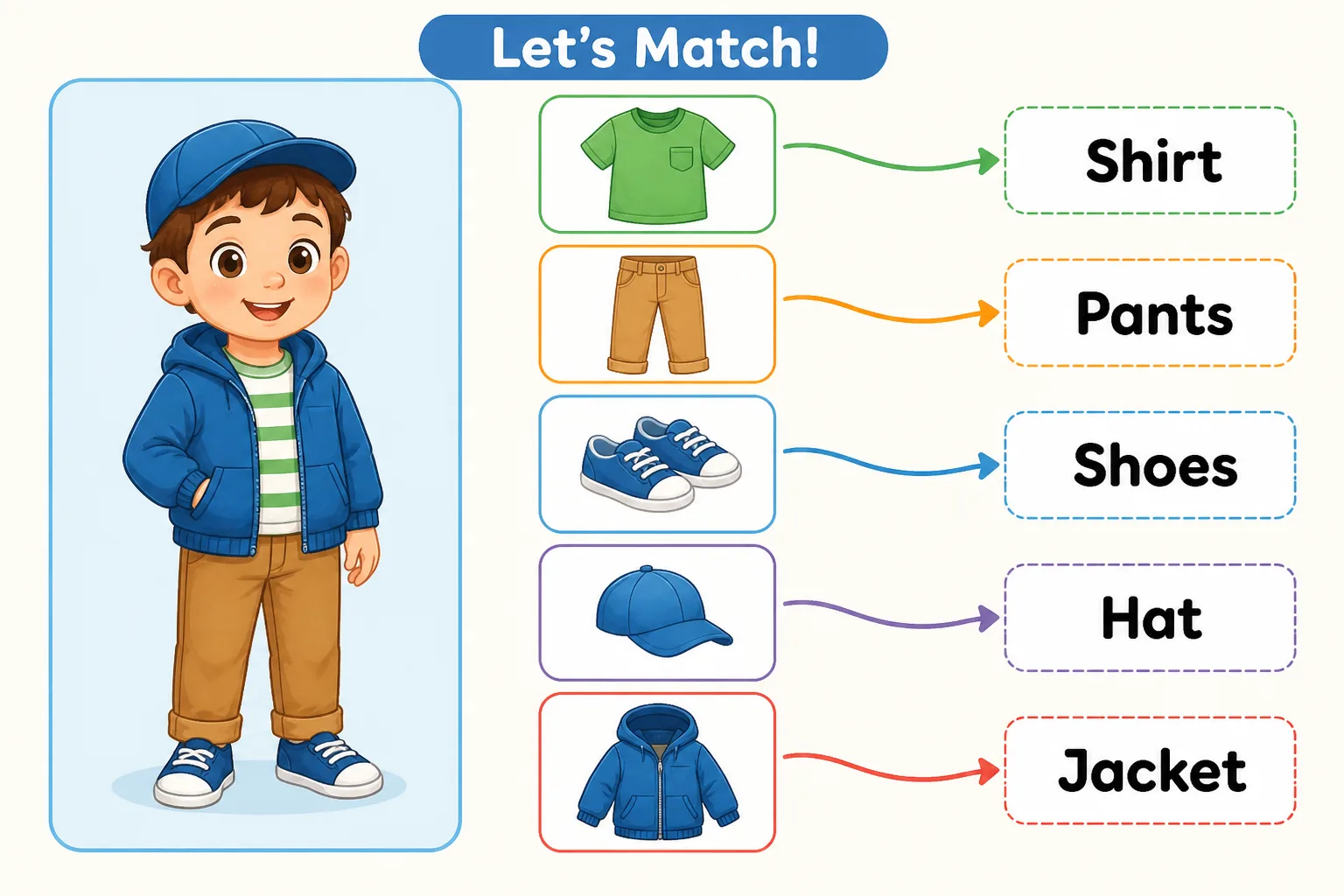
Learning words for clothing helps young children understand and communicate about everyday items they wear. This skill teaches children to recognize, name, and talk about common clothes like shirts, pants, shoes, hats, and jackets. It supports both receptive language (understanding words) and expressive language (using words to communicate needs and preferences).
Why This Skill Matters
Clothing vocabulary is part of daily routines such as getting dressed, going outside, or packing for school. Knowing these words helps children participate more independently and express their choices. For autistic children and those with communication challenges, learning clothing words can reduce frustration and support functional communication during dressing and social situations.
What Parents May Notice
- The child may point to or look at clothing items when named.
- They might use gestures, signs, or AAC devices to indicate clothing.
- Some children may show preferences for certain clothes or resist wearing others.
- Children might imitate words or sounds related to clothing with support.
The Learning Set
This article focuses on five common clothing words:
- Shirt – a top worn on the upper body.
- Pants – clothing worn on the lower body, covering legs.
- Shoes – footwear worn on the feet.
- Hat – headwear to protect from sun or cold.
- Jacket – an outer layer worn for warmth.
How to Model the Language
- Use simple, clear language: “Here is your shirt.” “Put on your shoes.”
- Point to or hold up the clothing item as you say the word.
- Use the words during daily routines, like dressing or packing bags.
- Repeat the words naturally without pressuring the child to speak.
- Use gestures or signs alongside spoken words to reinforce meaning.
Easy Ways to Practice at Home
- During dressing, name each item as you help your child put it on.
- Play matching games with pictures of clothing and real items.
- Use books or songs about clothes to reinforce vocabulary.
- Offer simple choices: “Do you want the red hat or the blue hat?”
- Encourage your child to point, sign, or use AAC to indicate clothing items.
Helpful Examples to Say
- “Put on your shirt.”
- “Where are your shoes?”
- “I see your hat.”
- “Take off your jacket.”
- “These pants are blue.”
Supporting AAC, Gestures, and Other Communication
Respect all communication methods. If your child uses AAC, add these clothing words to their device. Use pictures or symbols for each clothing item. Encourage gestures like pointing or signing the words for shirt, shoes, or hat. Always respond positively to any form of communication about clothing.
What to Avoid
- Don’t force your child to say words or make eye contact.
- Avoid rapid-fire questioning like “What is this?” repeatedly.
- Don’t overwhelm with too many new words at once.
- Avoid negative reactions if your child resists wearing certain clothes.
Real-Life Example
During a morning routine, a parent says, “Let’s put on your shirt and pants. Do you want your hat today?” The child points to the hat picture on their AAC device and the parent responds, “Yes, the hat! Good choice.” This interaction supports language and choice-making in a low-pressure way.
When Extra Support May Help
If your child has difficulty understanding or using clothing words despite practice, consider consulting a speech-language pathologist. They can provide tailored strategies and support to build vocabulary and communication skills.
Key Takeaway
Teaching clothing words is a practical way to help your child communicate about daily routines and express preferences. Use clear, simple language, model naturally, and support your child’s communication style for the best learning experience.
What clothing words does your child use or show interest in right now?
Download the images in this article