Study Finds Altered Striatal Synaptic Plasticity in Autism Model Mice Overexpressing eIF4E

New Insights into Striatal Changes in Autism Spectrum Disorder Model
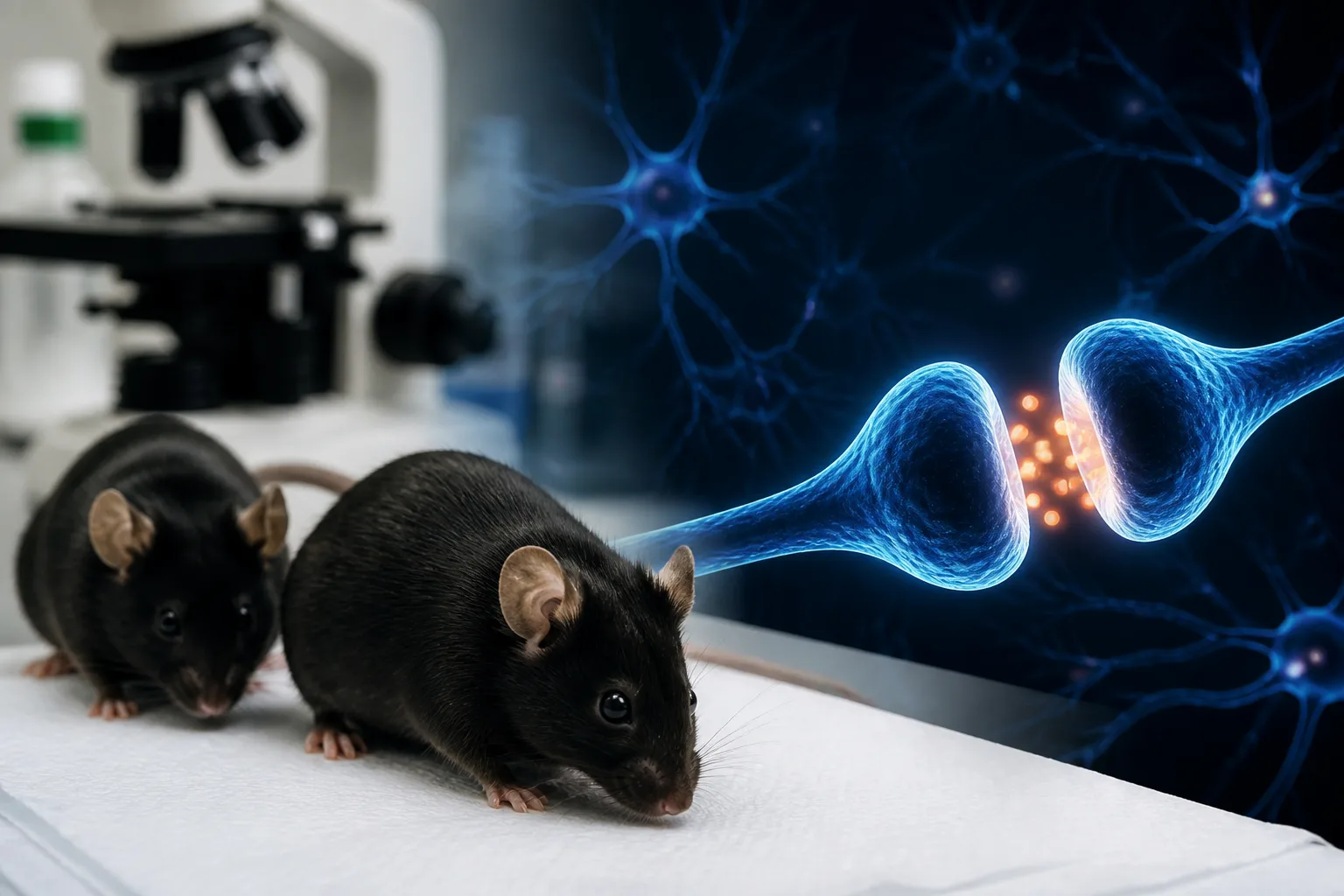
Research published in iScience on September 3, 2026, reports that mice genetically modified to overexpress the autism risk gene eIF4E display notable changes in synaptic function within the striatum, a brain region involved in motor control and reward processing. These alterations may contribute to autism spectrum disorder (ASD)-related behaviors observed in this model.
Key Findings on Synaptic Transmission and Plasticity
The study focused on transgenic mice (eIF4E-TG) that carry extra copies of the eukaryotic initiation factor 4E (eIF4E) gene, identified by the Simons Foundation Autism Research Initiative (SFARI) as an ASD risk gene. Prior work showed these mice exhibit ASD-like behaviors and reduced dopamine release in the dorsal striatum.
In the current investigation, researchers found that eIF4E-TG mice had an increased density of dendritic spines on striatal neurons, which are small protrusions where synapses form. Electrophysiological recordings revealed a higher frequency of miniature excitatory postsynaptic currents (mEPSCs) mediated by AMPA and NMDA glutamate receptors, although the amplitude of AMPA receptor-mediated currents was reduced.
Importantly, spiny projection neurons (SPNs) from these mice showed enhanced long-term potentiation (LTP) that depended on NMDA receptor activation. This form of synaptic strengthening was more readily induced and of greater magnitude compared to controls. Notably, blocking dopamine D1 or D2 receptors did not prevent this enhanced LTP, suggesting dopamine signaling alterations are not the sole driver.
Additionally, calcium signaling within SPNs, both at the cell body and dendrites, was altered during depolarization events, indicating changes in intracellular processes linked to synaptic plasticity.
Implications for Understanding ASD
These findings suggest that overexpression of eIF4E biases striatal neurons toward increased NMDA receptor-dependent synaptic potentiation. Since synaptic plasticity underlies learning and behavioral adaptation, such changes in the striatum could contribute to the neural circuit dysfunctions associated with ASD.
While the study provides valuable mechanistic insights, it is important to note that these results are from a mouse model and may not fully represent human ASD. Further research will be needed to explore how these synaptic alterations relate to behavioral symptoms and whether they offer targets for therapeutic intervention.
Study Source
For more detailed information, the full study is accessible via PubMed: Altered striatal long-term potentiation in the eIF4E-TG mouse model of autism spectrum disorder.
Download the images in this article