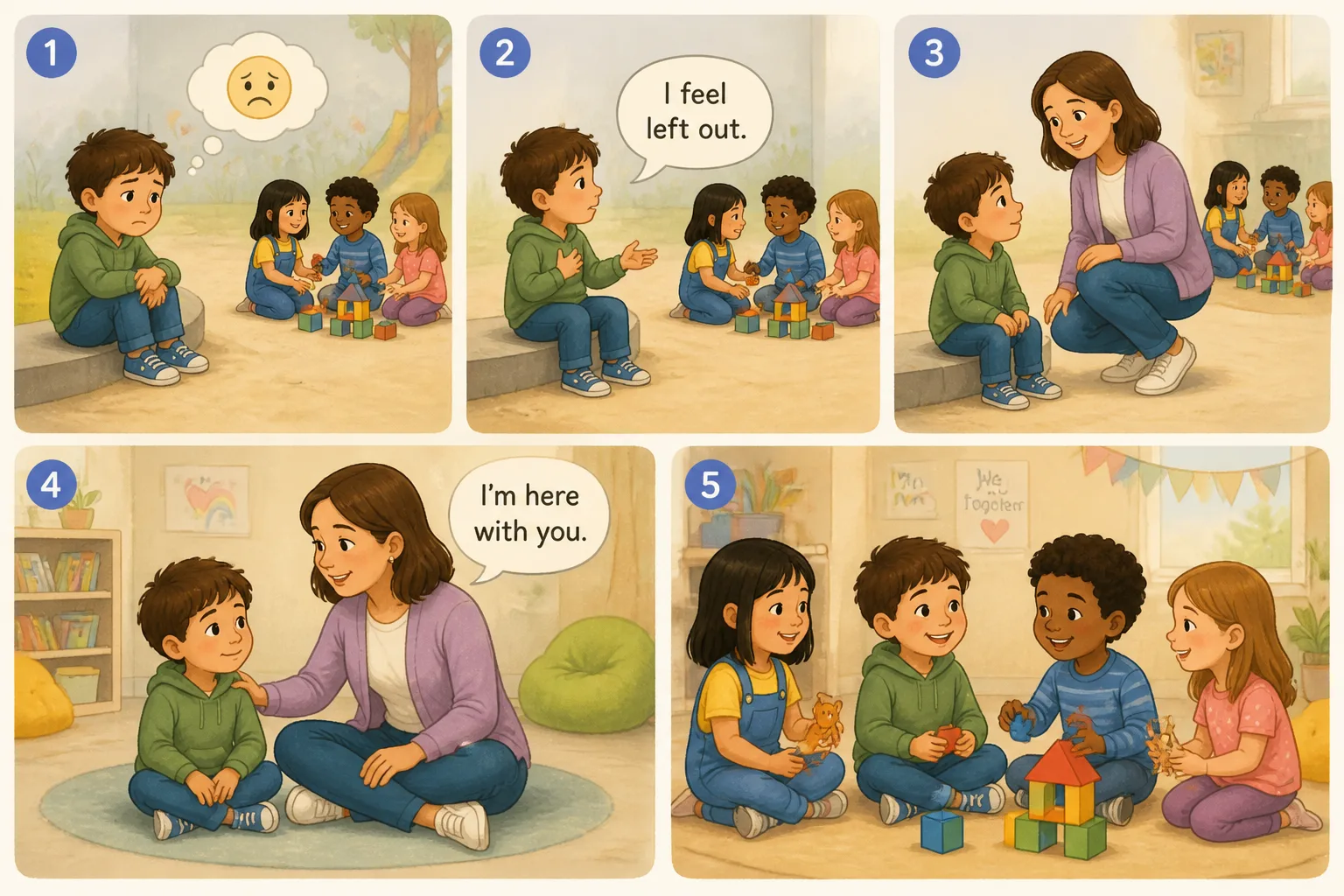

Feeling left out is a common and sometimes difficult emotion for young children, including autistic children and those who need additional emotional support. It happens when a child notices that others are playing or doing something together, but they are not included. Understanding this feeling and learning ways to cope can help children feel safer and more connected.
What Does Feeling Left Out Mean for a Child?
When a child feels left out, they may experience sadness, loneliness, or confusion. They might not fully understand why they are not included or how to join in. For some children, especially those with communication or sensory differences, this feeling can be overwhelming or hard to express.
Signs Adults May Notice
- The child may withdraw or sit alone quietly.
- They might look sad, avoid eye contact, or show less interest in nearby activities.
- Some children may become upset, cry, or show frustration.
- Others might try to get attention in ways that seem unexpected, like shouting or moving away.
Common Triggers for Feeling Left Out
- Not being invited to join a game or activity.
- Group activities where communication or social rules are unclear.
- Changes in routine or new social settings.
- Difficulty understanding social cues or how to join in.
Practical Support Strategies for Adults
- Notice and name the feeling: Gently say, “I see you feel left out right now,” to help the child recognize their emotion.
- Offer choices: Ask if the child wants to join the group, play separately, or have a quiet moment.
- Provide a safe space: Allow the child to have a calm spot where they can feel comfortable if they need a break.
- Facilitate inclusion: When possible, help the child join activities by explaining the rules or encouraging peers to include them.
- Use simple communication: Encourage the child to use words, pictures, or gestures to express “I feel left out” or “Can I play?”
Helpful Things Adults Can Say or Do
- “It’s okay to feel left out sometimes. I’m here with you.”
- “Would you like to tell me what you want to do?”
- “Let’s find a game you enjoy or a way to play together.”
- Stay nearby without forcing interaction, giving the child space and support.
- Model calm breathing or quiet activities to help the child regulate.
How to Practice During Calm Moments
Practice naming feelings and asking for help during times when the child is calm. Use stories, role-play, or visual aids to talk about feeling left out and ways to respond. This builds skills and confidence for future situations.
What Adults Should Avoid Forcing
- Don’t force the child to join a group if they are not ready.
- Avoid telling the child to “just play” or “stop feeling sad.”
- Don’t pressure the child to explain feelings before they are able.
- Avoid shaming or punishing the child for withdrawing or showing emotions.
Individual Differences Matter
Every child experiences feeling left out differently. Some may need more time or different ways to communicate. Respect each child’s unique needs and pace. Some children may prefer quiet activities, while others want help joining peers.
Key Takeaway
Feeling left out is a meaningful emotion that signals a child’s need for connection and support. Adults can help by noticing feelings, offering choices, providing safe spaces, and facilitating communication without pressure or judgment. Through gentle, respectful support, children learn to understand and cope with feeling left out in healthy ways.
For more strategies on managing social emotions, see our articles on Helping Young Children Cope with Social Frustration and Helping Young Children Understand and Manage Frustration.
Parent question: What signs does your child show when they feel left out, and what helps them feel better?
Download the images in this article